

谁的文革?谁的责任?——董郁玉评《文化大革命的起源》
Whose Cultural Revolution? Whose Responsibility? — Dong Yuyu’s Review of The Origins of the Cultural Revolution

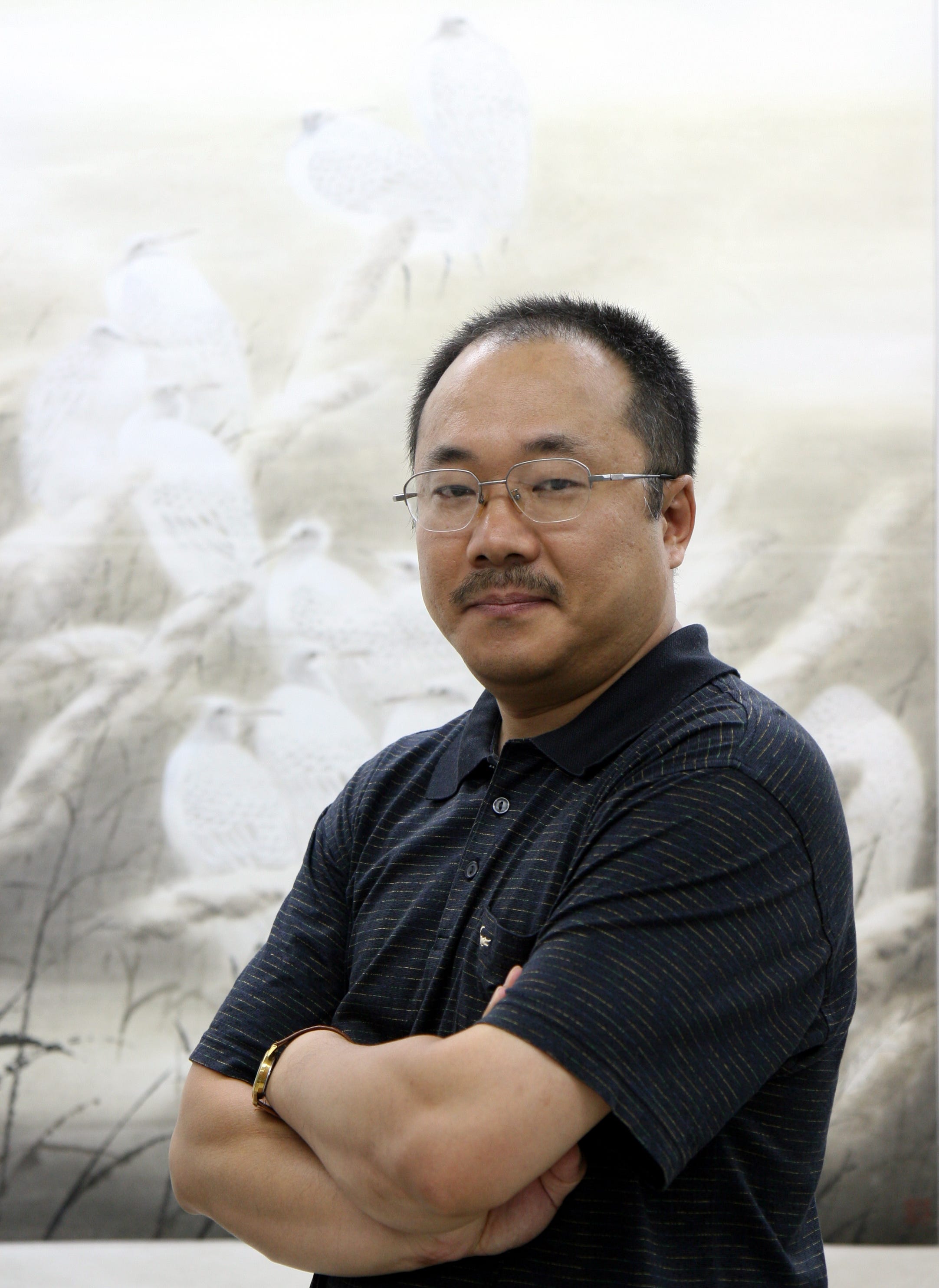
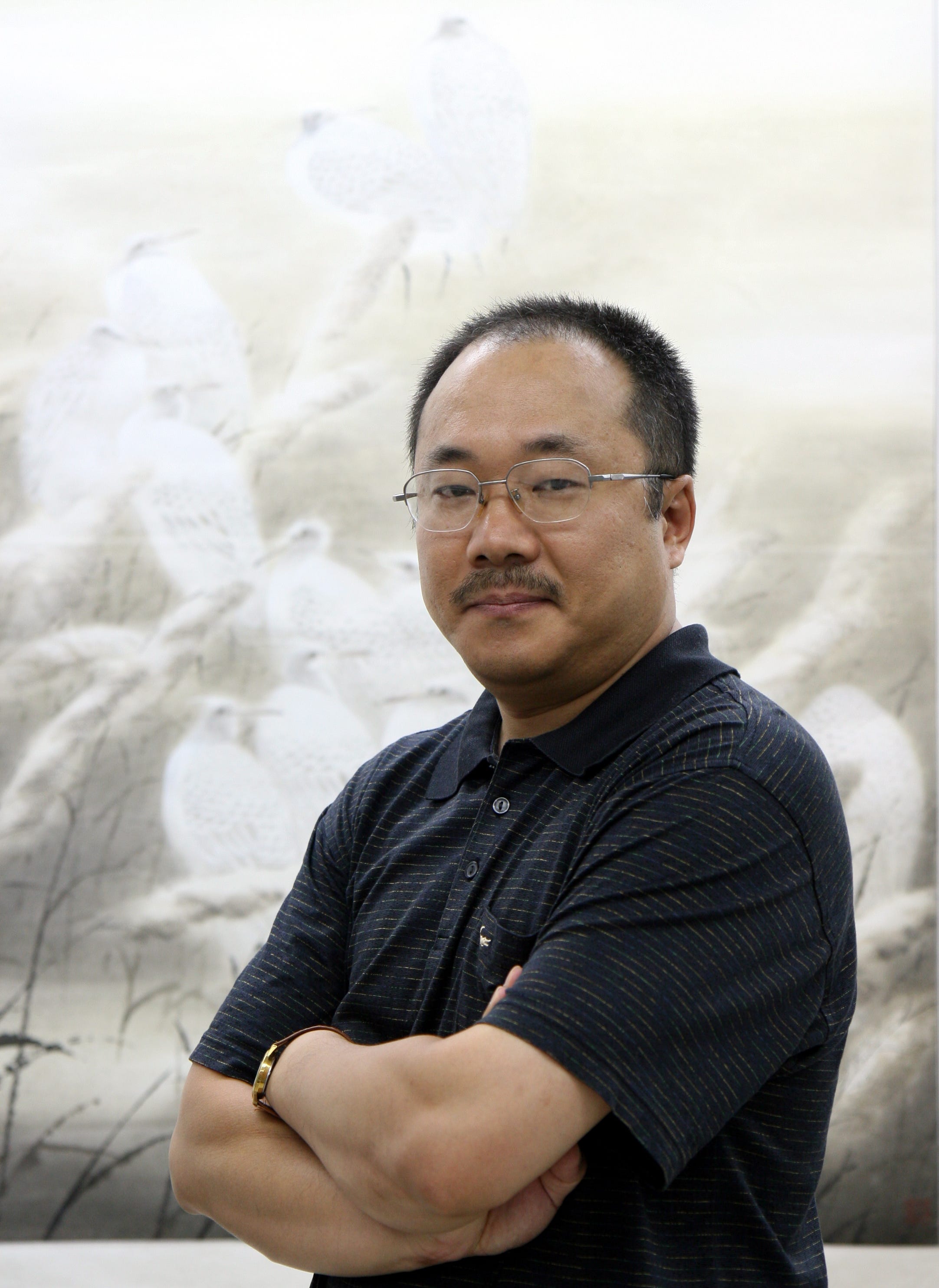
作者:董郁玉
By Dong Yuyu
The English translation follows below.
编者按:
近日,据媒体报道,已身陷囹圄四年多的中国记者董郁玉被检查出心律失常,肺部发现肿瘤。他的家人呼吁当局实行人道主义,让董郁玉取保送医,以接受更好的治疗。
董郁玉1987年毕业于北京大学,1989年因参与天安门抗议,被下放劳动一年,后回到《光明日报》工作,曾任评论部副主任。2022年2月董郁玉在北京失去自由,2024年被以“间谍罪”判刑7年,尽管官方未能提供定罪证据。董郁玉是中国资深的记者和评论作家,同时也是一位学养丰富的政治学研究者,在1998年就与人合著出版《政治中国——面向新体制选择的时代》一书,呼吁宪政民主与民主。
2013年,董郁玉曾在《炎黄春秋》刊文评论哈佛大学教授麦克法夸尔的三卷本著作《文化大革命的起源》,对这本书的价值,以及如何看待毛泽东与文革的关系做了深入分析。今年正值文革爆发六十周年,本站精简此文,重新刊发,并在此呼吁全球知识界关注董郁玉的案件以及他的处境,希望这位因言获罪的知识分子能得到人道主义的对待。
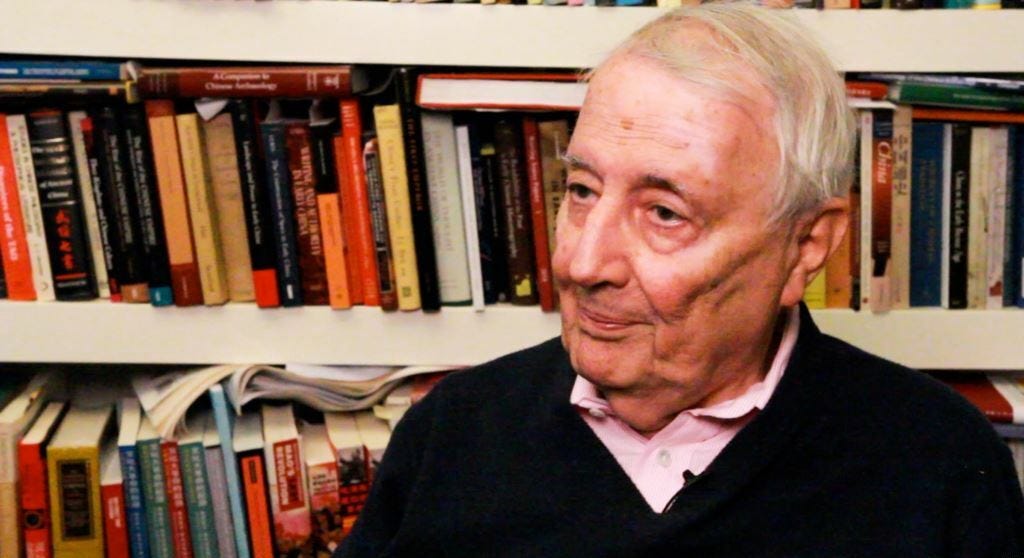
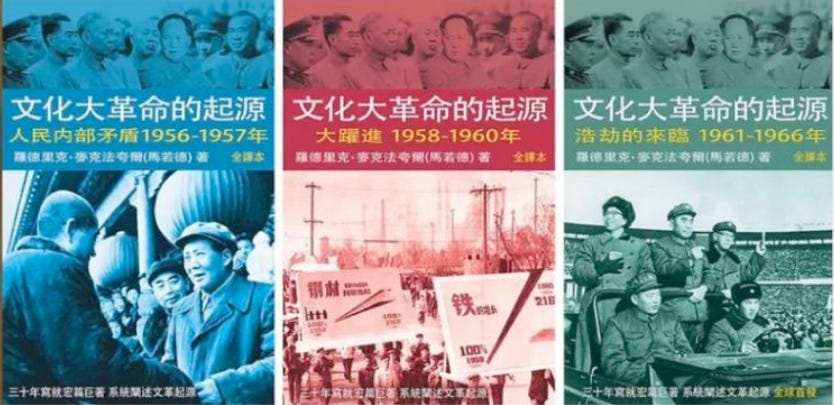
哈佛大学教授罗德里克·麦克法夸尔著的三卷本《文化大革命的起源》(以下简称《起源》)的中译本,于2012年由香港新世纪出版社出齐。该书的第一卷和第二卷,在1980年代和1990年,曾由中国内地的出版社删节后出版。
这部专述文化大革命起源的通史,从文革前10年的1956年写起,到1966年文革爆发时止,分成《人民内部矛盾1956—1957年》、《大跃进1958—1960年》和《浩劫的来临1961—1966年》三卷,共计1430多页,实可谓皇皇大著。《起源》对来自官方与民间的海量历史资料,条分缕析,多方考证;细致甄别,贯通因果。以至句句有根,事事有据,旁征博引之全面,在中外文革研究领域中,尚不见出其右者。
对于中文读者来说,更重要的则在于,《起源》以文革起源为全书叙事的脉络,其成书的逻辑却迥异于中共党史的逻辑。整部书都是在中共官方党史、或者说是联共(布)党史的话语体系之外,从国家政治的角度,契入构成文革起源的国家政治运作,使读者既能身临其境去体味文革的种种细枝末节,又能与文革拉开必要的观察距离,而不至深陷文革起源历史的具体是非中,而不可自拔。
1. 谁的文革?
在传统的中共党史话语体系中,党即是国,国即是党;党史就是国史,国史就是党史。于是,各种官定的中国国家现代史乃至近代史,其叙事结构与内容,与中共党史的历史唯物主义叙事结构及其内容毫无二致,雌雄不辨。这种国史党史同为一体的叙事结构,几无政治权力来源、国家权力合法性、政治责任和政治道德的位置,而尽是革命、路线、领袖和阶级的范式。
正是在这种范式的阐释中,在国史混同于党史的情况下,“无产阶级文化大革命”不是以中国的国家政治灾难和社会灾难被叙事,而是被当成了一个党在革命征途上的一次挫折被叙事。并且,这个挫折被有选择、有限制地展开叙事,以证明党因为战胜了挫折、纠正了造成挫折的错误,而变得比以前更加强大。
当然,人们不能“对事实发火”(西方格言——编者注)。从《起源》一书中,读者可见,在1949年以后的国家政治架构和社会结构中,所谓“无产阶级文化大革命”,确实把中国国家历史和中国共产党党史从某种角度上重叠在了一起。而同样的事实,如果放置于不同的叙事结构当中,得出的结论可能是大相径庭的。
以国家历史为叙事框架,中国共产党是一个掌握全部国家政治权力的政治组织,文化大革命则是这个政治组织为国家制定政策并实施的结果。
而以中共党史为叙事框架,国家、社会、公民就很难在其中找到厕身之处。中国共产党则在不同的执政阶段中,被分割成了代表不同路线的“左、中、右”派别;这些派别又被划分成“好人”与“坏人”的不同群体。如是,在面对其对国家负有的政治责任方面,中国共产党就不再是一个掌握了国家全部的政治权力,从而应对国家负有全部政治责任的政治组织,而是由其中的四人帮、或所谓改革派、保守派代表整个党,并承担某个阶段的政治责任——这样,文化大革命不再是这个政党的政策输出和权力运行的结果,而是四人帮、林彪等“坏人”当道、“好人”受难的结果,是右派不识时务、左派错整右派、“中间派没有觉悟”等一堆党内事务。
这种叙事框架,把文化大革命当作中共党内事务,实则掏空了执政党对国家的政治责任。或者说把执政党对国家的政治责任,变成了厘清并公布谁是党内的“好人”、谁是党内的“坏人”,谁是党内的“七分好人、三分坏人”,谁是党内的不折不扣、彻彻底底的“坏人”,谁又是党内的胸怀“好心”却不得不办了错事、坏事的好人等党内是非。
如此一来,党内“好人”的受难,便可替换国家的政治灾难;党内“坏人”的罪错或某个派别对党负有的党内责任,亦可顶替整个党对国家负有的全部政治责任。在这样的叙事逻辑中,依党内是非而划定的“好人”与“坏人”,不是构成党的整体的不同部分,而是“好人”代表党,“坏人”——通过把他们开除出党——则似乎成了与党组织无关的一部分人,由此便可摆脱这些“坏人”施政而带来的整个政党对国家应负的政治责任。也因此,党内的“坏人”不仅仅是党的敌人,也被用来充当国家的“公敌”。
麦克法夸尔《起源》的最大叙事特点,就是没有在中共党内划分出“好人”与“坏人”,进而诠释他们所主张政策的好、坏。没有“好人”“坏人”,当然也就没有国家政治责任的党内替罪者。中共党史叙事中的“好人”与“坏人”,在麦克法夸尔的《起源》中,都是中共党的一分子;就大的政治目标而言,他们都是为中共党的执政利益而怀相同的政治理想、存相同的政治动机、有相同政治目的的同志。这种不分“好”“坏”的客观叙事,最大限度地还原了文化大革命起源的历史过程。
2. 谁的政策?
对国家政治而言,一项公共政策,在实际中发生的效果,总是会强化或削弱政策制定者与实施者的政治威信,从而强化或削弱他们的政治地位和党内政治权力。这是党内政治斗争的动力所在,也是所有权力斗争发生的重要因由(参见《浩劫的来临1961—1966年》第449—451页)。因此,政策的制定与实施,正是麦克法夸尔契入文革起源之处。
《起源》一书把文革缘起的研究范围扩展至1956年,也正是因为中共在这个时期的政策,开始引发一些灾难性的后果,并由于党内权力结构和政治制度的限制而难以被纠正,以此为文革的爆发累积了政治能量。麦克法夸尔注意到,“1956年发生了两个关键性的事件——中国合作化的完成和苏共二十大的召开——它们随后引发了一连串的事件,最终明显地,也许是不可避免地,导致了文化大革命的发生”(《人民内部矛盾1956—1957年》第15页)。
毛泽东在1955年7月31日的一个报告中,对那些在农村合作化运动中持谨慎态度的官员进行了嘲笑,说他们“像一个小脚女人,东摇西摆地在那里走路”。当然,可能连毛泽东自己都没有想到,压指标、下命令的军事指挥方式在和平时期会产生什么样的效果:农业合作化只用了4个月的时间就完成了。这个速度,让毛泽东自己规定的14个月的时间都相形显得过分保守了。几亿农民世代延续的生产方式,在短短4个月的时间里被彻底改变。正是这个“伟大的成就”,空前膨胀了毛泽东的意志。也正是在1956年底,他信心满满地宣布:“这一年过去,社会主义的胜利就有很大的把握了。(本段引文均见《人民内部矛盾1956—1957年》第21页)”
但是,一项公共政策的实施,不似一项军事命令的执行那样可以迅速见分晓。农业合作化在4个月之内被迅速完成了。然而,这个政策的实施速度,加倍放大了其原本存在的问题。而这些问题,又不能像打扫战场那样,在短时间内被打扫干净。为此,具体实施政策的人,必须采取补救措施来为这个政策善后,并由此产生分歧——这也是党内政治权力斗争的起源。
当然,在毛泽东一言九鼎的中共党内权力格局中,身处“一线”的政策实施者,与置身“二线”的政策设计者毛泽东的分歧,只能以前者向毛泽东低头检讨而消弭。然而,所有政策的参与者都清楚,此时,失去更多政治威望的不是检讨者,而恰是毛泽东本人。而毛泽东由此产生的对失去政治权力的焦虑,和堆积于胸的块垒,直至10年后的1966年,才被毛泽东一吐为快(参见《浩劫的来临1961—1966年》第452—453页)。
《起源》一书,以中共党的政策制定和实施为经,以党内权力斗争为纬,为文革起源串通起了因果链条。并且,《起源》也常常以寥寥数笔来交代中共在其历史上党内权力斗争的脉络,为读者建立起相关的阅读背景。
毛泽东亲自发动的“无产阶级文化大革命”的最重要目的之一,无疑就是要铲除“以刘少奇为首的资产阶级司令部”,除掉那个在政策制定与实施上有自己的一套,并总是以检讨的姿态来蚕食自己政治地位的刘少奇(参见《浩劫的来临1961—1966年》第453页)。不过,正如《起源》所述,从中共党内权力派系的渊源上讲,刘少奇应为毛泽东最亲密的战友之一。刘少奇堪称是毛泽东在中共党内如日中天地位的最力建造者。如果没有刘少奇在延安整风时不遗余力的帮衬,没有刘少奇在中共七大政治报告中提出“毛泽东思想”这一具有超越性的意识形态主导思想,以及其他无数任劳任怨、鞍前马后的铺路和善后,毛泽东在党内说一不二的威望,就不会在曾经“山头”林立的中共党内如此快和如此牢固地建立起来。
3. 谁的责任?
共产党在进行内部的权力斗争时,虽然没有公开的、制度化的既定政治程序,但并不等于说,共产党内部的权力斗争毫无遵循。从各国共产党内部权力斗争的历史看,在党内权力斗争中的胜出者,无不是其意识形态的忠实体现者。
而正是意识形态的至高无上性,为那些残酷的党内权力斗争方式,提供了合理性以及正当性的支持。权力斗争的胜者,一定要申明其拥护、遵循和代表那个支撑党的意识形态;权力斗争的失败者,也一定被冠以反对、违背和篡改了党的意识形态。
1945年,刘少奇在中共七大政治报告中提出了“毛泽东思想”以后,共产党内部的实体性政治权力与共产党意识形态的结合,就具备了现实的基础——把党的意识形态附体于个人,某种程度而言,也就等于把这个人化身为了党的意识形态。事实上,马克思和列宁都没有经历过这样的“待遇”(参见《浩劫的来临1961—1966年》第314—322页,第448—449页)。
正是这样的“附体”,让毛泽东在党内的政治地位具有了“神性”。这个“神性”就体现在毛泽东的言说、政策设计、权力与党的意识形态的紧密结合上。而1945年之后中共所取得的一系列革命成就,都成了这个“神性”的证明。
问题也正在这里。如果共产党的事业一帆风顺,那么,不会有人去怀疑这个神祗的灵性。但是,当党的最高领导人设计、制定的政策在实际中遭遇失败时,让其去承担因此而产生的政治责任,这就不啻让那个丧失了保佑灵性的神祗去担当凡间的具体罪错。在这样的政治架构中,反对毛泽东制定的政策,反对毛泽东,反对毛泽东思想,反对党的指导思想,反对党的意识形态,反对党,反革命……就都成了一回事情。由此,在党内政治权力斗争中,“战无不胜的毛泽东思想”为毛泽东奠定了不败的基础(参见《大跃进1958—1960年》第299—302页,《浩劫的来临1961—1966年》第171—181页)。
历史的吊诡之处在于,正是提出“毛泽东思想”的刘少奇,成了其所打造的这个政治神祗的最大祭品。这也正是麦克法夸尔的不解之处:“刘几乎肯定从未想到过任何政变,但他却未作任何抵抗,这确实是很奇特的。相反地,他1966年5月顺从地主持了打倒他的主要政治盟友的会议。”(《浩劫的来临1961—1966年》第451页)
当然,在这样的政治架构中,对毛泽东那些在国家政治实践中已然遭遇到多重失败的种种政策感到无能为力的,还不止是刘少奇。在党的意识形态附于毛泽东之身时,那些曾亲眼见证过神祗灵性的同志们,看着“这位带领他们从漫长的革命征途走向胜利的人,现在又以某种捷径,带领他们向乌托邦发起了冲刺”的时候,“谁会去提醒作为神的毛说,大自然可以驯服,却不可被践踏;人们可以移山,却不能创造奇迹;政治革命可以在十年或者甚至一天里成功,但思想革命却需要几个世纪”?(《大跃进1958—1960年》第314页)
也正是这样的“人神”一体,使毛泽东具有了党内其他任何人所不可能具有的政治优势。这种政治优势,是毛泽东发动文化大革命的政治本钱——毛泽东是“毛泽东思想”的化身,“毛泽东思想”是中共党的指导思想,因此,毛泽东也是中国共产党的化身。这个现实,正是毛泽东发动的文化大革命几近彻底颠覆了党的组织结构,却能给除他自己以外的所有人扣上“分裂党”的帽子,他本人则凌驾全党之上的根本原因。
这样的现实,也是中共在日后整理文革瓦砾之时,颇有投鼠忌器之感,难以将毛泽东与作为中共指导思想的“毛泽东思想”彻底剥离,并且要“确立毛泽东同志的历史地位”,“坚持和发展毛泽东思想”,以及对过去的事情“宜粗不宜细”(引文均见《关于建国以来党的若干历史问题的决议》)的根源。
中共执政地位的确保,需要作为其指导思想的“毛泽东思想”;而“毛泽东思想”的存续,又需要确保毛泽东的历史地位;要确立毛泽东的历史地位,就必须对过去的事情“宜粗不宜细”;“宜粗不宜细”,才有当下中国大陆文革历史研究的冷清局面……然而,也正是在这样环环相扣的制约和限制中,党对国家应负的政治责任,文化大革命给国家造成的灾难,都始终没有得到细致言说的机会。也正因此,今日中国,在相当多的人的想象中,文革竟然有了玫瑰色调的魔幻色彩,由此,也才会公然出现“重庆模式”(指薄熙来主政重庆期间推行的一系列政策)的政治实践。
至今,“毛泽东思想”让毛泽东仍旧站在中共历史的制高点上。这,也许正应了天安门上毛像仍在神坛般位置的事实——“毛主席万岁!” 以文化大革命爆发为止点的《起源》一书,也正是用“毛主席万岁”这句耐人寻味的“最高指示”,结束了这三部探讨文革发生起源的皇皇大著(《浩劫的来临1961—1966年》第454页)。
本期档案推荐:
【作者观点不代表中国民间档案馆立场。】
Whose Cultural Revolution? Whose Responsibility? — Dong Yuyu’s Review of The Origins of the Cultural Revolution
By Dong Yuyu
Editors’ Note:
According to recent media reports, Chinese journalist Dong Yuyu, who has been imprisoned for more than four years, has recently been diagnosed with arrhythmia and a lung tumor. His family is now calling upon the authorities to exercise humanitarianism by granting him medical parole, allowing for better treatment.
Dong graduated from Peking University in 1987. In 1989, he was sent down for a year of hard labor due to his participation in the Tiananmen protests. He later returned to work at Guangming Daily, eventually serving as the deputy director of the commentary department. Dong was detained in Beijing in February 2022 and was sentenced to seven years in prison on charges of espionage in 2024, even though prosecutors provided no evidence of the crime. A veteran journalist and columnist, Dong is also an accomplished political commentator. As early as 1998, he co-edited Political China: Towards an Era of Choices for a New System, in which he advocated for constitutionalism and democracy.
In 2013, Dong published a review in the historical magazine Yanhuang Chunqiu regarding the late Harvard Professor Roderick MacFarquhar’s three-volume work, The Origins of the Cultural Revolution. In it, Dong provided an in-depth analysis of the book’s value and the relationship between Mao Zedong and the Cultural Revolution.
As this year marks the 60th anniversary of the Cultural Revolution’s outbreak, the China Unofficial Archives has condensed and republished his article. We join in calling for the global community to pay attention to Dong Yuyu’s case and his current plight, in the hope that he—criminalized for his speech—will receive humanitarian treatment.
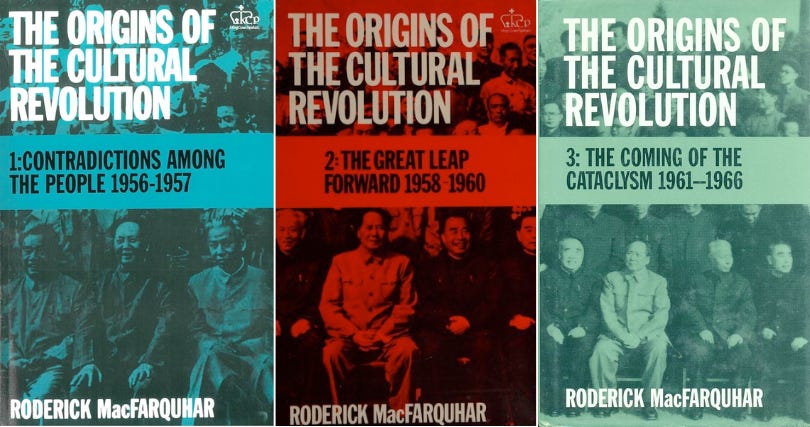
The Chinese translation of the three-volume work The Origins of the Cultural Revolution (hereafter Origins), by Harvard Professor Roderick MacFarquhar, was fully published by the Hong Kong New Century Press in 2012. Abridged versions of the first and second volumes had previously been published by mainland Chinese presses during the 1980s and 1990s.
This general history of the Cultural Revolution’s origins begins in 1956—ten years prior to the event—and concludes with the outbreak in 1966. Divided into three volumes—Contradictions Among the People 1956–1957, The Great Leap Forward 1958–1960, and The Coming of the Cataclysm 1961–1966—the work totals over 1,430 pages and is a truly monumental achievement.
Origins meticulously analyzes and cross-references a massive corpus of historical data from both official and private sources. Through rigorous differentiation and the integration of cause and effect, the work ensures that every sentence is rooted in fact and every incident is supported by evidence. Its exhaustive citations remain unparalleled in the field of Cultural Revolution studies, both in China and abroad.
For Chinese readers, it is especially significant that Origins adopts the genesis of the Cultural Revolution as its narrative thread while following a logic entirely distinct from that of official Chinese Communist Party history. The entire work exists outside the discourse of official Party history—or rather, the historiographical framework of the Communist Party of the Soviet Union (Bolshevik). By approaching the Chinese state’s political operations that birthed the Cultural Revolution from a political science perspective, the book allows readers to experience the minute details of the era while maintaining the observational distance necessary to avoid becoming hopelessly entangled in the specific historical polemics of the time.
1. Whose Cultural Revolution?
In the traditional discourse of Chinese Communist Party history, the Party is the state and the state is the Party; thus, Party history and national history are synonymous. Consequently, the narrative structure and content of various official modern Chinese histories are indistinguishable from the historical materialist framework of the Party itself. This integrated structure leaves almost no room for discussions of the source of political power, the legitimacy of state authority, political responsibility, or political morality; instead, it is defined entirely by the paradigms of revolution, political lines, supreme leaders, and social class.
Within this interpretive framework, where national history is conflated with Party history, the Great Proletarian Cultural Revolution is not narrated as a political and social catastrophe for the Chinese nation. Instead, it is depicted as a mere setback encountered by the Party on its revolutionary path. Furthermore, this setback is narrated selectively and with limitations to prove that the Party became stronger by overcoming the obstacle and correcting the errors that caused it.
However, one cannot get angry at facts. Origins demonstrates that within the post-1949 political and social architecture, the Great Proletarian Cultural Revolution did indeed cause national and Party history to overlap from a certain perspective. However, when these same facts are placed within different narrative structures, the resulting conclusions can be diametrically opposed.
Within a national history framework, the Chinese Communist Party is a political organization wielding total state power, and the Cultural Revolution is the result of policies formulated and implemented by that organization.
Conversely, it is difficult for the state, society, or the individual citizen to find a place within the Party history framework. The Chinese Communist Party is instead fragmented into “Left, Center, and Right” factions representing different political lines during various stages of governance; these factions are then subdivided into “good” and “bad” actors. Consequently, regarding its political responsibility to the nation, the Party is no longer viewed as a unified organization holding total power—and thus total responsibility. Instead, specific groups—such as the Gang of Four, the Reformers, or the Conservatives—are made to represent the Party and bear the responsibility for specific periods. In this view, the Cultural Revolution was not the result of the Party’s policy output and exercise of power, but rather the result of “bad people” like the Gang of Four and Lin Biao holding sway while “good people” suffered. It becomes a matter of internal Party business: the Rightists being out of step with the times, the Leftists wrongly purging them, and the “Middle-roaders” lacking sufficient consciousness.
This framework treats the Cultural Revolution as an internal Party affair, effectively absolving the ruling party of its political responsibility to the state. Responsibility is reduced to the task of identifying and announcing who within the Party was “good” or “bad,” who was “70% good and 30% bad,” who was thoroughly “bad,” and who was a “good person” with “good intentions” who nonetheless committed errors.
In such a logic, the suffering of “good” Party members replaces the political catastrophe of the nation. The crimes of “bad” actors—or the internal responsibility a faction owes the Party—supplant the total political responsibility the entire organization owes the state. By defining “good” and “bad” actors based on internal Party standards, the “good” represent the Party while the “bad”—by virtue of their eventual expulsion—become an external group. This allows the organization to distance itself from the political responsibility arising from the “bad” actors’ governance. Thus, these internal villains are framed not only as enemies of the Party but as public enemies of the state.
The defining characteristic of MacFarquhar’s Origins is its refusal to categorize Chinese Communist Party actors as “good” or “bad” in order to justify or condemn their policies. Without these moral categories, there are no internal scapegoats to carry the burden of the state’s political responsibility. In MacFarquhar’s narrative, those labeled as “good” or “bad” in official accounts are all simply members of the Chinese Communist Party. Regarding their broader political objectives, they are comrades sharing the same political ideals, motives, and goals for the benefit of the Party’s rule. This objective, non-judgmental narrative restores the historical process of the Cultural Revolution’s origins to its fullest extent.
2. Whose Policy?
In national politics, the practical effects of a public policy will always either bolster or diminish the political prestige of its creators and implementers, thereby affecting their standing and intra-Party power. This is the engine of internal political struggle and a primary cause of power contests (cf. The Coming of the Cataclysm 1961–1966, pp. 449–451). MacFarquhar thus enters the history of the Cultural Revolution’s origins through the lens of policy formulation and implementation.
Origins extends its scope back to 1956 because the Party’s policies during that period began to yield disastrous consequences that could not be corrected due to the constraints of the power structure and political system. This accumulated the political energy that eventually fueled the Cultural Revolution. MacFarquhar observes that two pivotal events in 1956—the completion of agricultural cooperativization and the 20th Congress of the Communist Party of the Soviet Union—triggered a chain of events that led “clearly, and perhaps inevitably,” to the Cultural Revolution (Contradictions Among the People 1956–1957, p. 15).
In a July 1955 report, Mao Zedong mocked officials who were cautious regarding the rural cooperativization movement, comparing them to “a woman with bound feet, swaying as she walks.” Likely even Mao did not anticipate the effect his military-style command—based on quotas and orders—would have in a time of peace: agricultural cooperativization was completed in just four months. This speed made even Mao’s original fourteen-month timeline appear excessively conservative. The production methods of hundreds of millions of peasants, sustained for generations, were overturned in a mere four months. This “great achievement” led to an unprecedented inflation of Mao’s personal will. By the end of 1956, he confidently declared, “Now that this year has passed, the victory of socialism is largely assured” (Contradictions Among the People 1956–1957, p. 21).
However, the implementation of public policy does not yield immediate results like a military command. While the policy was executed rapidly, its speed magnified inherent flaws. These problems could not be cleared away as quickly as a battlefield. Consequently, those implementing the policy had to adopt remedial measures, leading to the internal disagreements that serve as the root of political power struggles.
In a power structure dominated by Mao’s absolute authority, disagreements between those on the “first line” of implementation and Mao—the designer on the “second line”—could only be resolved by the former offering self-criticisms. Yet all participants understood that, in such moments, the one losing the most political prestige was not the one offering the critique, but Mao himself. Mao’s resulting anxiety over his waning power and his deep-seated grievances would not find release until ten years later, in 1966 (cf. The Coming of the Cataclysm 1961–1966, pp. 452–453).
Origins weaves a causal chain by using policy formulation as its longitude and power struggle as its latitude. Furthermore, the work frequently provides concise context regarding the history of internal Party struggles to provide necessary background for the reader.
One of the primary goals of the “Great Proletarian Cultural Revolution” was undoubtedly to dismantle the “Bourgeois Headquarters headed by Liu Shaoqi.” Mao sought to eliminate a man who possessed his own approach to policy and who systematically eroded Mao’s status through the very act of offering self-criticisms (cf. The Coming of the Cataclysm 1961–1966, p. 453). Yet, as Origins notes, Liu Shaoqi was historically one of Mao’s closest comrades and the primary architect of Mao’s absolute authority within the Party. Without Liu’s tireless support during the Yan’an Rectification and his introduction of “Mao Zedong Thought” as a transcendent ideology during the 7th National Congress, Mao’s undisputed prestige would not have been established so firmly or so quickly within a party previously defined by competing factions.
3. Whose Responsibility?
While internal power struggles within the Communist Party lack public or institutionalized procedures, they are not without a specific logic. History shows that the victors in these struggles are invariably those who present themselves as the most faithful embodiments of the Party’s ideology.
This ideological supremacy provides the necessary rationality and legitimacy for the brutal methods employed in these struggles. The victor must claim to represent and follow the ideology that sustains the Party, while the loser is branded as one who has opposed or distorted it.
Following Liu Shaoqi’s elevation of “Mao Zedong Thought” in 1945, the union of substantive political power and ideology found a concrete foundation. By attaching the Party’s ideology to a specific person, that individual became the personification of the ideology itself—a status that even Marx and Lenin never enjoyed (cf. The Coming of the Cataclysm 1961–1966, pp. 314–322, 448–449).
This incarnation endowed Mao’s status with a divine quality, manifested in the total fusion of his rhetoric, policy designs, and power with the Party’s core ideology. The revolutionary successes following 1945 served as the empirical proof of this divinity.
This is the crux of the problem. As long as the Party’s cause prospered, the deity’s efficacy remained unquestioned. However, when the supreme leader’s policies failed in practice, holding him accountable was equivalent to charging a god with mortal sins. In such a system, opposing Mao’s policies became synonymous with opposing Mao himself, his Thought, the Party’s guiding principles, the ideology, the Party, and the Revolution itself. Thus, in the arena of internal struggle, the “invincible Mao Zedong Thought” provided Mao with an unassailable foundation (cf. The Great Leap Forward 1958–1960, pp. 299–302; The Coming of the Cataclysm 1961–1966, pp. 171–181).
It is a historical irony that Liu Shaoqi, the man who codified “Mao Zedong Thought,” became the primary sacrifice to the political deity he helped create. MacFarquhar finds this compliance perplexing: “Liu almost certainly never contemplated a coup, yet his lack of resistance is truly singular. Instead, in May 1966, he submissively presided over the very meetings that struck down his primary political allies” (The Coming of the Cataclysm 1961–1966, p. 451).
In this political architecture, Liu was not the only one rendered powerless against Mao’s failing policies. Once Mao became the personification of the ideology, his comrades—who had witnessed his earlier “miracles”—found themselves watching as the man who led them to victory now led them on a reckless sprint toward utopia. MacFarquhar asks: “Who would dare remind Mao-as-god that nature may be tamed but not trampled; that men can move mountains but cannot perform miracles; and that while a political revolution can succeed in a decade or a day, an ideological revolution requires centuries?” (The Great Leap Forward 1958–1960, p. 314).
This “man-god” fusion gave Mao a political advantage unmatched by any other figure. This advantage was the political capital that allowed him to launch the Cultural Revolution. Because Mao was the embodiment of both the Party’s Thought and the Party itself, he was able to launch a movement that nearly destroyed the Party’s organizational structure while simultaneously accusing everyone else of splitting the Party. He alone stood above the organization.
This reality also explains why the Chinese Communist Party, when sifting through the wreckage of the Cultural Revolution, felt restricted by the fear of “breaking the vase while aiming at the rat.” It was nearly impossible to fully detach Mao from the ideology that guides the Party. Consequently, the Party insisted on “establishing Comrade Mao Zedong’s historical position,” “persisting in and developing Mao Zedong Thought,” and the principle of being “broad rather than detailed” regarding the past (cf. “Resolution on Certain Questions in the History of Our Party Since the Founding of the People’s Republic of China”).
The preservation of the Party’s ruling status requires the survival of “Mao Zedong Thought,” which in turn requires the preservation of Mao’s historical standing. This necessitates the “broad rather than detailed” approach to history, which accounts for the current stagnation of Cultural Revolution research in mainland China. Within this cycle of constraints, the Party’s political responsibility to the nation and the catastrophe inflicted upon the state have never been fully articulated. As a result, in the imagination of many today, the Cultural Revolution has acquired a rose-colored, magical quality, allowing for the emergence of political practices like the “Chongqing Model,” which the now-disgraced politician Bo Xilai implemented while he was the mayor of Chongqing.
To this day, “Mao Zedong Thought” ensures that Mao remains at the commanding heights of Chinese Communist Party history. This is perhaps best exemplified by his portrait on the Tiananmen Gate that confirms his position on the altar: “Long Live Chairman Mao!” MacFarquhar’s Origins, a monumental study of the factors leading to the catastrophe, appropriately concludes with this same poignant “supreme instruction”: “Long Live Chairman Mao!” (The Coming of the Cataclysm 1961–1966, p. 454).
Recommended archives:
Political China: Towards an Era of Choices for a New System
The Origins of the Cultural Revolution
Yanhuang Chunqiu (China Through the Ages)
[The views expressed by the author of this article do not necessarily reflect the position of the China Unofficial Archives.]
Makes me think back to the articles by Deng Yuwen in 2011 and 2013 on the same topic.
2011: Why We Need to Repent for the Cultural Revolution 为什么我们需要忏悔
https://gaodawei.wordpress.com/2022/02/16/589/
and
2013 Deng Yuwen: Why Do So Few Chinese Have Regrets About the Cultural Revolution? https://gaodawei.wordpress.com/2017/09/06/2011-the-cultural-revolution-and-the-need-for-repentance/
MacFarquhar was the most illuminating read in grad school