
编辑手记:纪念林昭
Editors’ Note: Remembering Lin Zhao

在林昭遇害57周年之际,中国民间档案馆向读者推荐本馆收录的一系列关于林昭的作品,以纪念这位自由战士和思想先驱。
The English translation follows below.
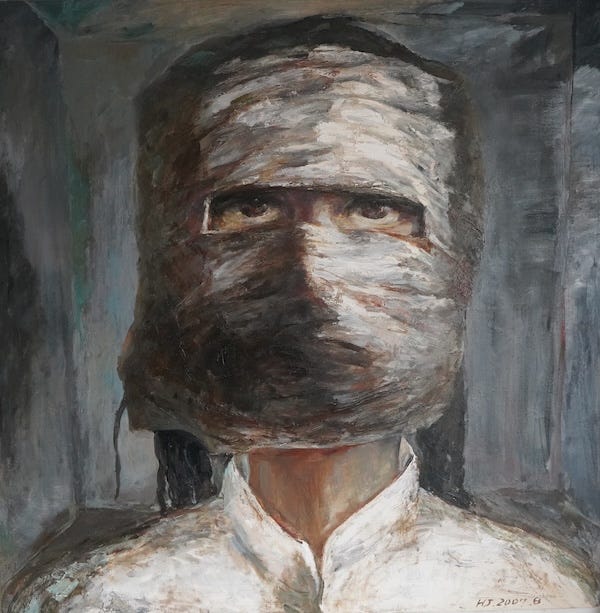
1968年4月29日,36岁的政治异见者林昭被判死刑,当日于上海提篮桥监狱遭枪决。林昭曾因共产主义理想追随中国共产党,在反右运动中看清当权者在崇高理念包裹下对人权的践踏,“断然不能容许自己堕落到甘为暴政奴才的地步”(《致人民日报编辑部信》),转而成为当局的坚定批判者。即使身陷囹圄、饱受折磨,她仍坚持写下约五十万字的文章,在没有纸笔的情况下以鲜血当笔墨,讨伐专制统治,阐述对民主自由、政治抗争的思考。
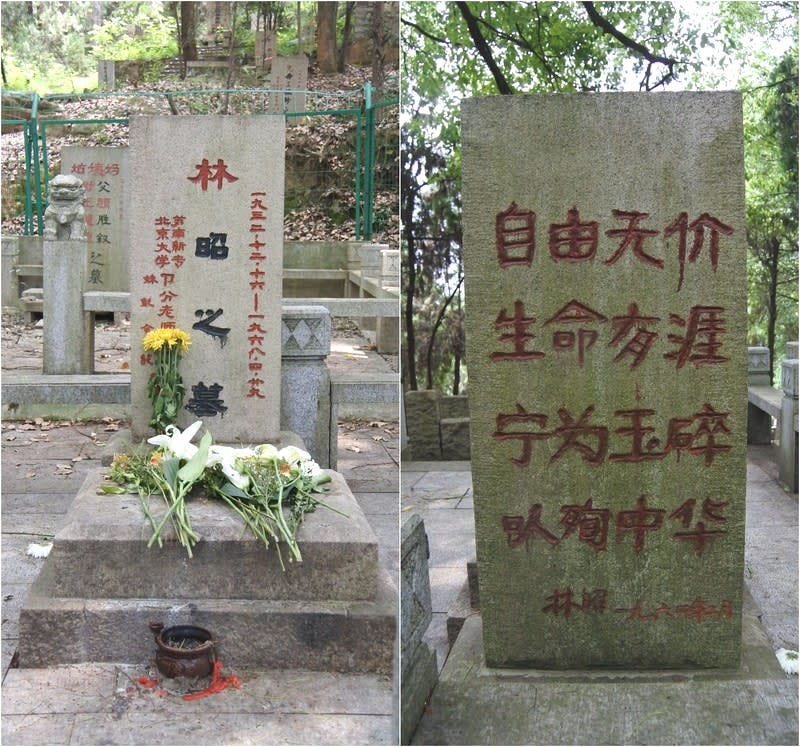
林昭因此成为毛时代最重要的抗争者之一。面对极权,她毫不妥协,她对当权者的尖锐批判,到如今仍在发出铿锵有力的回响。57年过去,林昭的档案从短暂公开到再度封存,从允许纪念到近十年来的墓地维稳,如今的中国容不下一场低调的悼念、一尊安静的雕像、一段偏离官方叙述的文字。中国民间档案馆希望这一线上空间能为保存与传播这段历史尽一份力量。
档案馆目前有十余个关于林昭的内容条目(请在档案馆“全部馆藏”页面的搜索栏中搜索“林昭”或“Lin Zhao”),包括林昭本人的文字、关于林昭的介绍书籍和纪录片,以及他人对林昭的纪念文章等。这其中有林昭最著名的狱中文字《致人民日报编辑部信》(又称“十四万言书”),以及由林昭生前好友编辑整理的《林昭文集》,其中收录了近百篇林昭中学时期以来写作的散文、诗歌、评论、新闻报导,及其部分狱中文稿和书信。通过这些非官方记录,我们可以看到在那个恐惧压过一切的疯狂年代里,林昭如何坚守底线和常识,用生命为历史作证。通过这些不同角度的书写,我们也才能透过抽象的高大反抗者形象,看到林昭作为一个女性抗争者虽粗粝但真实的个体经验。
阅读林昭会让今天的我们产生强烈的连接感:同样处在一个集体噤声的时代,“把自由释成空气和食粮”(《海鸥》)的人们被划为政治上的“异民”(《父亲的血》)而受尽迫害。关于抗争目标,她主张反抗暴政的结果不应是建立新的奴役,并且“只要生活中还有人被奴役着,则除了被奴役者不得自由,那奴役他人者同样地不得自由!”(《致人民日报编辑部信》)关于抗争策略,她指出,组织不过是形式,核心在于人,就像串珠子,有了珠子,“什么线都能串”(《个人思想历程的回顾与检查》)。这种政治智慧和视野对今天的社会运动也仍有重要意义。
1980年林昭获平反后,其亲友在北京为她办了一场追悼会,会上有一副挽联,上联是:“?”,下联是:“!”。相隔40多年,这幅无字挽联似乎与2022年年末以来街头和校园里的那一张张白纸遥相呼应。这种历史的接续性力量恰恰是官方不遗余力垄断历史的原因。胡杰在纪录片《寻找林昭的灵魂》的最后问道:“历史会进入我们的记忆吗?历史将如何进入我们的记忆?”林昭的答案是:“火本来只应该属于人类,怎能够把它永藏在天庭? 哪怕是没有我偷下火种,人们自己也找得到光明。”(《普罗米修斯受难的一日》)
本期档案推荐:
《星火》(胡杰导演的纪录片)
《星火》(大饥荒时期出版的地下刊物)
【本文为中国民间档案馆首发,转载时请务必在正文之前注明“本文首发于中国民间档案馆”,并加上原文在中国民间档案馆网站或者中国民间档案馆Substack的链接。】
Editors’ Note: Remembering Lin Zhao
On April 29, 1968, Lin Zhao, the 36-year-old political dissident, was sentenced to death and executed on the same day. Inspired by communist ideals, Lin Zhao was a passionate follower of the Chinese Communist Party until the Anti-Rightist Campaign, when she witnessed and experienced the cruelty under the guise of lofty ideals. She “could not allow herself to be degraded as a lackey of a tyrannical government” (“A Letter to the Editorial Board of People’s Daily”) and turned into a staunch critic of the authorities. Though subject to endless torture behind bars, she continued to write, sometimes in her own blood when denied paper and pen, criticizing the Communist Party’s tyrannical rule and expounding her thoughts on democracy, freedom, and political resistance.
During the 57 years after her death, Lin Zhao’s personal files were briefly made public and then sealed again. Over the years, Lin Zhao has become one of the most significant resistance figures in the Mao era, and her actions resonate even today, especially her uncompromising positions, and her critique of the Communist Party’s unchecked powers. Remembering Lin Zhao in public was allowed until the authorities prohibited people from visiting her grave in the mid-2010s. Today in China, there’s no room for even low-profile memorials for Lin Zhao. We at the China Unofficial Archives hope to do our part to preserve this history and let more people know and remember Lin Zhao.
The China Unofficial Archives currently holds around a dozen entries about Lin Zhao (accessible by typing “Lin Zhao” in the search box in the “Explore the Collection” page), including her own writings, as well as books and documentaries about her (this collection is far from complete, and we will continue to include more relevant contents). Among these are Lin Zhao’s most famous writing from prison “A Letter to the Editorial Board of People’s Daily,” (also called “the 140,000-character letter”) and Lin Zhao Anthology, a collection compiled and edited by Lin Zhao’s friends, containing nearly one hundred pieces of writing, including essays, poems, commentaries, and news reports since her middle school years, as well as all her manuscripts and letters from prison, which were later returned to her family.
These records show how Lin Zhao stood firm on her values, and testified for history with her life in a tumultuous era when fear paralyzed the whole society. Through the different perspectives of the writings, we can also look beyond the abstract, monolithic heroic image of dissidents, and understand Lin Zhao’s real, complicated experience as a woman and a unique individual.
Reading Lin Zhao creates a strong sense of connection for us today: we live in an era of voicelessness, and people who “treat freedom as air and food” (“The Seagull”) were labeled political “aliens” (“Father’s Blood”) and subject to cruel persecution. About the goal of resistance, she argued that resistance should not lead to another tyranny, and “as long as there are still people enslaved, no one is really free, not even those who enslave others!” (“Letter to the Editorial Board of People’s Daily”) On the strategies of resistance, she pointed out that organization is only a form, and the core lies in people: it’s like stringing, so long as the beads are there, “one can use any thread to string” (“Thought Report and Self-Criticism”). Such political wisdom and vision remain relevant to today’s social movements.
After Lin Zhao was rehabilitated in 1980, her family and friends held a memorial service for her in Beijing, at which one of the couplets read as: “?” and “!”. More than 40 years apart, this wordless couplet seems to echo the “White Paper Protests” at the end of 2022. History’s power of connection is precisely why authorities spare no effort to monopolize it.
At the end of his documentary In Search of Lin Zhao’s Soul, Hu Jie asks, “Will history enter our memory? How will history enter our memory?” Lin Zhao answered in her poem The Day Prometheus Suffered: “Fire belongs to human beings, how can it be hidden forever in Heaven? Even without me stealing the fire, people will always find the light.”
Recommended archives (the following hyperlinks include introductions to the works in English):
Lin Zhao: A Letter to the Editorial Board of People’s Daily
In Search of Lin Zhao’s Soul (Independent director Hu Jie’s classic documentary on Lin Zhao)
Blood Letters: The Untold Story of Lin Zhao, A Martyr in Mao’s China (English version available)
Holy Virgin on the Altar: A Biography of Lin Zhao
Remembering Lin Zhao (Independent director Lao Hu Miao’s search for Lin Zhao’s past)
The Soul of Peking University–From Lin Zhao to the 1989 Democracy Movement
Spark (with English subtitles) (Independent director Hu Jie’s classic documentary on an underground magazine and resistance in Maoist China)
Spark, Issue 1 (An underground magazine published during the Great Famine)
[This article first appears on China Unofficial Archives. When reposting, please ensure that the following is included at the beginning of the reposted text: “This article was first published by the China Unofficial Archives,” accompanied by a link to the original article on the China Unofficial Archives website or Substack.]
《寻找林昭的灵魂》在北美地区可以在CathayPlay.com上看到正版。google “CathayPlay 胡杰”就可以找到链接