

文革“拨乱反正”中,被回避的正义
Justice Denied: “Rehabilitation” After the Cultural Revolution

作者:陈往之
By Chen Wangzhi
The English translation follows below.
在中国共产党的历史叙事中,文化大革命结束于1976年10月6日——华国锋“粉碎”了四人帮,党的领导层开始把精力投入到“拨乱反正”之中。但今天回看,针对文革的“拨乱反正”,实际上是一项彻底烂尾的政治工程——不管是中共对文革原因的反思,还是对毛泽东错误的彻底批判,更别说对文革受害者的赔偿了。
今年时值文革爆发60周年,结束50周年。关于文革的讨论,在中国的防火墙外一片热闹,但在中国国内,官方媒体上一片沉默,社交媒体上也几乎无人敢谈起——相关的独立声音很快会被删除,文革依然是中国政治生活中的敏感话题。这也从侧面证明,文革后的所谓“拨乱反正”,更多只是一个官方术语,并未在现实政治中得到落实。
1
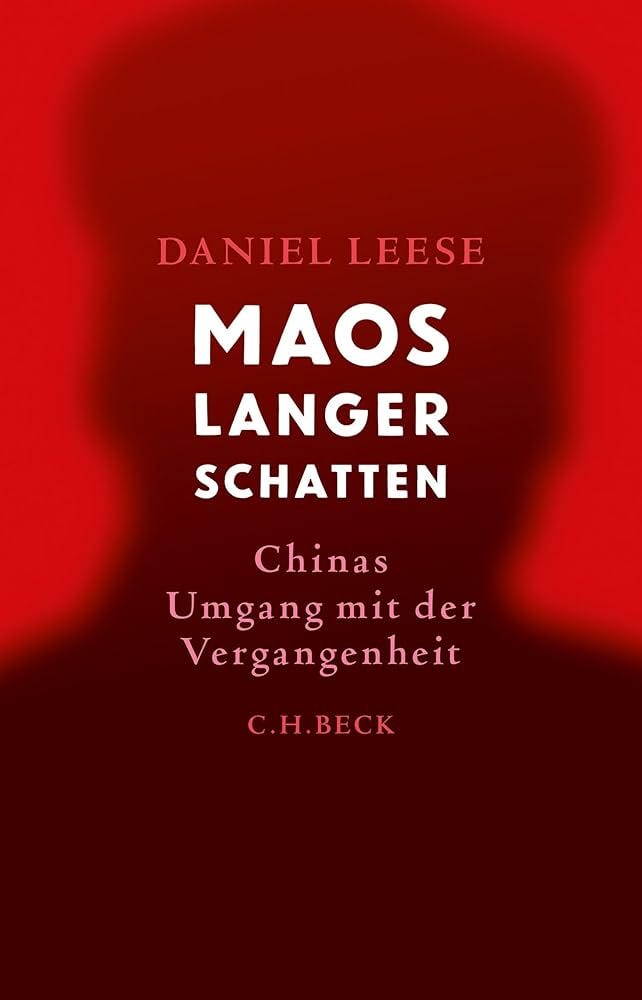
德国汉学家Daniel Leese在其德语著作《毛泽东的漫长阴影:中国对待过去的方式》Maos langer Schatten. Chinas Umgang mit der Vergangenheit 一书中,把毛泽东去世(1976年)后的十年,描述为在司法清算、平反赔偿和新一轮镇压中走钢丝。他指出,一个独裁政权正视自己的罪行是不寻常的情况,其目的可能是为了创造一个更公正的社会,但核心目标仍然是继续掌权。Leese说,1976年之后,中国共产党建立了一种文化大革命不会卷土重来的叙事,以此来确立自己的合法性,但今天,关于文革的这种(反思)叙事已很少看到,人们只关心当下的政绩和党辉煌的过去。
中国学者宋国庆曾借用“转型正义”的框架来理解文革后的拨乱反正。他将转型正义分为:追溯正义(retroactive justice)、修复正义(restorative justice)、惩罚正义(retributive justice)和历史正义(historical justice)等。追溯正义指追究前政权的非法暴行和滥权行为;修复正义主要是指对受害者实行经济、心理等诸多方面的补偿;惩罚正义指对施害者的刑事惩罚及其他惩处;历史正义是指对历史真相的挖掘和揭示。
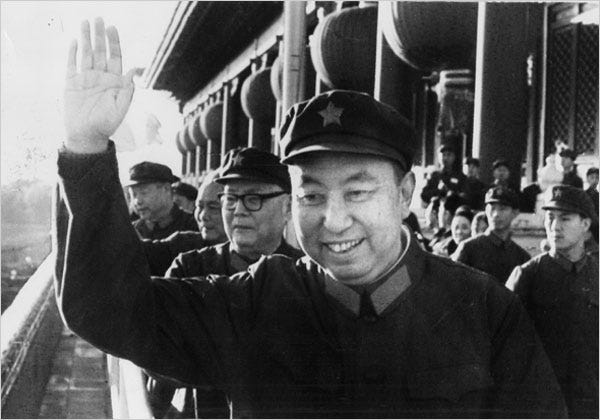
从中国的历史事实看,中共开始“拨乱反正”后,首先处理任的任务是平反冤假错案。1977年12月,胡耀邦出任中共中央组织部部长,开始处理全国的冤假错案。根据宋任穷回忆,到了1982年,全国复查平反被立案审查的干部230万人,集团性的冤假错案2万件。但许多平反已经来得太迟,当事人已经被迫害致死。
文革造成的实际死亡人数至今未有官方记录。斯坦福大学社会学教授魏昂德(Andrew G. Walder)著有《1966-1971年中国的叛乱与镇压》一书。他系统性收集了2213个县市的地方志,
估算出1966年-1971年之间中国的非正常死亡人数有110万-160万,2200万-2300万人受到迫害。
根据中国最高法院的官方数据,文革十年,司法机关审判了40万件反革命案件,105万件普通刑事案件。最高法院承认,前者基本都是错判,后者有10%为错判。1978年,中国各级人民法院开始纠正冤假错案,与此同时,新的冤假错案也同步被制造。1977年发布的“六号文件”,提出“对攻击毛主席、华主席和以华主席为首的党中央的现行反革命分子,要坚决镇压”。在四人帮已经被逮捕的1977年-1978年,中国又判处了3.3万件反革命案件。从这个意义上讲,文革此时并没有结束。
比如江西女工李九莲,她因反革命罪在1975年被判刑15年,1977年,因“恶毒攻击英明领袖华主席”被判死刑,1977年底被枪决后抛尸荒野。1978年,为李九莲鸣冤的女教师钟海源也被处死。直到1980年底华国锋下台,这些案件才得以平反。
2
随着文革冤案的平反,当时,更多政治运动的受害者写信上访、要求平反。 土改、整党、镇压反革命(毛泽东决定按千分之一的比例杀人)、三反五反、反右派、反右倾、四清运动……建国后的政治受害者不计其数。
1979年,中共中央批准中组部《关于文化大革命前一些案件处理意见》。《意见》认为文革前处理的案件绝大多数是正确的和基本正确的,与文革大量冤假错案“有原则的区别”,如果不加分析通通重新翻腾一遍,“势必造成是非不清,引起不必要的思想混乱,影响安定团结,也会脱离党内外广大干部和群众”。
中共一开始就对文革前案件的平反做出了限制。所以,尽管1957年反右运动中五十多万右派,在1978年几乎全部“摘帽”,也仍然留下了97人不予改正(包括章伯钧、罗隆基、储安平、彭文应、陈仁炳五个著名右派)。对于右派所用的词语是“改正”而非“平反”。1978年12月,邓小平表示:“1957年反右派斗争是正确的,但后来扩大化了。”法学家郭道晖颇为讽刺地评价:扩大化5759.1354倍,错划比率占99.99%。所谓“必要性”只占万分之1.736。
对于文革冤假错案的受害者,并没有系统性的国家赔偿方案。宋国庆引用中共中央党史研究室编著的《拨乱反正:中央卷》数据,显示,随着受害者的广泛申诉,中共政府后来为50多万平反干部补发了10.1亿元工资。对受迫害的“民族资产阶级(即被认定的中、小资本家)”,在经济上的退赔和补充也比较彻底,发放了被查抄、冻结的存款和工资。中共统战部的数据显示,截至1984年,退赔约300万两黄金、700万两白银、15万件金银制品和800万枚银元,按上缴银行时的牌价作价退还;退还被查抄尚存的350万件文物、字画、珠宝、玉器、工艺品和264万册私人图书。
对“民族资产阶级”的积极赔偿,也让党内外许多人感到不满。党的统战部为此特别发了文章解释:国民经济恢复发展需要私人资本主义经济的积极性,需要他们一切有用的技术专长和企业管理经验。
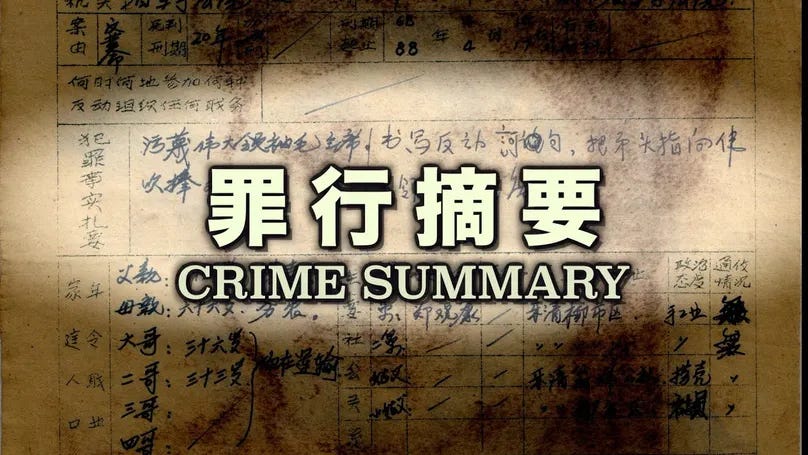
相对地,农民受害者,还有很多的普通受害者,几乎没有获得任何赔偿。导演徐星在纪录片《罪行摘要》中走访了14位被定为“现行反革命”的农民。当年他们被放回家后,找过当地政府,政府给出的回应是:现在国家被“四人帮”破坏得厉害,全国都这样。国家有困难,你们要体谅。等国家好了,会慢慢处理。但2010年,浙江省再次拒绝了他们的赔偿申请。
除了对受害者的平反和赔偿之外,当时所谓拨乱反正的内容还包括对施害者的惩罚。
宋国庆在文章中指出,中共用人事清查和司法审判的方式对文革施害者进行惩罚。人事清查具体指的是对“三种人”的清查,即“追随林彪、江青反革命集团造反起家的人、帮派思想严重的人、打砸抢份子”。邓小平认为这三种人不能留在党内继续担任公职。到1987年整党结束,全国(不包括广西)共清理出“三种人”5449名,犯有严重错误的43074名。广西是文革受害最严重的省份之一,也是文革期间非正常死亡人数最严重的地方,广西清理出严重违法乱纪分子27919名,犯有严重违法乱纪错误的13154名。当中25000多人被开除或清理出党,其余被纪律处分、判刑或免予处罚。
当时的司法审判,主要是两案(林彪、江青反革命集团案)的审判。两案审理的过程中,全国立案审查了48万多人,其中2万多人被判刑。经“两案”审理定为犯严重错误的有1.45万人。
总之,根据官方记录,1983年全国整党前因文革问题立案审查人员达48万人,其中受到各种处理的人员21万人(2万人被判刑)。1983至1987年整党期间,全国又处理近9万人。两项相加,总计有30万人因为文革问题受到处理。
3
拨乱反正最重要的是“历史正义”的问题,即文革的历史真相是什么,谁应该为文革责任(如何评价毛泽东),文革会不会卷土重来?
在这些问题上,中共在当时就表现出了对历史和公正的回避。1980年5月,在为刘少奇平反的追悼会上,邓小平发表的悼词,特别提到“刘少奇同志在工作中也有某些缺点和错误”,这被党内不少人认为是对毛泽东错误的护短。
在准备第二份历史决议的过程中,邓小平也提出,对历史问题,要粗一点,概括一点,不要搞得太细。而之所以不愿意彻底否定毛泽东,也源自对苏联的经验的学习。1978年,邓小平说:“党中央、中国人民永远不愿意干赫鲁晓夫那样的事。”他指的是赫鲁晓夫否定斯大林的事情。
同样,在审理“两案”过程中,为了撇清毛泽东和周恩来的责任,彭真定下的方向是只审罪行,不审路线。因此,在写起诉意见书时,有13件无法和毛、周分开的事情(包括刘少奇的定案等),都没有写进起诉意见书里。
1981年通过的《第二个历史决议》,正式将文革定义为一场内乱,并承认这场历史不义的主要责任主要在中共的领导人毛泽东。但同时,这份决议更强调林彪、江青反革命集团在文革中造成的破坏,以及“复杂的社会历史原因”,也明确表示,毛泽东的历史地位和毛泽东思想作为意识形态旗帜不变。
至此,关于文化大革命的“拨乱反正”就告一段落。从前文可以看出,在文化大革命迫害了多少人,造成了多少人冤死,有多少人受到审判和惩罚等涉及历史真相的问题上,中共仍然没有开放足够完整的档案进行研究,也没有足够权威的官方报告。在历史责任的追究上,强调的是所谓向前看,对塑造集体记忆一事,如今更是避之不及。
直到2013年,习近平提出“两个不能否定”,强调不能用“后三十年否定前三十年”。2021年推出的《第三个历史决议》,对文化大革命只是轻轻带过。尽管官方文件上目前仍然是否定文革的态度,但近年来,事实上对文革的研究、报道、讨论已经成为重要禁区。与此同时,年轻世代对文化大革命的浪漫想象和向往,也成为新的潮流——这一切,其实都是互相关联的事情。
本期推荐档案:
在线资料库:Maoist Legacy
【本文为中国民间档案馆首发,转载时请务必在正文之前注明“本文首发于中国民间档案馆”,并加上原文在中国民间档案馆网站或者中国民间档案馆Substack的链接。】
【作者观点不代表中国民间档案馆立场。】
Justice Denied: “Rehabilitation” After the Cultural Revolution
By Chen Wangzhi
In the official historical narrative of the Chinese Communist Party, the Cultural Revolution ended on October 6, 1976, when Hua Guofeng “smashed” the Gang of Four and the Party leadership began shifting its energy toward restoring order. Looking back today, however, this campaign to rectify the legacy of the Cultural Revolution was an unfinished political project. This shortfall is evident whether you look at the Party’s superficial reflection on the root causes of the era, its refusal to thoroughly critique Mao Zedong’s errors, or, least of all, its failure to compensate the victims.
This year marks both the 60th anniversary of the outbreak of the Cultural Revolution and the 50th anniversary of its conclusion. While discussions on the topic are bustling outside China’s Great Firewall, they are met with total silence within the country. Official media ignores the anniversary entirely, and almost no one dares to mention it on social media. Because any independent voices are swiftly censored, the Cultural Revolution remains highly taboo in Chinese political life. This reality suggests that the post-Cultural Revolution effort to restore order was largely just official rhetoric that was never truly realized in practical politics.
1
In his book Mao’s Long Shadow: China’s Way of Dealing with the Past (Maos langer Schatten. Chinas Umgang mit der Vergangenheit), German sinologist Daniel Leese describes the decade following Mao Zedong’s death in 1976 as a tightrope walk between judicial reckonings, rehabilitation with compensation, and new waves of state suppression. He points out that it is highly unusual for an authoritarian regime to confront its own crimes; while such a move may ostensibly aim to create a fairer society, its core objective is always to maintain its grip on power. Leese notes that after 1976, the Chinese Communist Party established a narrative promising that the Cultural Revolution would never happen again, using this promise to cement its own legitimacy. Today, however, this reflective narrative has largely vanished, replaced by an exclusive focus on current political achievements and the Party’s glorious past.
Chinese scholar Song Guoqing once used the framework of transitional justice to evaluate these post-Cultural Revolution rectifications. He breaks transitional justice down into four categories: retroactive justice, restorative justice, retributive justice, and historical justice. Retroactive justice entails investigating the unlawful atrocities and abuses of power committed by a previous regime; restorative justice primarily involves providing economic, psychological, and other forms of compensation to victims; retributive justice focuses on criminal prosecution and penalties for perpetrators; and historical justice centers on unearthing and exposing historical truths.
Looking at the historical facts, the Chinese Communist Party’s top priority when it began restoring order was rehabilitating those affected by unjust, false, and wrongful convictions. In December 1977, Hu Yaobang took over as head of the Organization Department of the Chinese Communist Party Central Committee and began addressing these systemic injustices across the country. According to the recollections of official Song Renqiong, by 1982 the government had re-examined and rehabilitated 2.3 million cadres who had been placed under formal investigation, alongside 20,000 collective wrongful cases. Unfortunately, many of these rehabilitations came far too late, as the victims had already been persecuted to death.
To this day, there is no official record of the Cultural Revolution’s death toll. However, Andrew G. Walder, a professor of sociology at Stanford University and author of Rebellion and Repression in China, 1966–1971, systematically analyzed local chronicles from 2,213 counties and cities. He estimates that the number of unnatural deaths in China between 1966 and 1971 ranges from 1.1 million to 1.6 million, with an additional 22 to 23 million people suffering political persecution.
According to official data from China’s Supreme People’s Court, judicial organs tried 400,000 counter-revolutionary cases and 1.05 million ordinary criminal cases during the ten turbulent years of the Cultural Revolution. The Supreme People’s Court later admitted that virtually all of the counter-revolutionary convictions were wrongful, as were 10% of the ordinary criminal cases. In 1978, Chinese courts at all levels began overturning these wrongful verdicts.
Simultaneously, however, new wrongful convictions were still being manufactured. “Document No. 6,” issued in 1977, explicitly decreed that “active counter-revolutionaries who attack Chairman Mao, Chairman Hua, and the Party Central Committee headed by Chairman Hua must be resolutely suppressed.” Consequently, between 1977 and 1978—well after the Gang of Four had been arrested—Chinese courts handed down sentences in another 33,000 counter-revolutionary cases. In this sense, the Cultural Revolution had not truly ended.
Consider the case of Li Jiulian, a female worker from Jiangxi. She was originally sentenced to 15 years in prison for counter-revolutionary crimes in 1975. In 1977, she was sentenced to death for “viciously attacking our wise leader Chairman Hua,” executed by firing squad, and her body was abandoned in the wilderness. In 1978, Zhong Haiyuan, a schoolteacher who spoke out against the injustice done to Li, was also executed. These cases were not rehabilitated until late 1980, when Hua Guofeng fell from power.
2
As the Cultural Revolution verdicts began to be overturned, a flood of victims from earlier political movements also began writing letters and visiting government offices to petition for their own rehabilitations. Between the Land Reform, Party Rectification, the Suppression of Counter-Revolutionaries (where Mao decided to execute citizens at a quota of one per thousand), the Three-Anti and Five-Anti Campaigns, the Anti-Rightist Movement, the Anti-Right-Deviationist Campaign, and the Four Cleansings Movement, the number of political victims since the founding of the People’s Republic was incalculable.
In 1979, the Chinese Communist Party Central Committee approved a document from the Central Organization Department titled “Opinions on the Handling of Certain Cases Prior to the Cultural Revolution.” The document asserted that the vast majority of pre-Cultural Revolution cases were decided correctly or were at least fundamentally sound. It argued that these cases differed “in principle” from the widespread injustices of the Cultural Revolution. The leadership warned that blindly reopening and re-examining every past case without distinction would “inevitably blur the line between right and wrong, cause unnecessary ideological confusion, undermine stability and unity, and alienate cadres and the masses both inside and outside the Party.”
From the very beginning, the Party drew a hard line limiting the rehabilitation of pre-Cultural Revolution cases. For instance, although nearly all of the 500,000-plus individuals labeled as “rightists” during the 1957 Anti-Rightist Movement had their labels removed in 1978, the government explicitly refused to correct the verdicts of 97 people. This group included five prominent intellectuals: Zhang Bojun, Luo Longji, Chu Anping, Peng Wenying, and Chen Renbing. Furthermore, the state deliberately used the term “correction” rather than “rehabilitation” for former rightists. In December 1978, Deng Xiaoping maintained that “the anti-rightist struggle in 1957 was correct, but it was later excessively magnified.” Legal scholar Guo Daohui noted the bitter irony of this stance, pointing out that the campaign was magnified by 5,759.1354 times, meaning the error rate was 99.99%, while the so-called “historical necessity” accounted for a mere 1.736 out of 10,000 cases.
The victims of the Cultural Revolution never received a systematic, state-level compensation program. However, in response to widespread petitions, the Chinese government eventually paid out 1.01 billion yuan in back wages to more than 500,000 rehabilitated cadres. Financial restitution was also relatively thorough for the persecuted “national bourgeoisie” (designated small and medium capitalists), who recouped their confiscated or frozen bank deposits and wages. Official data reveals that by 1984, the state had returned approximately 3 million taels of gold, 7 million taels of silver, 150,000 gold and silver items, and 8 million silver dollars—all valued at the state exchange rates from when they were originally seized. The government also returned 3.5 million surviving items of confiscated property—including cultural relics, calligraphy, paintings, jewelry, jade, and handicrafts—along with 2.64 million private books.
This swift and generous compensation for the “national bourgeoisie” sparked resentment among many people both inside and outside the Party. In response, the Party’s United Front Work Department published a dedicated explanatory article, arguing that restoring and developing the national economy required the drive, technical expertise, and managerial experience of private capitalists.
By contrast, rural peasants and ordinary citizens received almost no compensation whatsoever. In his documentary Summary of Crimes, director Xu Xing interviewed 14 peasants who had been branded as “active counter-revolutionaries.” When they were finally allowed to return home, they petitioned their local governments for restitution. The standard official response they received was: “The country has been severely ruined by the Gang of Four, and the whole nation is suffering. The nation is facing hardships, and you should be understanding of this situation. Once things improve, we will deal with it slowly.” Decades later, in 2010, the Zhejiang provincial government rejected their compensation applications yet again.
Beyond rehabilitation and compensation, the campaign to restore order also encompassed punishing the perpetrators of the Cultural Revolution.
In his article, Song Guoqing points out that the Party handled these perpetrators through political purging and judicial trials. The purging process focused heavily on three types of people: those who rose to power by joining the rebellion led by the Lin Biao and Jiang Qing counter-revolutionary cliques, those with deep-seated factional mindsets, and those who engaged in violent smash-and-grab operations. Deng Xiaoping insisted that these individuals could no longer remain in the Party or hold public office. By the time the Party Rectification concluded in 1987, a total of 5,449 individuals belonging to those three categories and 43,074 others who committed serious errors had been purged nationwide (excluding Guangxi). Guangxi, which suffered some of the worst atrocities and highest rates of unnatural deaths during the Cultural Revolution, separately removed 27,919 “severe violators of law and discipline” and 13,154 individuals who “committed grave errors.” Of these, more than 25,000 were expelled from the Party, while the remainder faced disciplinary actions, prison sentences, or exemptions from punishment.
On the judicial front, efforts were concentrated on the high-profile trials of the “Two Cases” (the Lin Biao and Jiang Qing counter-revolutionary cliques). During these proceedings, over 480,000 people were investigated nationwide, resulting in more than 20,000 prison sentences. An additional 14,500 individuals were formally ruled to have committed serious errors.
In total, official records show that prior to the 1983 nationwide Party Rectification, 480,000 people were investigated for Cultural Revolution-related offenses, with 210,000 receiving some form of punishment (including the 20,000 sentenced to prison). During the subsequent rectification period from 1983 to 1987, another 90,000 individuals were penalized. Combined, roughly 300,000 people were officially held accountable for their actions during the Cultural Revolution.
3
The most critical dimension of restoring order lies in the realm of historical justice—confronting the historical truth of the Cultural Revolution, assigning accountability (specifically regarding how to evaluate Mao Zedong), and preventing its recurrence.
Yet, even in the early post-Mao years, the Chinese Communist Party consistently chose to evade historical transparency and true justice. In May 1980, during the memorial service rehabilitating Liu Shaoqi, Deng Xiaoping delivered a eulogy that pointedly noted, “Comrade Liu Shaoqi also had certain shortcomings and mistakes in his work.” Many within the Party viewed this line as a deliberate attempt to shield Mao Zedong from sole blame.
While drafting the Second Historical Resolution, Deng Xiaoping explicitly instructed that historical issues should be painted with a broad brush and kept generalized rather than overly detailed. This reluctance to completely condemn Mao was deeply informed by the Soviet experience. As Deng noted in 1978, “The Party Central Committee and the Chinese people will never do what Khrushchev did,” referring to Khrushchev’s total denunciation of Stalin.
Similarly, during the trials of the “Two Cases,” the politician Peng Zhen set a strict directive to try only specific criminal acts rather than the broader political line, aiming to insulate Mao Zedong and Zhou Enlai from culpability. Consequently, when the indictment was drafted, 13 key historical events that could not be decoupled from Mao and Zhou—including the engineering of the case against Liu Shaoqi—were intentionally omitted.
When the Second Historical Resolution was passed in 1981, it formally categorized the Cultural Revolution as a period of domestic turmoil and acknowledged that the primary responsibility for this historical catastrophe lay with Mao Zedong. Crucially, however, the resolution deflected blame by focusing heavily on the havoc wrought by the Lin Biao and Jiang Qing counter-revolutionary cliques, pointing also to “complex social and historical factors.” It firmly re-established that Mao’s historical status remained monumental and that Mao Zedong Thought would endure as the Party’s foundational ideological banner.
With that resolution, the official era of rectifying the Cultural Revolution drew to a close. As the evidence shows, when it comes to the core historical truths—the exact number of people persecuted, the scale of wrongful deaths, and the identities of those tried and punished—the Chinese Communist Party has never opened its archives fully to researchers, nor has it ever published an authoritative official report. When assigning historical blame, the Party prefers to emphasize looking forward instead of backward, and today, it actively avoids shaping an independent collective memory.
This approach was reinforced in 2013 when Xi Jinping introduced the doctrine of the “Two Cannot Negates,” asserting that the 30-year history of the People’s Republic after the reform era cannot be used to negate the 30-year history that preceded it, and vice versa. By the time the Third Historical Resolution was unveiled in 2021, the Cultural Revolution was merely glossed over in passing. Although official state documents technically still maintain a negative stance on the Cultural Revolution, independent research, reporting, and public discussion on the era have effectively become strictly politically forbidden. Meanwhile, a romanticized nostalgia for the Cultural Revolution is trending among the younger generation—phenomena that are, in reality, deeply interconnected.
Recommended archives:
Online archive: Maoist Legacy
Memoirs of Song Renqiong (Sequel)
[This article first appeared in China Unofficial Archives. When reposting, please ensure that the following is included at the beginning of the reposted text: “This article was first published by the China Unofficial Archives,” accompanied by a link to the original article on the China Unofficial Archives website or Substack.]
[The views expressed by the author of this article do not necessarily reflect the position of the China Unofficial Archives.]