

崔卫平:守望漫漫长夜——我与傅国涌的交往点滴
Cui Weiping: Keeping Vigil Through the Long Night—My Interactions with Fu Guoyong

作者:崔卫平
By Cui Weiping
The English translation follows below.
编者按:2025年7月7日凌晨,历史学者、作家傅国涌因病突然辞世。早年间,作家崔卫平曾邀请他为她翻译的米奇尼克文集《通往公民社会》写序,两人也曾就东欧知识分子哈维尔、帕托切克和本达等人的思想深入讨论,这也促成了崔卫平另一部译著《平行城邦》的产生。作为自由主义者以及公共知识分子,他们心念所系的,是现实体制之下,人们如何以公民的态度生活,捍卫民间社会的独立性,并最终推进自由的实现。在供给民间档案馆的这篇文章里,崔卫平回顾了他们之间的友谊,那些思想碰撞的时刻,偶尔的争执,还有她满怀温情的怀念与敬意。
作者:崔卫平
国涌去世的消息传来,我的第一感觉是不可能,怎么会是他?他太年轻了!1967年1月10日出生的他,在这个世界上才度过短短58个春秋。
经丁东先生的介绍,我与国涌认识有二十余年。应该是在2003年左右的某个夏天,国涌和妻子曹丽蓉在我家住过几天。国涌从未与我谈起他的过往经历,是丽蓉与我谈起国涌自1989年之后,几度失去自由,至少三次,前后加起来有五、六年,这让我产生钦佩之情。一个人第一次坐牢时,可能对铁窗生活并不知情,就像小孩子不懂事对着燃烧的火苗伸出手来;而国涌是在尝过两年铁窗滋味之后,一而再、再而三地选择赴汤蹈火。他这么做,一定得有非同寻常的意志和信念。
丽蓉对丈夫无怨无悔的深情也让我十分感动。她毕业于北师大特殊教育专业,在世俗眼光中,她的学历比国涌要高。听朋友说,国涌夫妇是1989年特殊的时期,在天安门广场举行的婚礼。多年来,丽蓉因丈夫的境遇饱受痛苦,流了太多的泪。她身材瘦小,却蕴藏着巨大的力量。记得那个夏天,媒体人安替带一帮人在后海举行皮划艇比赛,我与他们夫妇曾一同前往。
国涌声如洪钟,如人们说的“南人北相”。与人谈话时,他始终沉浸在问题之中,不接与思想或知识无关的话题,多少有点不食人间烟火的感觉。当丽蓉与我谈话时,他就从书架上拿出一本书埋头读起来,并且一会儿功夫他就能从书中发现问题,头脑飞快。他说话时经常面带微笑,那是一种与生俱来的感觉,体现着他精神上的富足和优裕。我见过许多“自学成才”的人,思路是独自在黑暗中摸索出来的,这很了不起,但因此说起话来带有一种独断论,与他人没有商量的余地。但是国涌没有,他笃定而不独断。他会听进去在场旁人所说的,然后做出自己的回应。
1
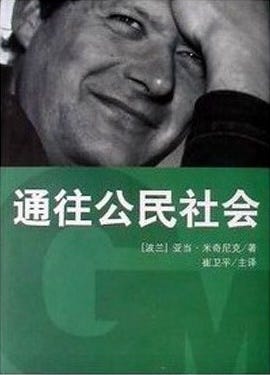
我感觉到了国涌的头脑和思路开放,决定请他为当年由我主译的米奇尼克文集《通往公民社会》写序言(米奇尼克,波兰历史学者,著名异见人士——编者注)。另一位序言作者是何家栋先生(中共体制内异见学者,“两头真”老人。2006年去世——编者注)。说实话,米奇尼克思想中的许多内容对于我们许多人来说是陌生的。当然也不是完全陌生——米奇尼克正是针对革命意识形态中的种种痼疾做出反省;但生活在中国的我们,出于思维惯性,并非人人都能捕捉得到。但国涌十分敏锐地抓住了米奇尼克思想的开拓性内容,他称阅读米奇尼克有一种“豁然开朗”的感觉,如同“面朝大海、春暖花开”,他也看重我的文章《谁是亚当·米奇尼克》中关于“不与皇帝一道进餐”的表达,他自己就此写道:
“对一个从来只知道‘打江山、坐江山’,只知道明君、清官的古老中国而言,这是不可思议的,在我们这块见证了无数次王朝循环的大地上,和皇帝一道进餐几乎是唯一的选择,在“皇帝的餐桌”之外过自己独立的生活,至今还是一个全新的题目。”
“一个全新的课题”,他说对了!在权力之外独立的个人与独立的社会,这个立场与当时蔚然成风的中国自由主义言说(强调个人权利)一道,成为进入2003年可称之为“公民运动”的思想起点。国涌把自己的这篇序言题为《权利,而非权力》,并署上“2004年8月13-15日杭州家中”(参见文末作者附注1)。
在他的眼中,这种个人与社会的“独立”并非过渡性的,不是一度落草之后还是要归于朝廷,“独立”意味着真正拥有自身根基和尊严。过独立生活的人们不根据权力的标准来衡量自身,不以夺取权力的成功与失败来判断自己的工作,甚至不拿推翻现有权力为直接或最终的目标,这形成了与此前革命意识形态的根本区别。他说——
“米奇尼克的起点是社会,而不是国家,他追求的是权利,而不是权力。他反对凌驾在整个社会之上、剥夺了所有社会自主空间的国家机器,目的并不是取而代之,自己去掌握那架机器,而是寻求把社会从这架无所不能、无所不为的机器下解放出来。”
在远离权力中心和广场的地方,立足于社会与个人的自主性,着眼于人们生活本身的权利和丰富多样性,保护人们免受专断任意的权力的干扰和侵犯,如此,一个全新的画面在人们面前展开,国涌将此描述成:“眼前仿佛出现了一片辽阔的天空、无际的大海”。就知识分子而言,其言说的对象也不再是朝向权力,而是面向独立的公众;不是小圈子里的窃窃私语或谋反,而是尽量公开化,将真相和真理交到公众手里。这个过程同时也是接受公众的检验和制约,与社会一道成长和进步,而不是高高在上地对他人的生活指手画脚。
难能可贵的是,国涌他以自己的行动,见证了这些他认为是富有意义的开拓性思想。或者说,没有人像他那样,与米奇尼克一拍即合,互为印证。显然国涌为2003年前后兴起的“重新建立社会的自主性”这个话题,贡献了自己的许多力量。他写下大量的时政文章,参与当时的公共讨论,总有自己独到的见解。尤其是,他对于民国历史人物的研究,远不是一般对于故旧历史的兴趣,而是有着强烈的他自身的动机和目的:寻找现代历史上的自由、独立的精神资源,为今天的人们提供借鉴和激励。比如对于民国报馆报人的研究,对于民国时期开拓性实业家的研究,他让人们看到了前人曾经怎样开拓自由,以及如何创造了自由的价值。
2
有一种看法,认为国涌早期的担当,比他后来的学术研究和公共发言更重要,我不这样认为,我认为同样重要,不分彼此。我相信国涌本人也是这个看法,不会觉得他后来的公开言说对他的人生来说,只是不得已而为之。国涌知道他在做什么,他最喜欢以“公民”自称,借此他突出了自己的尊严和合法性,他需要公开行动和公开写作。当然他没有把自己处于“安全地带”,而是始终选择站在有压力的天空(或天花板)之下。除了他的言说,他也是带头就地维权的知识分子,包括他们所居住的小区拆迁维权和维护信仰的传统形式。显然他不属于那种曼海姆(德国社会学家)所称的“漂浮的知识分子”,而是有着强烈的家国情怀和乡土情怀,特别是正义情怀。
国涌著书立说的范围很广,著作等身,但其中贯穿着一条红线,可以称之为“中国现代性转型”。这是自十九世纪中叶鸦片战争以来,困扰着一代又一代中国志士仁人的头号问题。在国涌关注的文化现代性中,现代人格的转换和生成是他的焦点所在。处理他手中的历史素材时,他擅长从人物性格入手,关注一个人的道德品味、做人的原则、这个人是如何处理传统和现代的关系,他的工作是否帮助推动了朝向现代文明的转换。对于传统中围绕着“皇权”及其所产生的一切,国涌有着鲜明坚定的批判,这是他的《金庸传》引起许多争议的原因,在他看来,金庸“未能成就知识分子的现代人格”(参见文末作者附注2)。
国涌曾经著文说是我去杭州开会(2004年春天),带去了胡杰的纪录片《寻找林昭的灵魂》,给了他如同《哈维尔文集》一样的震动。这之后,国涌本人也开启了他自己继续寻找林昭灵魂的路程。他读过尚未公开的林昭的“十四万言书”,仔细寻觅了林昭这位奇女子的思想轨迹;在不同的的年份,他先后写下了一批关于林昭的文章,持续向读者通报林昭的新研究和新发现的材料,并于2008年在香港出版了由他编辑的《林昭之死1932-1968四十年祭》,收入了从许良英先生到各个不同世代人们的研究纪念文章,包括当时三位“90后”的中学生,这不仅是对林昭研究的集大成展示,而且是一次良心勇气的聚集和召唤。
2005年,我的思想随笔集《正义之前》出版,其中有一半是我喜欢和译介的思想家和诗人——米沃什、布罗茨基、托马斯·曼、阿伦特、哈维尔、米奇尼克等,另一半则是2004年我在《中国新闻周刊》的一个专栏“重建社会小辑”,其中有指出在我们此前的意识形态中对于社会的一系列污名化:“社会闲杂人员”、“社会盲流”、“社会渣滓”、“社会上的不法分子”,提倡在重新认识社会矛盾的同时,培育社会理性,从而实现更多社会自治。国涌敏锐地把这两个看似不相干的部分结合起来,问我“可否把前者看作是你的精神源头,后者则是你用自己的言词表达自己的观点”,如此深入的理解令我大为感动。我这次才发现,这年国涌还写过一篇关于拙作《水木年华》的书评,这是我在非典不能出门时期写的一本童年和少年时期的回忆录,很少有人提到过。他应该很好奇一个人走过的道路,他细心地从我的书房发现,我个人阅读中哲学书籍的分量比文学更重要。
3
国涌是一位精力充沛的人,他的交游十分广泛,太多的人可以说“我的朋友傅国涌”。但他与人交流时,话题紧密,注意力高度集中,绝无闲适的、浪费时间的成分。在众多怀念文章中,我见到有写到国涌反对打麻将,认为那是无端消耗生命,我觉得这十分符合国涌的性格。我也举一例。何方先生(1922-2017)与我同住顺义后沙峪一个小区里,人称何先生为《炎黄春秋》三驾马车之一(另两位是李锐和杜导正),他曾担任张闻天的政治秘书,多年在外交部工作,后写了《党史笔记》、《从延安一路走过来的反思》两本重要著作,还有一些反思中国外交路线的重头文章。国涌一经与何方先生认识,他来北京时便经常拜访这位老人,我也在何方那里见过国涌。何老去世之后,国涌写了深情的怀念文章,其中不止一次提到何老夫妇带他出去“吃好吃的”。何方夫妇对我也极好,我住得那么近,几步就到,但是没有一次被喊去与他们同吃“好吃的”。他们之间应该有更紧要的话要谈,免得我这个不谙历史的人冲淡了话题。
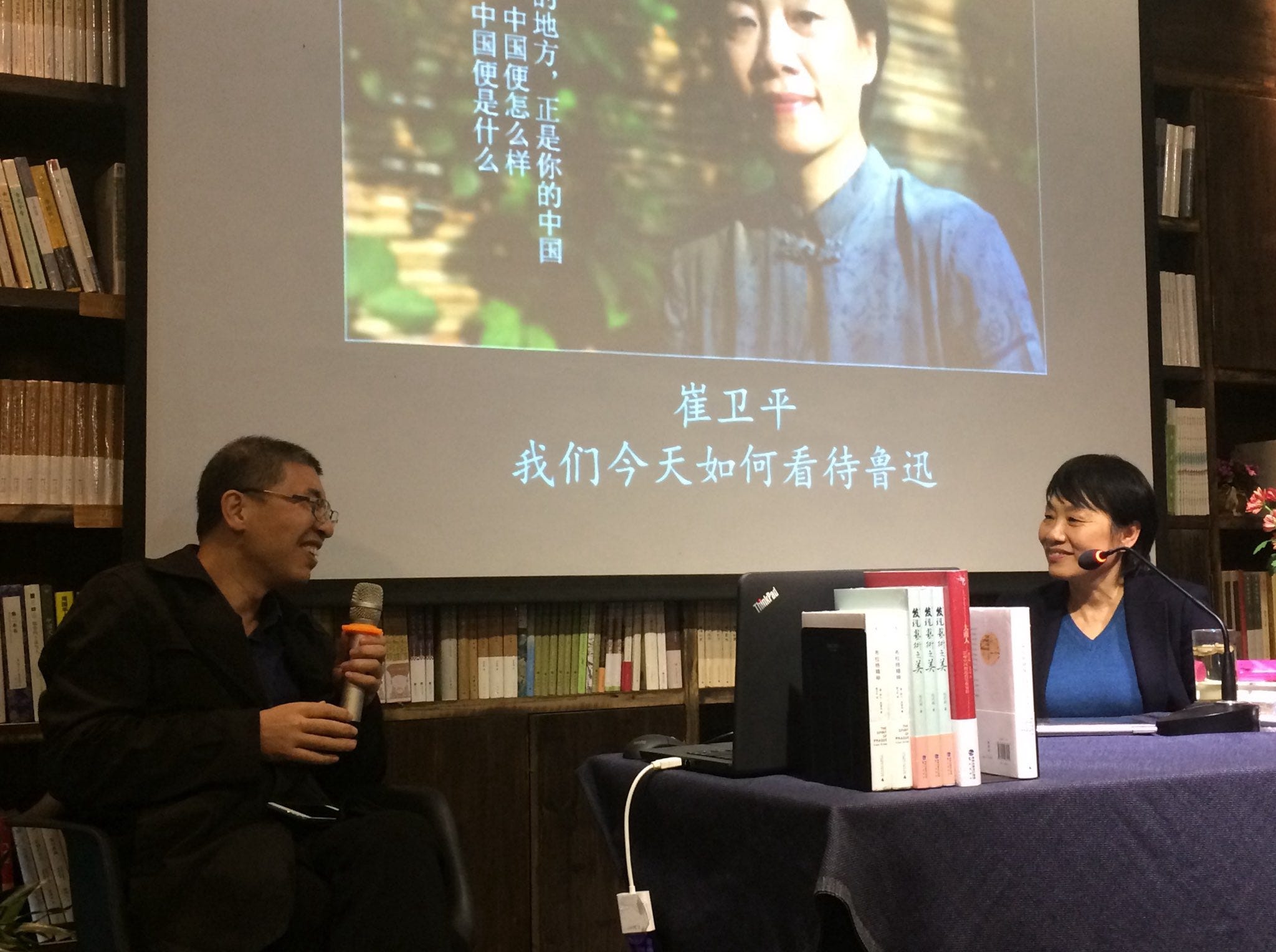
2016年11月我受浙江德清图书馆的邀请去做一个讲座,之后又去了苏州,在当地“半书房”与读者见面,主办方请来国涌当嘉宾。为了让读者一目了然,苏州的活动主题为“今天我们怎样看待鲁迅”。没曾想到,第二个与嘉宾对谈环节时,国涌与我当场发生激烈争吵。我是拿着一篇半成稿的文章(《冲突与逍遥》)上路的,所以记得自己的观点,大抵是以赛亚·伯林的思路,指出在极权主义的上游,浪漫主义要负一些责任。对于鲁迅受尼采影响及所发展出来的隐喻式政治历史表述,我提出了一些批评意见。国涌对于我批评鲁迅大为不悦,他提出了毫不退让的反驳,具体观点我不记得了。同去的、原德清县图书馆馆长慎志浩先生,在悼念国涌的文章中有如下记载——
“在这场对话中,崔卫平侧重说的是一个“浪漫主义”观念在中国的首播者、一个革命者的鲁迅;而傅国涌眼里依旧是传统的丑陋人性的揭示者、鞭挞者的鲁迅。傅国涌是观念在原址上的凿进,崔卫平的见识则是另辟蹊径,无疑是新颖的独到的。两位大学者唇枪舌剑互不相让,精彩纷呈。”
慎志浩先生并发来这次争吵时的图片。看起来我们都在原座位上坐得好好的,面带微笑,但我记得自己当时激动得站了起来,国涌也站了起来,我们在讲台上来回交叉走动,边走边说。对我来说,仿佛2013年大病手术之后丧失了的力气,第一次重又回到我身上。近来不止一次读到有朋友在怀念文章中说,国涌提醒别人不能仅仅读鲁迅,鲁迅有其局限性,他推荐对方去读胡适,显然他对于鲁迅也是有反思的。同样,我对于鲁迅其实也一直是尊崇的。
4
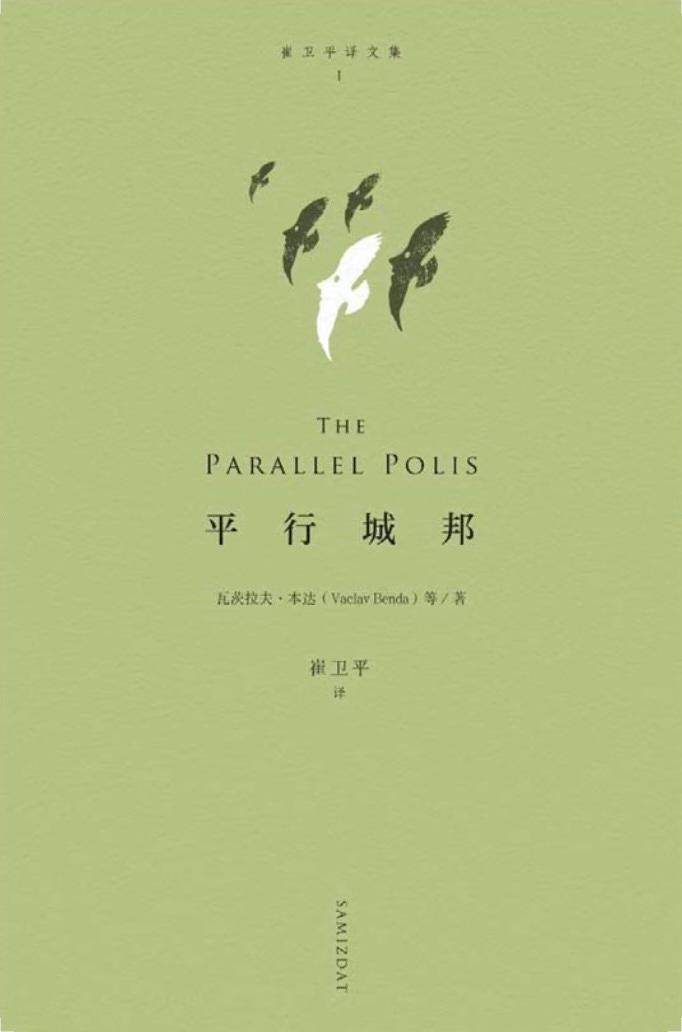
2022年下半年,我与他用微信进行交流,前后大约有半个月左右。在这种交流中,他促使我翻译了一本新书《平行城邦》。
更早些时候,我读到2017年2月《纽约客》上发表的一篇文章,作者是印度政治评论家和小说家潘卡吉·米什拉(Pankaj Mishra),题为《瓦茨拉夫·哈维尔关于如何创建一个“平行城邦”的经验》(参见文末作者附注3),他视“平行城邦”为川普年代抵制新的极权主义现象的思想资源。作者提到刚刚在美国拉开帷幕的反川普运动,与哈维尔他们当年从事的公民活动有所匹配。今天川普的反对派们,也可以创造他们自己的“平行城邦”,从而“在自由世界塑造一种救赎性的异见政治”。他的观点遭到了澳大利亚一位哈维尔专家丹尼尔·布伦南 (Daniel Brennan)的反驳,他于2019年发表文章《在川普的年代读哈维尔》,提出哈维尔与众不同之处,恰恰在于没有提出或推荐一种“救世”的方案,对于试图一劳永逸地解决问题的思路保持终生警惕,哈维尔天生是反乌托邦和反弥赛亚的。
两篇文章从不同的角度提出问题,都有其意义,也让我意识到,西方世界的人们仍然把哈维尔视为从中汲取的精神资源,而运用中文的我们没有理由将哈维尔置之脑后。于是围绕着“平行城邦”这个题目,我找到了这本《中欧的公民自由:捷克斯洛伐克的声音》(Civic Freedom in Centry Europe: Voices from Czechoslovakia )。提出“平行城邦”(parallel polis)概念的是瓦茨拉夫·本达(Václav Benda,1946-1999),1978年他在“七七宪章”一再遭到挫折和危机时,建议“七七宪章”成员不要局限于自身及自身话题,而需要增强与他人之间的连结,把自己放到更加广阔的社会空间中去,创立与官方权力及其机构相平行的各种独立的社会自我组织。
我把本达的文章粗粗翻译了出来,通过微信发给了国涌,凭着2004、2005年关于重建社会的交流讨论,尤其当下我们当中许多人也处于本达和哈维尔都形容过的“ghetto”当中,即与他人及社会的隔离和隔绝状态,包括我本人,我相信他能够理解。果然,国涌积极肯定了这篇文章的意义,肯定了我继续寻找东欧反对派思想资源的工作,他完全明白我在做什么。我也对他说,你目前从事的民间语文教育,在官方的校园之外开办学堂,正是一种“平行教育”。非常可惜的是,这之后我与他本人都换过手机,这些微信交流没有保存下来,接下来所说的仅凭记忆了。
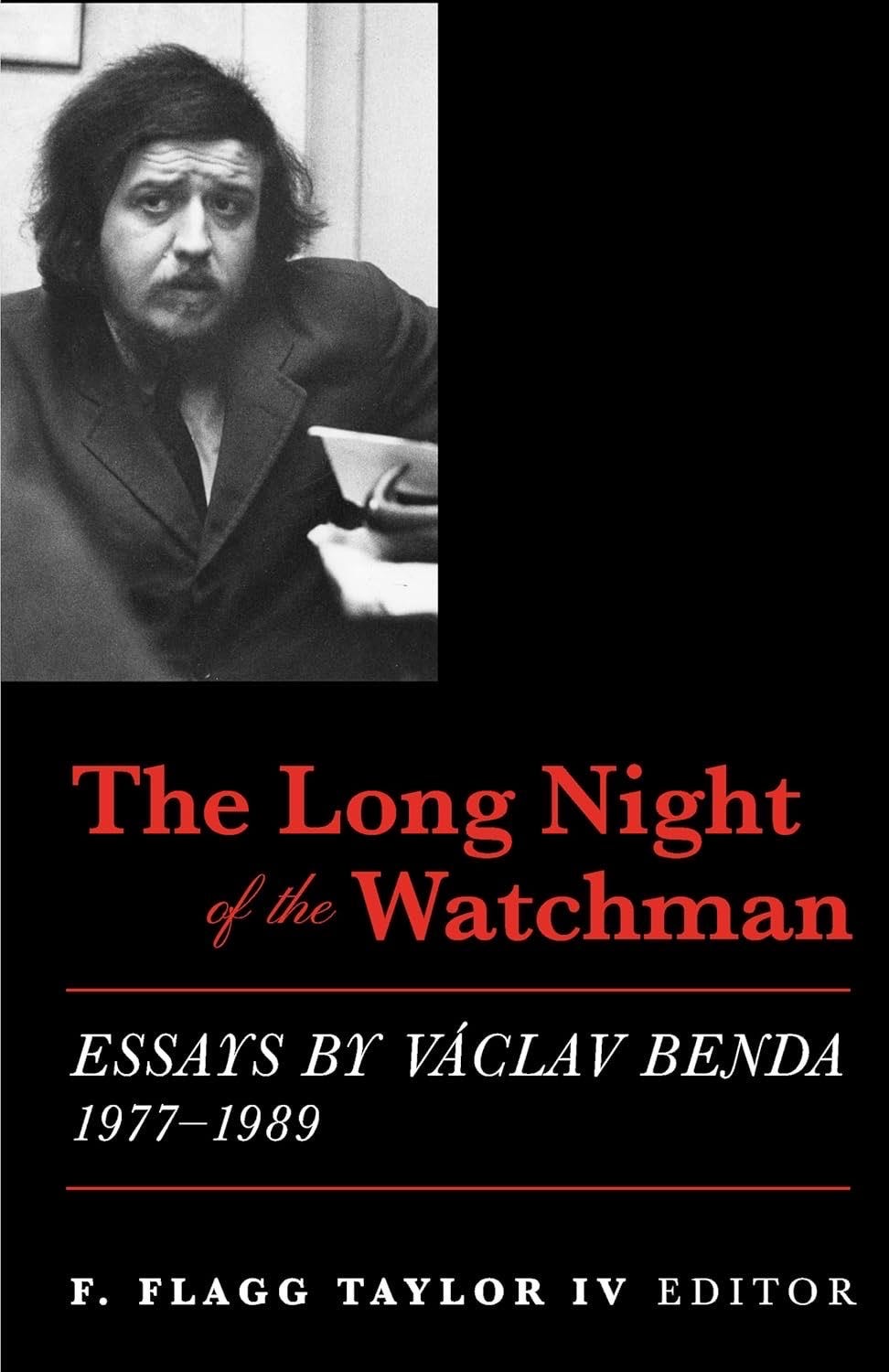
大约过了一两天,国涌突然发来一本书的封面,问我,你说的本达与这位本达是同一个人吗?我一看,是一本我没有见过的本达的英文文集,书的标题是“The Long Night of the Watchman”,也即《守望者的漫漫长夜》(参见文末作者附注4)。封面上还配有本达的照片。这本2018年出版的书,汇集了本达1977年到1989年整个异议期间的主要文章。本达是一位数学家,天主教徒,两次担任“七七宪章”发言人,1979年在“保护受不公正审判者”一案中被判四年,与哈维尔同案。身为天主教徒,在本达的思想和行动中,浸透着他的宗教精神及牺牲精神。他也组织过宗教方面的抵抗活动。本达是一位十分严谨严格的人,因而在天鹅绒革命之后,本达负责对于前共产党人的审查和清除。
我有点惊讶,不谙英文的国涌怎么会知道这本书?是否因为国涌后来也成为基督徒,通过宗教的渠道进一步了解到本达?我没有问他,而是回答了他的问题:是同一个人。他继而又发来信息说,捷克他喜欢帕托切克和本达。这回他没提哈维尔,我一下子明白了他的意思。因为在哲学家帕托切克和天主教徒本达身上,更加体现了宗教般的超越精神,释放了个人人格的崇高伟大。显然,个人人格是国涌始终关注的对象,最能够触动和打动他。在这本新找到的围绕“平行城邦”的书里,正好有一篇文章的标题是《扬·帕托切克和瓦茨拉夫·本达》。我随手把这文章翻译了出来,给了国涌。
在该文的讨论中,提到帕托切克“为宪章”匆匆写下的两篇文章,是一个哲学家多年的深思熟虑,即试图在道德流失的现代社会中重新扶牢个人内心的道德根基,帕托切克1977年3月在一次长长的审讯中突然去世,也加深了“七七宪章”道德的和牺牲的精神;而本达提出“平行城邦”时,正是针对这种道德孤绝的危机状态,提出要扩大思想视野和行动的空间。如果说道德关乎个人,是一个人的自我超越,属于垂直方向上的;那么“城邦”就关乎与你一道生活的人,福祉在他人和社会,属于与他人共在的水平方向上。就反对运动而言,本达“平行城邦”的提法,显然表达了新内容和提示着另一个阶段。
5
我给国涌发去译文的同时,对他说,哪怕只有一个人读者,哪怕只有一个人对这些东西感兴趣,我都会翻译出来。这的确是我当时的心境。其时我在美国已经呆了六年,中国对我来说越来越遥远,尤其是越来越抽象,我已经无法切身感受到朋友们随时随地的感受,不知道如何与他们一道坚持和努力,不知道怎么帮助他们也是帮助我自己。既然国涌对我说,他对帕托切克和本达感兴趣,好吧,那我译出一些来满足他的好奇心。说实话,90年代初我试译哈维尔,也是在朋友的推动下和为了满足朋友们的需要。
国涌没有就译文本身继续与我讨论,但是我对《中欧的公民自由》这本书的兴趣加深了。我称之为“来自捷克斯洛伐克的声音”,其内容是当时捷克斯洛伐克18位持异见者,回答加拿大历史学家斯基林(H.Gordon Skilling)在1986、1987年间给他们提出的四个问题,包括“你认为‘独立社会’一词在贵国目前的条件下是否具有相关性和意义?”“这样一个独立社会的长期影响和可能结果是什么?”参与者包括哈维尔和希罗斯,后者是1976年受审的摇滚音乐人之一。此时他已出狱,是他第一个提出了与此相关的“第二文化”的概念,可以视为“平行城邦”的前身和来源。就同样的基本问题,不同的人从自己所站立的角度,做出了互相之间略有差异的回答,这让我很来神,有差异就有丰富性!虽然都是异见者,基本立场一致,但这些微小差异体现了生命和思想的多样性。于是我决定把这十八篇回答全部翻译了出来,这便是这本小书“平行城邦”的缘起。
我还答应国涌,一旦找到本达的那本“守夜人”文选,一定找出几篇翻译了给他。但是,这个愿望永远无法实现了。好兄弟国涌,我们说好的事情呢……
这些天我在想,国涌本人难道不正是我们身边漫漫长夜的守护人?他发掘和守护为自由中国进程做出开拓性贡献的人们,守护在最为残酷黑暗年代里坚贞不屈的人们,守护人的尊严、人格和价值理想。国涌让她/他们在我们头顶上星光灿烂,而国涌自己也加入了这片永恒的星海。
现在轮到我们来当守护者,守护这片包括国涌在内的令人敬仰的星空。
写于 2025年7月17日
作者附注:
1. 傅国涌引用本人关于“不与皇帝一道进餐”的原文是:“在他(米奇尼克)的头脑中,不存在一个需要不断加以关注的、至高无上的权威,不需要明里暗里不断关注他们的行为、动向,希冀最终由权威作出关键的变动,从而引起预期的社会效果,或者借此作为自己政治赌博的押宝。采取“和皇帝一道进餐”的人仍然将皇帝看作唯一的权力资源,他将依据皇帝的脸色、皇帝将要收获什么而行事,甚至皇帝所拥有的某个怪癖,也成为这些人关心的对象和行为的依据;而采取独立行动的人们相信还有别的权力资源,他的席位不是在皇帝的餐桌上,而是在自身的行为当中,这样的行为不需要皇帝来钦定,不需要皇帝赋予其意义,而是自主的和自我赋予的。说米奇尼克是个言行合一的人,这是鲜明的例证:既然是搞民主,就意味着眼光向下,意味着立足自身,立足于和自身一样独立的人们,他和这些人们的行为便是一个富有意义的起点。他这样的行动可以从任何地方任何人们那里开始,而且可以马上就去做。”《谁是亚当·米奇尼克》,《正义之前》,新星出版社,2005,P39-58。
2. 但是另一方面,在国涌的这篇《金庸的致命缺陷:他始终未能成就知识分子的现代人格》一文中,有一个小标题为“与金庸同时代出生的优秀知识分子”,提到了这些人的名字——顾准、殷海光、许良英、李慎之还有戴煌、何家栋。国涌将金庸与这些人放在一起比较,也反映出国涌对于伴随着成熟商业社会而产生的不同文化现象缺乏了解,对于金庸先生本人在香港社会政治中扮演的角色也缺乏了解,导致了方法论上的错置。
3. H. Gordon Skilling and Paul Wilson, edited “Civic Freedom in Centry Europe: Voices from Czechoslovakia”, Palgrave Macmillan, 1991.
4. The Long Night of the Watchman: Essays by Vaclav Benda, 1977-1989,Edited by F. Flagg Taylor, St. Augustines Press, 2018.
Cui Weiping: Keeping Vigil Through the Long Night—My Interactions with Fu Guoyong
Editor’s Note: In the early morning hours of July 7, 2025, historian and writer Fu Guoyong suddenly died of a heart attack. For many years, he had collaborated and brainstormed with another prominent public intellectual, the writer and translator Cui Weiping. In the early 2000s, Cui had invited Fu to write a preface for The Road to Civil Society, Cui’s Chinese translation of a collection of Adam Michnik’s essays. Cui and Fu also had in-depth discussions about the ideas of other Eastern European intellectuals, such as Václav Havel, Jan Patočka, and Václav Benda. These conversations eventually led to her translation of The Parallel Polis, which contains writings by Benda. Cui and Fu were deeply concerned with how people could live as citizens and ultimately advance civil liberties under the existing political system.
In this article written exclusively for the China Unofficial Archives, Cui discusses her work with Fu, their collaboration, occasional disputes, and her respect for his fierce intellect. At 4,000 words, it is longer than most of our newsletters, but we think it is an important historical document, especially valuable for highlighting the role of Central and Eastern European thinkers in the search for space for independent thought in China, as well as the close ties between Cui and Fu, two of China’s most important contemporary public intellectuals.
By Cui Weiping
When I heard the news of Guoyong’s passing, my first thought was, “It can’t be true! How could it be him? He’s too young!” Born on January 10, 1967, he had only lived for a mere 58 years.
I had known Guoyong for over twenty years, having been introduced by the independent historian Mr. Ding Dong. It must have been in the summer of around the year 2003 when Guoyong and his wife, Cao Lirong, stayed at my home for a few days. Guoyong never spoke to me about his past experiences, but Lirong shared that since 1989, Guoyong had lost his freedom at least three times due to his advocacy for democracy in China, totaling five or six years. This filled me with deep admiration. When someone is imprisoned for the first time, they might not understand the harshness of prison life, much like a child unknowingly reaching out to a burning flame. But Guoyong, after experiencing two years behind bars, repeatedly chose to put himself in harm’s way. He must have possessed extraordinary will and conviction.
Lirong’s unwavering and deep affection for her husband also moved me. She graduated from Beijing Normal University with a degree in special education, and by conventional standards, her education was superior to Guoyong, who attended the little-known Wenzhou Education College. Friends told me that Guoyong and Lirong had their wedding in Tiananmen Square during the spring of 1989. For years, Lirong suffered greatly due to her husband’s situation. She was petite but possessed immense strength. I remember that summer when journalist An Ti brought a group of people for a kayaking competition at Houhai in Beijing, the couple and I went along.
Guoyong’s voice was resounding, as people say, like a “southerner with a northern demeanor.” When conversing, he was always deeply immersed in the topic, avoiding subjects unrelated to thought or knowledge, which gave him a somewhat unworldly aura. When Lirong and I talked, he would pick up a book from the shelf and immediately engross himself in it. Within moments, he could identify issues in the book, his mind working swiftly. He often smiled when he spoke, a natural expression that reflected his spiritual abundance and composure. I’ve met many self-taught individuals whose thought processes were forged in darkness—a remarkable feat. However, this often leads to a dogmatic way of speaking, leaving no room for discussion. Guoyong, though, was different; he was resolute yet not dogmatic. He would listen to what others said and then offer his own thoughtful response.
1
Sensing Guoyong’s open mind and insightfulness, I decided to ask him to write the preface for The Road to Civil Society, my translation of a collection of Adam Michnik’s essays. The other author for the preface was Mr. He Jiadong, a dissident scholar within the Chinese Communist Party system who passed away in 2006. In fact, much of Michnik’s thought was unfamiliar to many of us. Of course, it wasn’t entirely unfamiliar—Michnik was precisely reflecting on the deep-seated problems within revolutionary ideology. However, living in China, due to our ingrained ways of thinking, not everyone could grasp it. But Guoyong acutely captured the groundbreaking essence of Michnik’s thought. He said that reading Michnik gave him a feeling of sudden enlightenment, like “facing the sea, with spring blossoms.” He also valued the idea of public intellectuals not cutting deals with those in power, which I expressed in the phrase “not dining with the emperor” from my article “Who is Adam Michnik.” On this, he wrote:
“For an old China that has only ever known ‘conquering the land and ruling the land,’ that has only ever known wise emperors and honest officials, this is inconceivable. On this land that has witnessed countless dynastic cycles, dining with the emperor is almost the only choice. To live an independent life outside of the ‘emperor’s table’ is still a brand-new topic.”
“A brand-new topic”—he was absolutely right! The concept of independent individuals and an independent society outside of power, coupled with the prevailing Chinese liberal discourse emphasizing individual rights at the time, became the intellectual starting point for what could be called the “New Citizens’ Movement” in 2003. Guoyong titled his preface “Rights, Not Power” and signed, “Completed in my Hangzhou home, August 13-15, 2004” (see Author’s Note 1).
In his view, this independence of individuals and society was not temporary, nor was it a temporary retreat that would eventually lead to returning to the establishment. Independence meant truly possessing one’s own roots and dignity. People living independent lives do not measure themselves by the standards of power, do not judge their work by success or failure in seizing power, and do not even take overthrowing the existing power as their direct or ultimate goal. This marked a fundamental difference from previous revolutionary ideologies. He stated:
“Michnik’s starting point is society, not the state. What he pursues are rights, not power. He opposes a state machine that lords over the entire society and deprives all social autonomy. His purpose is not to replace it and seize control of that machine himself, but to seek the liberation of society from this omnipotent and all-encompassing machine.”
Far from the centers of power and public squares, by focusing on the autonomy of society and individuals, on the rights and rich diversity of people’s lives, and by protecting people from the interference and infringement of arbitrary power, a whole new picture unfolded, which Guoyong described as: “It was as if a vast sky and an endless sea appeared before my eyes.” As for intellectuals, their discourse was no longer directed toward power but toward an independent public. It wasn’t about whispering or conspiring in small circles, but rather about making things as public as possible, putting truth and facts into the hands of the public. This process also involved accepting public scrutiny and constraints, growing and progressing with society, rather than being aloof and dictating how others should live.
What was particularly commendable was that Guoyong, through his own actions, bore witness to these pioneering ideas that he considered meaningful. In other words, no one else aligned so perfectly with Michnik like him, each validating the other. Clearly, Guoyong contributed significantly to the topic of re-establishing social autonomy that emerged in China around 2003. He wrote numerous articles on current affairs and participated in public discussions of the time, always offering his unique insights.
Crucially, his research on historical figures of Republican China (1911-1949) did not stem merely from a general interest in history; it had strong personal motives and objectives: to seek out spiritual resources of freedom and independence in modern history, providing lessons and inspiration for people today. For example, through his research on newspaper offices and journalists in Republican China, and on pioneering industrialists during that period, he showed people how earlier generations of Chinese had once forged freedom and created values of freedom.
2
Some hold the view that Guoyong’s earlier commitments to democracy were more significant than his later academic research and public statements. I disagree, for I believe they were equally important and indistinguishable. I’m sure Guoyong himself shared this perspective and wouldn’t have felt that his later public discourse was merely a last resort. Guoyong knew exactly what he was doing. He liked to refer to himself as a “citizen,” thereby highlighting his dignity and legitimacy. He needed to act publicly and write publicly. Of course, he didn’t place himself in a safe zone, but consistently chose to stand under pressure. Besides his discourse, he was also a leading intellectual in rights defense, including defending his residential community against demolition and upholding traditional forms of faith. Clearly, he didn’t belong to what sociologist Karl Mannheim called “free-floating intellectuals,” but rather possessed a strong sense of national, local, and especially justice-oriented sentiments.
Guoyong’s published works are extensive, covering a wide range of topics, but a common thread runs through them, which is China’s modern transformation. This has been the paramount problem vexing generations of Chinese patriots and intellectuals since the Opium War in the mid-19th century. In the cultural modernity that Guoyong focused on, the transformation and formation of the modern personality was his central concern. When handling historical material, he was adept at starting with character traits, focusing on a person’s moral taste, principles of conduct, how they managed the relationship between tradition and modernity, and whether their work helped promote the transition towards modern civilization. Guoyong held a clear and firm critique of everything in tradition that revolved around imperial power. This was why his biography of the author Jin Yong (Louis Cha) caused much controversy; in his view, Jin Yong “failed to achieve the modern personality of an intellectual” (see Author’s Note 2).
Guoyong once wrote that I brought Hu Jie’s documentary Searching for Lin Zhao’s Soul when I went to a conference in Hangzhou in spring 2004, and it impacted him as profoundly as The Havel Collection. After that, Guoyong himself began his own journey to continue searching for Lin Zhao’s soul. He read Lin Zhao’s “140,000-character letter,” which was not yet public, and meticulously sought out the intellectual trajectory of this extraordinary woman. In different years, he successively wrote a series of articles about Lin Zhao, continuously updating readers on new research and newly discovered materials about her. In 2008, he published The Death of Lin Zhao 1932-1968: A Forty-Year Commemoration in Hong Kong, which he edited. It included research and commemorative articles from Mr. Xu Liangying to people of various different generations, including three middle school students at the time. This was not only a comprehensive display of Lin Zhao research but also a gathering and summoning of conscience and courage.
In 2005, my collection of philosophical essays, Before Justice, was published. Half of it consisted of thinkers and poets I admired and translated—Miłosz, Brodsky, Thomas Mann, Arendt, Havel, Michnik. The other half was a special column I wrote for China Newsweek in 2004, “Rebuilding Society,” which pointed out a series of stigmatizations of society in our ideology: “idle social elements,” “social drifters,” “social dregs,” “unlawful elements in society.” It advocated for cultivating social rationality while re-understanding social contradictions, thereby achieving greater social autonomy.
Guoyong keenly combined these two seemingly unrelated parts and asked me, “Can the former be seen as your spiritual source, and the latter as you expressing your views in your own words?” This deep understanding moved me greatly. I only now discovered that Guoyong had also written a book review that year about my humble work Shuimu Nianhua (Halcyon Days). This was a memoir of my childhood and adolescence written during the SARS period when I couldn’t go out, and very few people had mentioned it. He must have been very curious about my journey, and he carefully discovered from my study that philosophical books held more weight than literature in my personal reading.
3
Guoyong was an energetic person, and his social circle was extensive; many people could say, “Fu Guoyong is my friend.” But when he communicated with people, his topics were tightly focused, and his attention was highly concentrated, with absolutely no leisurely, time-wasting elements. Among the many memorial articles, I saw one mentioning Guoyong’s opposition to playing mahjong, believing it to be a pointless consumption of life. I think this fits Guoyong’s character perfectly.
I’ll give another example. Mr. He Fang (1922-2017) lived in the same community as me in Houshayu, Shunyi, in northeastern Beijing. Mr. He was known as one of the “three musketeers” of Yanhuang Chunqiu (the other two being Li Rui and Du Daozheng). He once served as Zhang Wentian’s political secretary, worked in the Ministry of Foreign Affairs for many years, and later wrote two important works, Party History Notes and Reflections on the Road from Yan’an. He also wrote several major articles reflecting on China’s diplomacy. As soon as Guoyong met Mr. He Fang, he would often visit the elderly man whenever he came to Beijing, and I also saw Guoyong at He Fang’s place. After Mr. He passed away, Guoyong wrote a deeply emotional memorial article, mentioning more than once that the elderly He couple took him out to “eat delicious food.” Mr. and Mrs. He were also very kind to me; I lived so close, just a few steps away, but was never called to “eat delicious food” with them. They must have had more important things to discuss, so that I, unfamiliar with history, wouldn’t dilute the topic.
In November 2016, I was invited by the Deqing Library in Zhejiang to give a lecture. Afterwards, I went to Suzhou to meet readers at the local Banshufang “Half Study” bookstore. The organizers invited Guoyong as a guest. To make it clear to the readers, the theme of the Suzhou event was “How We View Lu Xun Today.” Unexpectedly, during the second guest discussion segment, Guoyong and I had a fierce argument on the spot. I was traveling with a half-finished article (“Conflict and Detachment”), so I remembered my point of view, which was roughly in the vein of Isaiah Berlin, pointing out that romanticism bears some responsibility for totalitarianism. I raised some criticisms of Lu Xun’s Nietzschean influences and his development of metaphorical political and historical expressions. Guoyong was greatly displeased by my criticism of Lu Xun, and he put forward an unyielding rebuttal; I don’t remember the specific points. Mr. Shen Zhihao, the former director of Deqing County Library who accompanied us, recorded the following in his memorial article for Guoyong:
“In this dialogue, Cui Weiping focused on Lu Xun as a pioneer of ‘romanticism’ in China and a revolutionary; while in Fu Guoyong’s eyes, he remained the traditional revealer and scourger of ugly human nature. Fu Guoyong’s ideas were a deep excavation at the original site, while Cui Weiping’s insights blazed a new trail, undoubtedly novel and unique. The two great scholars debated fiercely, refusing to yield, and it was brilliantly spectacular.”
Mr. Shen Zhihao also sent pictures from that argument. We appeared to be sitting properly in our original seats, smiling, but I remember I was so excited that I stood up, and Guoyong also stood up. We walked back and forth across the stage, talking as we moved. For me, it was as if the strength I had lost after my major surgery in 2013 had returned to me for the first time. Recently, I’ve read several times in memorial articles by friends that Guoyong reminded others not to just read Lu Xun but also recognize that Lu Xun had his limitations, and he recommended they read Hu Shih, indicating that he also had reflections on Lu Xun. Likewise, I have always held Lu Xun in high regard.
4
In the latter half of 2022, I communicated with Guoyong via WeChat for about half a month. During this exchange, he encouraged me to translate a new book, The Parallel Polis, a book by the Czech intellectual Václav Benda.
Earlier, I read an article published in The New Yorker in February 2017, written by the Indian political commentator and novelist Pankaj Mishra, titled “Václav Havel’s Lesson on How to Create a ‘Parallel Polis’” (see Author’s Note 3). He viewed the “parallel polis” as an intellectual resource for resisting new totalitarian phenomena in the Trump era. The author mentioned that the anti-Trump movement just beginning in the United States matched the civic activities Havel and his colleagues engaged in back then. Today’s opponents of Trump could also create their own “parallel polis” to “forge a redemptive politics of dissent in the free world.” His view was refuted by Daniel Brennan, an Australian expert on Havel, who published an article in 2019, “Reading Václav Havel in the Age of Trump,” arguing that Havel’s distinctiveness lay precisely in not proposing or recommending a salvation-style solution, maintaining lifelong vigilance against attempts to solve problems once and for all. Havel was inherently anti-utopian and anti-messianic.
Both articles raised questions from different perspectives, and both were meaningful. They also made me realize that people in the West still regard Havel as a spiritual resource, and there’s no reason for us, who use Chinese, to disregard Havel. So, centering on the theme of the “parallel polis,” I found the book Civic Freedom in Central Europe: Voices from Czechoslovakia. The concept of the “parallel polis” was proposed by Václav Benda (1946-1999). In 1978, when Charter 77 repeatedly faced setbacks and crises, he suggested that Charter 77 members should not limit themselves and their topics, but instead needed to strengthen their connections with others, put themselves into a broader social space, and create various independent social self-organizations parallel to official power and its institutions.
I made a rough translation of Benda’s article and sent it to Guoyong via WeChat. Based on our discussions about rebuilding society in 2004 and 2005, especially since many of us are currently in the “ghetto” described by both Benda and Havel—that is, a state of isolation and segregation from others and society, including myself—I believed he would understand. As expected, Guoyong enthusiastically affirmed the significance of this article and my continued work in finding intellectual resources from Eastern European dissidents; he fully understood what I was doing. I also told him that his current work in civilian language education, establishing schools outside official campuses, was a form of “parallel education.” It’s a great pity that both he and I changed phones after that, and these WeChat communications were not saved; what I’m about to say is solely from memory.
About a day or two later, Guoyong suddenly sent me a book cover and asked, “Is the Benda you’re talking about the same person as this Benda?” I saw it was an English collection of Benda’s essays I had never seen before, titled The Long Night of the Watchman (see Author’s Note 4). The cover also featured a photo of Benda. This book, published in 2018, compiled Benda’s main articles from his entire period of dissent, 1977 to 1989. Benda was a mathematician and a Catholic, serving twice as a spokesperson for Charter 77. In 1979, he was sentenced to four years in the “Protection of the Unjustly Prosecuted” case, alongside Havel. As a Catholic, Benda’s thoughts and actions were imbued with his religious and sacrificial spirit. He also organized religious resistance activities. Benda was a very rigorous and strict person, and thus, after the Velvet Revolution, Benda was responsible for the screening and purging of former communists.
I was a bit surprised. How would Guoyong, who wasn’t proficient in English, know about this book? Was it because Guoyong later became a Christian, learning more about Benda through religious channels? I didn’t ask him, but answered his question: Yes, it’s the same person. He then sent another message saying that in the Czech context, he liked Patočka and Benda. This time he didn’t mention Havel, and I immediately understood his meaning. This is because in the philosopher Patočka and the Catholic Benda, a more profound religious transcendent spirit was embodied, unleashing the sublime greatness of the individual personality. Clearly, individual personality was always Guoyong’s focus, what most touched and moved him. In this newly found book centered on the “parallel polis,” there happened to be an article titled “Jan Patočka and Václav Benda.” I translated this article and gave it to Guoyong.
In the discussion of that article, it mentioned Patočka’s two articles hastily written “for the Charter” were the result of a philosopher’s years of deep contemplation, an attempt to re-establish the inner moral foundations of individuals in a morally eroding modern society. Patočka’s sudden death during a long interrogation in March 1977 also deepened the moral and sacrificial spirit of Charter 77. And Benda proposed the “parallel polis” precisely in response to this crisis of moral isolation, suggesting the need to expand intellectual horizons and spheres of action. If morality concerns the individual, a person’s self-transcendence, belonging to the vertical direction; then the “polis” concerns the people you live with, whose well-being is intertwined with others and society, belonging to the horizontal direction of coexistence with others. In terms of the dissident movement, Benda’s proposal of the “parallel polis” clearly expressed new content and indicated another stage of thinking.
5
As I sent the translation to Guoyong, I told him that even if there was only one reader, even if only one person was interested in these things, I would translate them. This was indeed my state of mind at the time. I had been in the United States for six years then, and China felt increasingly distant to me, especially more abstract. I could no longer personally feel what my friends were experiencing at any given moment, and I didn’t know how to persevere and work alongside them, or how to help them and myself. Since Guoyong told me he was interested in Patočka and Benda, well, I would translate some to satisfy his curiosity. To be honest, when I first tried translating Havel in the early 90s, it was also at the urging of friends and to meet their needs.
Guoyong did not continue discussing the translation itself with me, but my interest in the book Civic Freedom in Central Europe deepened. I called it “Voices from Czechoslovakia”; its content comprised the answers of 18 Czechoslovak dissidents to four questions posed to them by Canadian historian H. Gordon Skilling between 1986 and 1987, including “Do you consider the term ‘independent society’ to be relevant and meaningful in the current conditions of your country?” and “What are the long-term implications and possible outcomes of such an independent society?” Participants included Havel and Šilhanec, the latter being one of the rock musicians tried in 1976. By this time, he had been released from prison, and he was the first to propose the related concept of “second culture,” which can be seen as a precursor and source of the “parallel polis.” On the same basic questions, different people gave slightly varied answers from their own perspectives, which greatly excited me—diversity comes from difference! Although they were all dissidents and shared a common basic stance, these minor differences reflected the diversity of life and thought. So, I decided to translate all eighteen answers, which was the genesis of this small book, The Parallel Polis.
I also promised Guoyong that once I found Benda’s Watchman anthology, I would translate a few pieces for him. However, that wish can never be fulfilled. My dear brother Guoyong, what about the things we agreed upon...
These days, I’ve been thinking, wasn’t Guoyong himself a watchman of the long night around us? He unearthed and protected those who made pioneering contributions to the process of a free China, guarded those who remained unyielding in the cruelest and darkest times, and safeguarded human dignity, personality, and ideals of value. Guoyong made them shine like stars above us, and Guoyong himself joined this eternal sea of stars.
Now it’s our turn to be the watchmen, guarding this admirable starry sky.
Written on July 17, 2025
Author’s Notes:
1. Fu Guoyong’s quote of my original text on “not dining with the emperor” is: “In his (Michnik’s) mind, there is no supreme authority that needs constant attention, no need to constantly watch their actions and movements, explicitly or implicitly, hoping that authority will ultimately make key changes that will bring about the desired social effects, or use it as a stake in one’s political gamble. Those who ‘dine with the emperor’ still see the emperor as the sole source of power; they will act according to the emperor’s mood, what the emperor will gain, and even the emperor’s peculiar habits become the object of their concern and the basis of their actions; while those who act independently believe there are other power resources. Their seat is not at the emperor’s table, but in their own actions. Such actions do not need to be approved by the emperor, nor do they need the emperor to imbue them with meaning; instead, they are autonomous and self-given. That Michnik was a man of his word and deed is a clear example: since it’s about democracy, it means looking down, meaning standing on one’s own feet, standing with independent people like oneself. His and their actions are a meaningful starting point. Such actions can begin anywhere, with anyone, and can be done immediately.” From “Who is Adam Michnik”, Before Justice, New Star Press, 2005, pp. 39-58.
2. However, on the other hand, in Guoyong’s article “Jin Yong’s Fatal Flaw: He Never Achieved the Modern Personality of an Intellectual,” there is a subheading titled “Excellent Intellectuals Born in the Same Era as Jin Yong,” which mentions the names of Gu Zhun, Yin Haiguang, Xu Liangying, Li Shenzhi, Dai Huang, and He Jiadong. Guoyong comparing Jin Yong with these individuals also reflects Guoyong’s lack of understanding of different cultural phenomena arising with a mature commercial society, and his lack of understanding of Mr. Jin Yong’s own role in Hong Kong society and politics, leading to a methodological misplacement.
3. H. Gordon Skilling and Paul Wilson, ed., Civic Freedom in Central Europe: Voices from Czechoslovakia, Palgrave Macmillan, 1991.
4. The Long Night of the Watchman: Essays by Václav Benda, 1977-1989, Edited by F. Flagg Taylor, St. Augustine’s Press, 2018.
Again, thank you for your work calling out the Chinese Communist Party's Crimes Against Humanity.