

当革命神话瓦解,如何理解那些被国家妖魔化的个人?——读笑蜀《刘文彩真相》
When Revolutionary Myths Collapse: Understanding Demonized Individuals

作者:海星
By Hai Xing
The English translation follows below.
童年的我,在川北山区的一个小学课堂上,第一次听到“刘文彩”这个名字。老师指着黑板上那幅放大的连环画图像——一个面容阴狠、满脸横肉的男人,站在“收租院”中冷笑,身边是被打断了腿的农民、哭泣的妇女、还有据说用来“整人”的水牢和铁链。这个叫刘文彩的男人被描述为“三千年地主阶级的总典型”、“最残暴的地主恶霸”。那年我八岁。
多年后我才知道,刘文彩这一形象并非来自历史本身,而是来自国家主导的叙事工程。从川西农村到全国展览馆,从小学语文课本到革命博物馆,刘文彩已不再是一个真实的人,而是一个被意识形态塑造出来的“敌人图像”,一个供千百万人民愤怒与仇恨投射的容器。他是“人”,也是“非人”,是制度话语中为了说明“我们是谁”而必需的“他者”。
笑蜀的《刘文彩真相》一书,于1999年出版。可以说,随着此书的出版,一代人童年记忆中那个“地主恶霸大坏蛋”的塑像也开始崩塌。这本书抛弃了官方媒体的敌意设定,用走访、查档,以及比对、倾听的方式,重构出了一个更为真实的刘文彩:原来,刘文彩不是圣人,也不是恶魔,而是特定历史时刻下的一个中国地方精英,他身上的矛盾与复杂,正是那个剧烈变动年代的缩影。
除了颠覆官方对一个历史人物的叙事,这本书也引出了一个更大的问题:我们该如何理解那些被“历史”抹去、歪曲、妖魔化的人?在一个被宏大叙事主宰一切的国度,如何才能重新拾起个体的真实与尊严?在真相被压制数十年之后而终于被揭露出冰山一角时,人们是否还有勇气面对它?
在中国,刘文彩不过是众多被历史处理过的面孔之一。但正是这些面孔的背后,藏着这个民族关于正义、记忆、道德判断的深层裂痕。《刘文彩真相》如同一把凿子,敲在那尊名为“国家叙事”的塑像上,让我们有机会从废墟中,看到那些真实得有些刺眼的、复杂的人。
控诉的神话:雕塑、展览与“地主阶级”的视觉政治
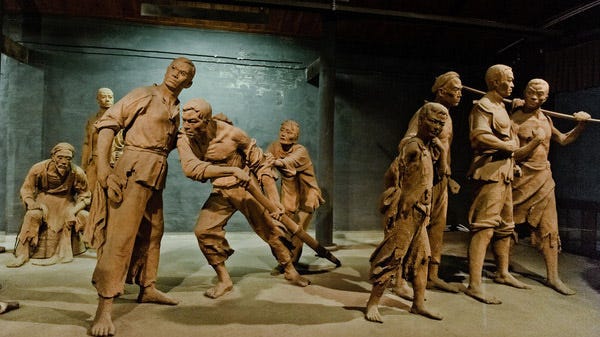
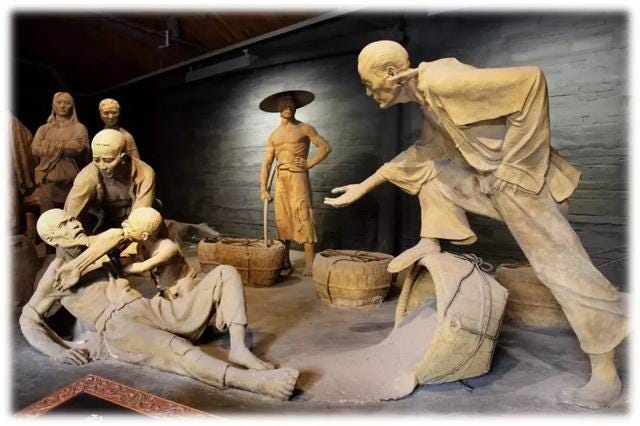
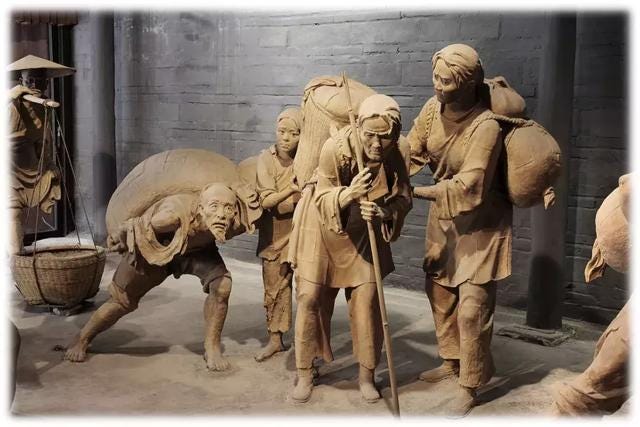
可以说,为了树立刘文彩的恶霸地主形象而精心设计的“收租院”展览,是1949年后中国视觉政治中最具标志性的造像工程之一。它最初是一个完成于1965年的大型群雕,有114个形象,上百个道具,来展示地主对劳动人民的残忍掠夺和剥削。它不仅构筑了一种关于“旧社会”的共同想象,也确立了“新时代”人民表达愤怒的合法方向。最终,经过国家的造像工程,刘文彩已不是一个人,而是一个经由泥塑、连环画、纪录片、样板戏共同铸造的“阶级敌人”——而这一神话的成功,正是来自对视觉震撼与情绪动员的精确操控。
笑蜀在《刘文彩真相》中对“收租院”的起源和运作机制给予了细致追溯。他揭示,这座后来成为全国样板的展览馆,其实是1965年由成都军区和地方宣传系统联合打造的一场预演,它的目的,是为即将到来的阶级斗争高潮铺垫氛围。展览中诸如水牢、铁链、“人棍”等形象,来源不是史料,而是被导演出来的历史剧本。根据笑蜀的调查,甚至连刘文彩的塑像,也不是依据刘文彩的真实相貌,而是由雕塑家参照“恶人脸谱”虚构而来。
更耐人寻味的是,在展览推广到全国之后,无数来自基层的参观者泪流满面地控诉“旧社会”,这场由雕塑与讲解员共同导演的悲情现场,被反复记录、上报,成为政治忠诚与群众路线的范本。诚如书中指出的:“刘文彩的恶,不是从历史中考证出来的,而是从政治需要中推导出来的。”
这使我不禁想起法国思想家福柯所说:“历史不是被记住,而是被生产。”刘文彩作为地主阶级的代表,被官方通过视觉符号、舞台表演与国家话语共谋塑形——他成为了一种政治凝视的承载物,让人们相信仇恨是正义、斗争是光荣、屈辱终将复仇。而这一机制,也恰恰遮蔽了复杂真实中的模糊地带:地主是否一定残暴?农民是否一定无辜?苦难是否只有一种归因方式?
《刘文彩真相》并未试图为刘文彩洗白,但它让我们意识到:真正可怕的不是一个人是否是“恶霸”,而是在长期的灌输和宣传之下,我们是否已经习惯了“不假思索地恨一个人”,并将恨他视为一种道德姿态,并在无数类似的故事中,成为盲目的看客?
从土豪到恶魔:刘文彩的真实身份与家族档案
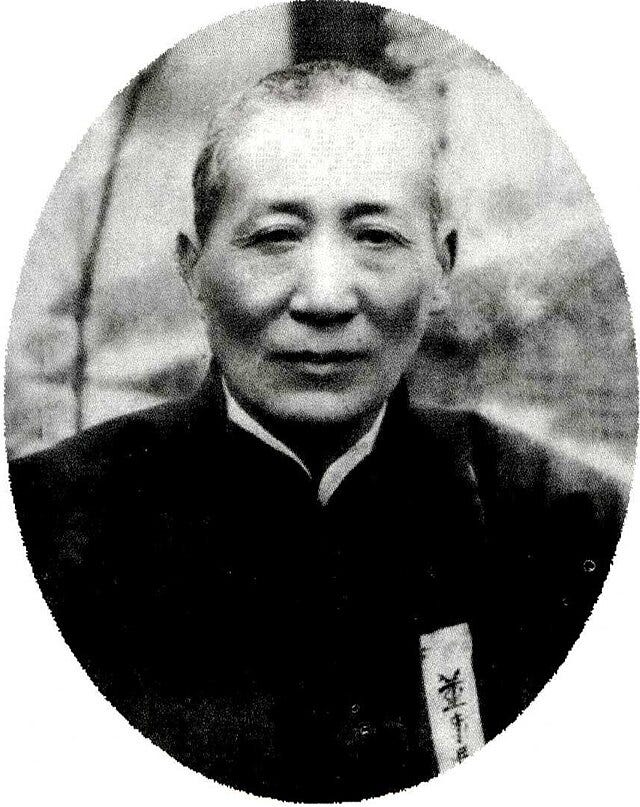
在被塑造成“地主恶霸”的形象之前,刘文彩究竟是一个什么样的人?这是《刘文彩真相》一书中最具争议性的部分。在高度符号化的政治话语中,一个人是否坏,往往无需证据——只需标签。而这本书的一个核心努力,正是要将这个被恶魔化的名字还原为一个有血有肉的真实的人。
刘文彩是近代四川的一个地方乡绅,发迹于清末民初政商混合的社会结构之下。他既是富户,也是地方慈善的捐资人;既投资教育,也经营地产;既有“压迫”之名,也有济困扶贫和兴办学校之实。通过广泛查阅当时的档案、公文、地契与口述史料,本书展现出一个远比“收租院”塑像复杂得多的刘文彩。
首先,他并非靠剥削农民起家,而是依赖其家族在辛亥革命与军阀混战中的政商斡旋能力——某种程度上,他是地方权力真空中浮现的一种“次级国家”,一个地方秩序的维持者。这种身份,决定了他对乡土和父老的忠诚,不可能是单纯的暴君。书中指出:“在整个大邑县,他的文教慈善支出,远超于征租收益。”
其次,关于“水牢”、“人棍”等刘文彩对民众使用酷刑的传说,在家族档案和村民口述中无一实证,而是多出于后期政治运动中的控诉与“忆苦思甜”的宣传文本。可以看出,这些记忆构建往往有官方提供的创作模板与情绪引导。
这让我想起另一本重要的口述史书籍——艾瑞克·霍布斯鲍姆的《盗匪》,作者曾提到:“在缺乏国家权威的边缘地区,很多所谓恶霸其实是地方正义的承担者。” 刘文彩的身份,是中国乡土社会中那种既令人惧怕也受人倚赖的中介性人物——但无论如何,他不可能是绝对的恶人。
本节的叙述令人沉思。在中国当代历史的剧场中,一个人被钉上“恶人”的牌子,也许只因他具备某种阶层象征,而非行为本身。《刘文彩真相》的最大贡献,不在于为历史人物平反,而在于提示我们:不要将历史的复杂,简化为道德的黑白。
革命中的记忆操控:历史的真空与情绪的填充
刘文彩并非在生前被定性,而是在其1949年死去之后,也就是中共建政之后,被彻底“剧场化”。这正是《刘文彩真相》中最令人不寒而栗的部分:一整套对历史记忆的操控工程,如何将一个复杂的人,压缩成一张被涂黑的面具;而这场操控,不仅发生在档案馆、宣传册中,更深深植入了几代中国人的日常记忆结构之中。
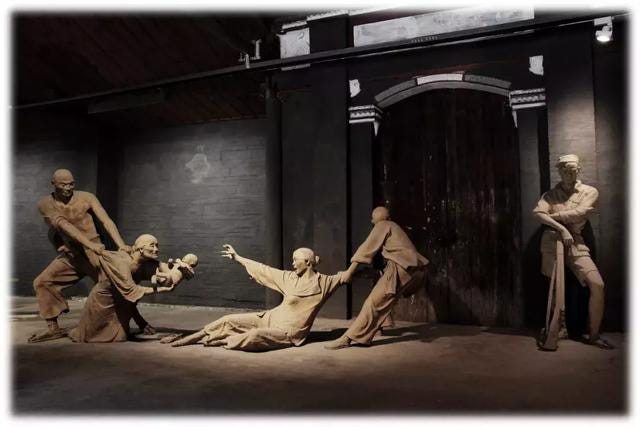
“收租院”就是最具象征性的历史剧场。那并非一个冷静的陈列馆,而是一个刻意制造情绪的感官装置:暗色灯光、湿冷牢笼、放大的血腥模型、循环播放的控诉音轨……这一切不是为了还原历史,而是为了激发一种确定的情绪——仇恨、愤怒、阶级正义感。
书中指出:“收租院没有提供任何可考的历史证据,却成为几代人对‘地主’集体想象的起点。”在这里,历史不再是追问、考证与商榷的过程,而成了一种心理剧场,一种打造政治认同与意识形态忠诚的装置。这种情绪化的记忆生产方式,具有极强的代际传递能力。在一代又一代孩子心中,刘文彩的形象与地主、恶人、剥削者紧紧绑定,已成了一种政治记忆的继承。
我们很难用今天的视角去全盘否定那个年代,但必须警惕的是:当历史真相让位于政治需要,当个体生命被塑造成宣传素材,当情绪成为认知的唯一通道,我们距离法西斯式集体主义并不遥远。
而在今天的语境中,国家是否仍在制造新的“刘文彩”?新的“收租院”?在数字空间、公共议题甚至教育系统中,新的“道德敌人”是否仍然源源不断被塑造,这套“情绪填空”的剧本是否仍在重演,只不过换了剧场?
“地主”的另一面:中国乡土秩序的复杂性
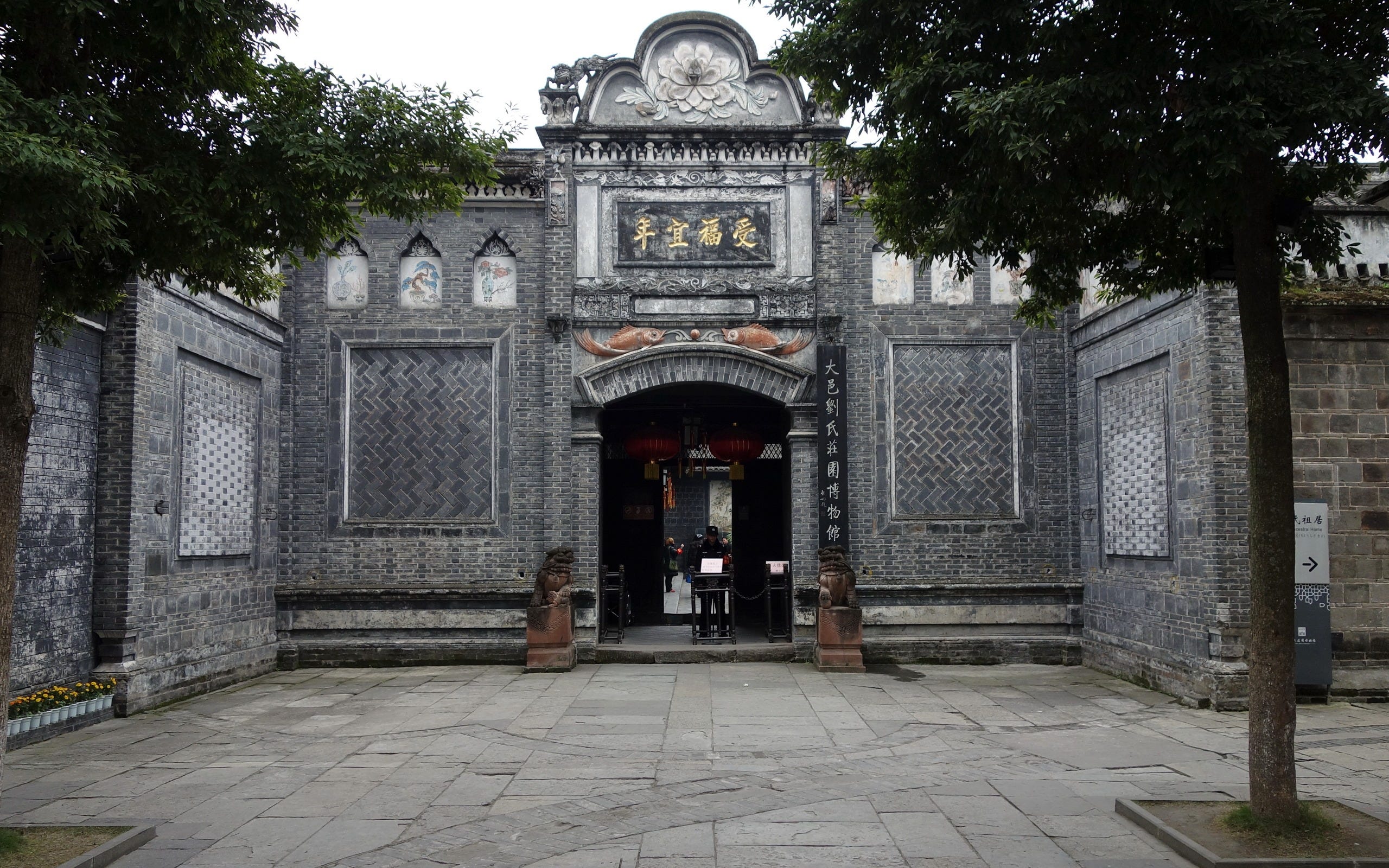
《刘文彩真相》一书的另外一个贡献,是将刘文彩这个人还原回他所处的历史结构与乡土关系中,从而挑战我们对“地主”二字根深蒂固的印象。
刘文彩不是抽象的阶级敌人,而是一个嵌入川西乡村秩序、复杂利益网络与文化结构之中的权力人物。他的财富与一种特定时代的精英模式——军功发家、地方结义、宗族调解、教育投资——紧密交织在一起。刘在当地修建公路和水利、兴办学校,为逃荒者提供赈济,他的所作所为,可以帮助我们理解1949年前,作为中国乡土精英的“地主”实际的社会角色。
这也提供了一种对中国基层社会的结构性观察。1949年前的中国乡村,并非如教科书简化的那样分为“地主”与“农民”两大你死我活的阶级,而是存在一个复杂的层级关系网络:宗族、士绅、乡约、保甲、书院、商号……这些结构一方面确实压迫了底层,但也为社会提供了秩序、信任与可预期性。刘文彩既是这一结构的受益者,也是维护者。在那个国家政权尚未全面渗透乡村的年代,这类乡土精英承担着准官僚、准士绅与准父母官的多重角色。
因此,当刘文彩在一系列政治运动中被彻底妖魔化时,实际上不仅是一个人被消灭,更是整个地方精英阶层、一整套乡土社会的中介结构被连根拔除。书中说得很清楚:“革命摧毁的不只是一个人、一类人,而是一个社会的组织神经。” 1949年之后,中国社会成为行政化、官僚化、国家化的全面统合,一种对刘文彩所在阶层的不信任与绝对排斥,已成为体制底色。刘文彩作为地主恶霸的象征,在这场断裂中,其实承担起了共产党建构执政合法性的情绪功能。刘文彩之死,是中国基层秩序现代转型中,一场对旧时代过于粗暴的告别。
从真相到共谋:历史书写中的我们
《刘文彩真相》并非止步于一个历史人物的澄清,它也追问了谎言的生成机制——以及我们为何如此轻易接受谎言。政权本身是在制造谎言,但另一个更令人不安的事实是:在编织与传唱刘文彩收租院神话的过程中,我们其实都在场。
本书从档案、口述与实地调查中一点点拨开迷雾,不断追问:这个经过精心布景的展览,这个以油画、雕塑、哭号声营造出的“活地狱”场景,为何能够深深地震撼几代人?不仅震撼受众,也震撼那些亲历者,甚至震撼过许多本应具备批判精神的知识分子。他让我们不得不面对一个尴尬的真相:谎言之所以能站立如此之久,并非因为它高明,而是因为它契合了一种结构性需求——对于敌人的想象、对于苦难叙事的道德依赖,以及对于革命正义的情感需求。
换言之,“收租院”并不是单纯的欺骗,它是一种社会共谋,一种由情感、意识形态、制度话语与文化逻辑共同生成的“叙事剧场”。而我们,每一个被教育、被感动、被愤怒、被认同的观众,或多或少都参与了这个剧场的搭建。
本书没有直白地批判观众的责任,而是以一种深沉的笔触书写我们作为叙事共谋者的心理结构。书中写到一位当年曾参与“收租院”建设的美术工作者,在多年后重访时,站在自己当年亲手制作的恶霸雕像面前沉默不语。这一沉默,比任何控诉更震撼人心:他不是不知道那是假的,而是当年,他也相信那是“必须的存在”。
这种“必须的存在”的幻象,正是官方政治叙事最危险的地方。它不靠事实取胜,而靠信仰、伦理与情感结构。刘文彩的被塑造,就是为了证明所谓新民主主义革命的正义性,而正义的需求越强,这个敌人的形象就越需要极端化。我们之所以接受,是因为我们也渴望那种确定性,那种非黑即白、善恶分明的世界,那种让我们感到痛恨有据、同情有理的道德秩序。
《刘文彩真相》不仅拆解一个叙事,更拆解了我们赖以维系政治情感的“黑白神话”,要求我们面对一种更难以承受的复杂性:没有纯粹的恶人,也没有绝对的好人;没有不带利益的记忆,也没有完全中立的叙事。它让我们意识到,历史不只是关于过去的真相,更是关于人们如何面对过去——以及面对自己曾如何参与其建构之中。
我们害怕真相,或许并不是因为真相本身令人不适,而是因为一旦承认了真实,我们便无法回避一个问题:我们当初,为何如此轻信?我们又准备如何面对那些被我们亲手埋葬、歪曲、甚至创造出来的历史影像?
《刘文彩真相》不仅是一部揭露历史虚构的作品,更是一场沉重的历史悼辞。它如同一面镜子,映照出那个时代受害者的沉默与无声抗争,也映照出我们当代人面对历史废墟时的困惑与无奈。
书中多次强调,那些被“收租院”诬陷和迫害的人们,实际上也在用他们的方式,抵抗着这场权力机器下的非人化与消解。他们的声音虽被压制,但并未彻底消亡。书中通过细腻的口述历史、破碎的档案,试图还原他们的复杂与多面——既非彻底的恶人,也非完全的受害者,而是在那个暴力时代中挣扎求生、充满矛盾的人性体。
这也正是这本书的价值:恢复对真实个体的尊重,以及对被屏蔽的真实记忆的重建。历史的修复,绝不仅仅是寻找真相那么简单,而是要重构一种尊严,为那些被历史遗忘、被官方叙事剥夺身份的人重塑话语权。
(作者海星:居住于中国大陆。历史研究者,新闻从业者。)
本期推荐档案:
When Revolutionary Myths Collapse: Understanding Demonized Individuals
In a primary school classroom in the mountains of northern Sichuan, I first heard the name Liu Wencai. My teacher pointed to an enlarged comic strip on the blackboard: a man with a menacing face and a cruel expression, sneering in the “Rent Collection Courtyard.” Surrounding him were peasants with broken legs, weeping women, and notorious tools of torture like the water dungeon and iron chains. This man, Liu Wencai, was depicted as the “ultimate archetype of the three-thousand-year-old landlord class,” the “most brutal landlord despot.” I was eight years old.
Years later, I learned that the image of Liu Wencai was not rooted in historical fact but was a product of a state-orchestrated narrative. From rural western Sichuan to national exhibition halls, from primary school textbooks to revolutionary museums, Liu Wencai ceased to be a real person. He became an image of the enemy shaped by ideology, a receptacle for the anger and hatred of millions. He was simultaneously human and inhuman, the essential other in official discourse, vital for defining who we are.
Xiao Shu’s The Truth About Liu Wencai, published in 1999, challenged this view. The book rejected the hostile framing by official media. Instead, a media professional, history enthusiast, and investigative journalist reconstructed a more balanced view of Liu Wencai. Through interviews, archival research, comparisons, and listening, Xiao Shu revealed that Liu Wencai was neither a saint nor a demon. He was a local Chinese elite living in a specific historical moment, whose complexities and contradictions mirrored the turbulent changes of that era.
This book also posed a larger question: How should we understand those who have been erased, distorted, and demonized by history? In a nation where grand political narratives dominate, how can we reclaim individual authenticity and dignity? And after decades of suppressed truth, when only a sliver of it finally emerges, do people possess the courage to confront it?
In China, Liu Wencai is just one of many figures processed by history. Yet, behind these faces lie the profound divisions within the nation concerning justice, memory, and moral judgment. The Truth About Liu Wencai is not a sensationalistic attempt to overturn a verdict. Instead, it’s a chisel chipping away at the monument of the state’s narrative, finally allowing us to glimpse the complex, stark realities of individuals.
The Accusatory Myth: Sculpture, Exhibition, and the Visual Politics of the “Landlord Class”
The meticulously designed “Rent Collection Courtyard” exhibition, created to establish Liu Wencai’s image as a tyrannical landlord, stands as one of the most iconic visual political projects in China after 1949. Originally a vast group sculpture completed in 1965, it featured 114 figures and hundreds of props, all designed to portray the brutal exploitation of the laboring people by landlords. This exhibition not only forged a collective imagination of the “old society” but also legitimized how the “new era” people could express their anger. Ultimately, through this state-led image-making endeavor, Liu Wencai was transformed from a person into a “class enemy”—a figure meticulously crafted through clay sculptures, comic strips, documentaries, and model operas. The triumph of this myth lay in its precise manipulation of visual impact and emotional mobilization.
In The Truth About Liu Wencai, Xiao Shu traces the origins and operational mechanisms of the “Rent Collection Courtyard.” He reveals that this exhibition hall, which later became a national model, was in fact a preview orchestrated in 1965 by the Chengdu Military Region and local propaganda departments. Its aim was to set the stage for the imminent climax of class struggle. Elements within the exhibition, such as the water dungeon and iron chains, were not derived from historical records but from a deliberately scripted historical drama. According to Xiao Shu’s investigation, even the statue of Liu Wencai was not based on his actual appearance but was fabricated by sculptors referencing generic villain archetypes.
Even more noteworthy, after the exhibition circulated nationwide, countless visitors from grassroots communities tearfully denounced what the party called “old society.” This emotionally charged spectacle, orchestrated by sculptures and narrators, was repeatedly documented and reported, becoming a paradigm for political loyalty and the mass line. As Xiao Shu observed, “Liu Wencai’s evil was not historically substantiated; it was derived from political necessity.”
This brings to mind the words of French philosopher Michel Foucault: “History is not remembered, but produced.” Liu Wencai, as a representative of the “landlord class,” was officially shaped through a confluence of visual symbols, theatrical performances, and state discourse. He became a conduit for a political gaze, leading people to believe that hatred was just, struggle was glorious, and humiliation would inevitably lead to revenge. This very mechanism, however, obscured the complexities and ambiguities of reality: Were landlords always brutal? Were peasants always innocent? Was there only one way to explain suffering?
The Truth About Liu Wencai doesn’t aim to vindicate Liu Wencai. Instead, it prompts us to realize that the true danger is not whether a person was a despot, but whether, after prolonged indoctrination and propaganda, we have become accustomed to hating someone without thinking, viewing such hatred as a moral stance, and becoming blind spectators in countless similar narratives.
From Local Magnate to Demon: Liu Wencai’s True Identity and Family Records
Before being cast as a landlord despot, what kind of person was Liu Wencai? This is the most challenging and controversial section of Xiao Shu’s book. In highly symbolic political discourse, a person’s wickedness often needs no proof—only a label. A central objective of this book is to restore this demonized name to a flesh-and-blood individual.
Liu Wencai was a local gentry figure in modern Sichuan, who rose to prominence during the late Qing Dynasty and early Republic of China amidst a blend of political and commercial structures. He was a wealthy landowner and a benefactor of local charities. He invested in education and managed real estate. While he was accused of “oppression,” he also genuinely helped the poor, provided relief, and established schools. Through examination of period archives, official documents, land deeds, and oral histories, Xiao Shu reveals a Liu Wencai far more intricate than the simplistic statue in the “Rent Collection Courtyard.”
Firstly, he did not amass wealth through exploiting peasants. Instead, his prosperity stemmed from his family’s adeptness at navigating political and business circles during the 1911 Revolution that toppled the Qing Dynasty and the subsequent warlord era. To some extent, he functioned as a secondary state in a vacuum of local power, a maintainer of local order. This role dictated a loyalty to his homeland and its people that prevented him from being a mere tyrant. Xiao Shu notes in the book, “Across Dayi County, his expenditures on culture and education, and philanthropy, significantly outweighed his rental income.”
Secondly, legends of Liu Wencai’s brutal torture of the populace, such as the water dungeon, lack any verifiable evidence in family records or villagers’ oral accounts. Instead, these tales largely emerged from accusations and political movements that required farmers to “recall past bitterness and think of present sweetness.” It’s clear that these memory constructions were often shaped by official templates and emotional guidance.
This brings to mind another significant oral history, Eric Hobsbawm’s Bandits, where the author remarked, “In marginal regions lacking state authority, many so-called despots were in fact bearers of local justice.” Liu Wencai’s identity typified an intermediary figure in Chinese rural society—both feared and relied upon—but he could not have been an absolutely evil person.
The narrative in this section is deeply contemplative. In the drama of contemporary Chinese history, a person might be branded an evil person perhaps simply because they symbolized a certain class, rather than due to their actual deeds. The greatest contribution of The Truth About Liu Wencai lies not in rehabilitating a historical figure, but in prompting us not to simplify historical complexity into moral absolutes of black and white.
Manipulating Memory in Revolution: Historical Vacuums and Emotional Fulfillment
Liu Wencai was not condemned during his lifetime. Rather, he was thoroughly theatricalized after his death in 1949, following the establishment of the Communist regime. This is the most chilling aspect of The Truth About Liu Wencai: an entire campaign of historical memory manipulation that compressed a complex individual into a blackened mask. This manipulation was not confined to archives and propaganda pamphlets; it became deeply embedded in the everyday memory of generations of Chinese people.
The “Rent Collection Courtyard” stands as the most iconic historical theater. It was not a dispassionate exhibition hall but a sensory environment deliberately designed to evoke emotion: dim lighting, damp and cold prison cells, enlarged gruesome models, and looping audio recordings of accusations. None of this aimed to accurately portray history; its purpose was to ignite specific emotions—hatred, anger, and a sense of class justice.
Xiao Shu points out, “The Rent Collection Courtyard offered no verifiable historical evidence, yet it became the genesis of generations’ collective imagination of ‘landlords.’” Here, history ceased to be a process of inquiry, verification, and debate. Instead, it became a psychological drama, a tool for forging political identity and ideological loyalty. This emotionally charged method of producing memory possessed immense power to transmit across generations. In the minds of countless children, Liu Wencai’s image became inextricably linked with “landlord,” “villain,” and “exploiter,” an inherited political memory.
While it’s difficult to completely dismiss that era from today’s perspective, we must remain vigilant: when historical truth is sacrificed for political expediency, when individual lives are reduced to propaganda material, and when emotion becomes the sole conduit for understanding, we draw dangerously close to fascist collectivism.
And in today’s context, is the state still manufacturing new Liu Wencais? New “Rent Collection Courtyards”? In the digital realm, in public discourse, and even within our educational systems, are new enemies of morality continually being shaped? Is this script of feeding people’s emotions still being replayed, simply in different settings?
The Other Side of the Landlord: The Intricacies of China’s Rural Order
Another contribution in The Truth About Liu Wencai is the re-portrayal of Liu Wencai himself. The book reintegrates Liu Wencai into the historical structures and rural relationships of his time, thereby challenging our deeply entrenched perceptions of the term landlord.
Liu Wencai was not an abstract class enemy; he was a powerful figure embedded within the intricate rural order, complex networks of interests, and cultural fabric of western Sichuan. His wealth was closely interwoven with a specific elite model of that era: military success, local sworn brotherhoods, clan mediation, and investments in education. Xiao Shu specifically highlights that Liu built roads and irrigation systems, established schools, and provided relief to famine victims in the local area. His actions help us understand the actual social role of “landlords” as rural elites in China before 1949.
This also offers a structural insight into China’s grassroots society. Pre-1949 Chinese rural areas were not simply divided into two mutually antagonistic classes–landlords and peasants–as textbooks often simplify. Instead, a complex tiered network existed: clans, gentry, village compacts, the baojia system, academies, commercial enterprises, and more. While these structures undeniably oppressed the lower strata, they also provided society with order, trust, and predictability. Liu Wencai was both a beneficiary and a maintainer of this structure. In an era when state power had yet to fully permeate the countryside, these local elites assumed multiple roles: quasi-officials, quasi-gentry, and quasi-community leaders.
Therefore, when Liu Wencai was thoroughly demonized in a series of political campaigns, it was not just one individual who was annihilated. It was the entire local elite class, a complete set of intermediary structures within rural society, that was uprooted. Xiao Shu states: “The revolution destroyed not just one person, or one type of person, but the organizational nervous system of a society.” After 1949, Chinese society became fully administrative, bureaucratic, and state-integrated. A profound distrust and absolute exclusion of Liu Wencai’s social class became the underlying principle of the system. Liu Wencai, as the symbol of the landlord despot, actually served an emotional function in the Communist Party’s establishment of its governing legitimacy during this profound societal rupture. His death represented an overly abrupt farewell to the old era in the modern transformation of China’s grassroots order.
From Truth to Complicity: Our Role in Historical Narratives
The Truth About Liu Wencai does not stop at clarifying a historical figure. Its impact lies in its inquiry into how lies are created—and why we are so willing to accept them. While the regime itself was fabricating falsehoods, an even more unsettling reality is this: during the weaving and propagation of the “Rent Collection Courtyard” myth surrounding Liu Wencai, we were all, in a sense, participants.
Xiao Shu constantly questions: How could this meticulously staged exhibition, this living hell crafted with oil paintings, sculptures, and wailing sounds, so deeply affect generations? It was not just the audience who were moved; it included first-hand witnesses, and even many intellectuals who should have possessed a critical spirit. He forces us to confront an uncomfortable truth: the lie endured for so long not because it was clever, but because it fulfilled a structural need—a need for an imagined enemy, a moral reliance on narratives of suffering, and an emotional demand for revolutionary justice.
In other words, the “Rent Collection Courtyard” was not mere deception; it was a social complicity, a narrative theater born from emotions, ideology, institutional discourse, and cultural logic. And we, every audience member educated, moved, angered, and identified, participated to varying degrees in the construction of this theater.
Xiao Shu does not explicitly critique the audience’s responsibility in the book. Instead, he describes the psychological structure of us as narrative accomplices. He writes about an artist who helped construct the “Rent Collection Courtyard.” Years later, upon revisiting, the artist stood silently before the despot statue he had personally created. This silence was more profoundly moving than any accusation: he was not unaware it was fake, but back then, he also believed it was a necessary existence.
This illusion of necessary existence is precisely where official political narratives are most dangerous. They do not win by facts but by appealing to faith, ethics, and emotional structures. Liu Wencai’s portrayal was meant to validate the justice of the so-called New Democratic Revolution. The stronger the perceived need for justice, the more extreme the enemy’s image had to be. We accepted it because we, too, craved that certainty, that black-and-white world of clear good and evil, that moral order which made our hatred feel justified and our compassion reasonable.
The Truth About Liu Wencai also dissects the black-and-white myth that underpins our political emotions. It compels us to confront a more challenging complexity: there are no purely evil people, nor absolutely good ones; no memories are entirely free of self-interest, and no narratives are completely neutral. It makes us realize that history is not just about past truths, but about how people face the past—and how they confronted their own role in its construction.
Perhaps our fear of the truth is not because the truth itself is inherently unsettling, but because once we acknowledge it, we can’t avoid a critical question: Why were we so easily swayed then? And how are we prepared to face the historical images we personally buried, distorted, or even created?
The Truth About Liu Wencai is not just a work that exposes historical fabrications; it’s a historical elegy. It acts as a mirror, reflecting the silence and unspoken resistance of the victims of that era, and also reflecting our contemporary confusion and helplessness when confronting historical ruins.
Xiao Shu repeatedly emphasizes in the book that those who were slandered and persecuted by the “Rent Collection Courtyard” actively resisted this dehumanization and erasure imposed by the machinery of power. Though their voices were suppressed, they were not utterly silenced. Through meticulous oral histories and fragmented archives, the book endeavors to restore their complex and multifaceted identities—they were neither absolute villains nor complete victims, but individuals struggling to survive and filled with contradictions in that violent era.
This is precisely the value of Xiao Shu’s book: to restore respect for authentic individuals and to reconstruct suppressed genuine memories. Restoring history is far more complex than simply uncovering facts; it requires rebuilding dignity and re-empowering those whom history has forgotten and official narratives have dispossessed.
(Hai Xing is a historian and journalist residing in China.)
Recommended archive: