

灾难与重生——麦地冲的百年歌声
Catastrophe and Rebirth: Songs from Maidichong

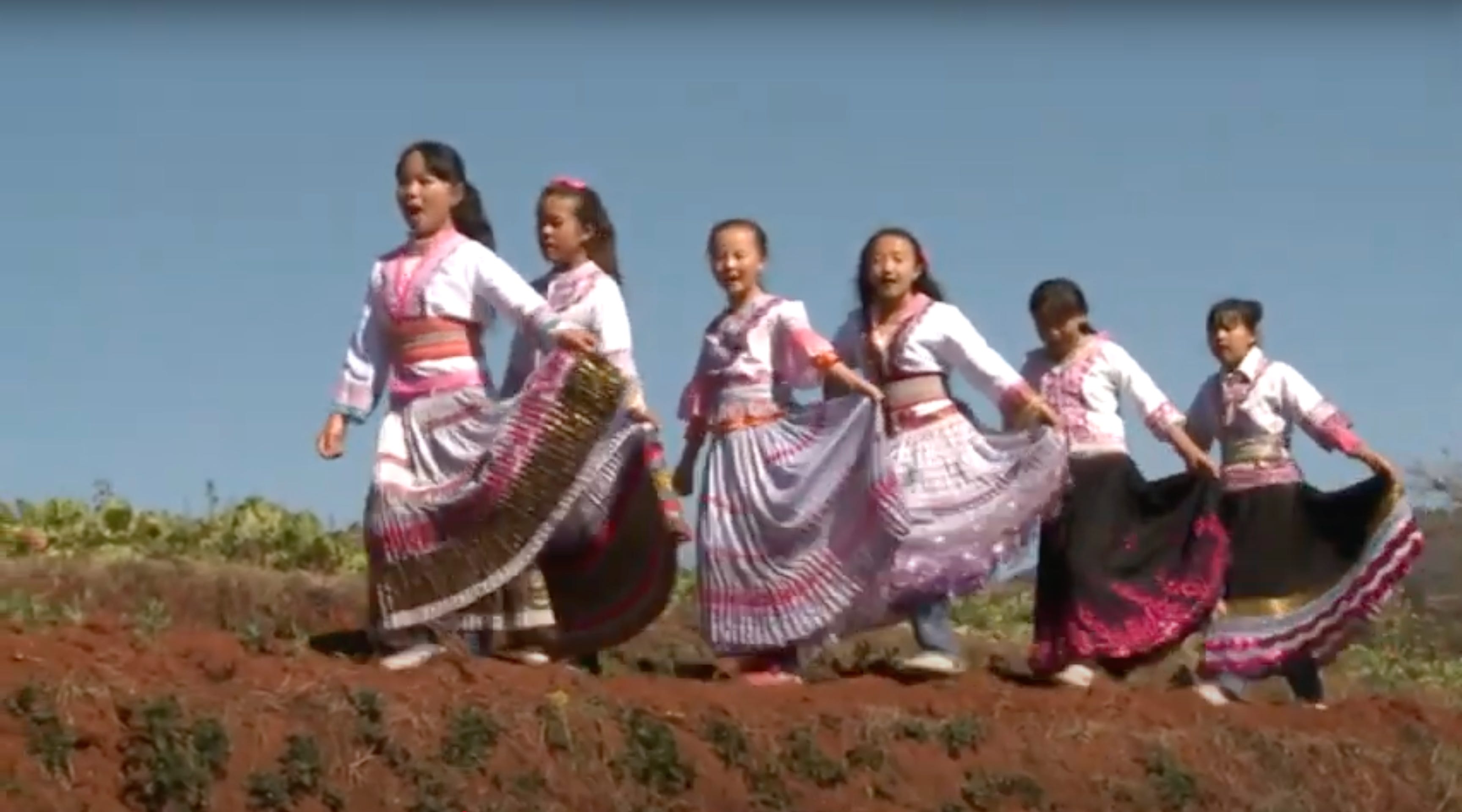
The English translation follows below.
麦地冲是云南中部的一个小山村。与中国大部分村庄不同的是,这里的村民大多是基督徒。100多年前,英国传教士伯格里(Samuel Pollard)来到云南,向社会最底层、长期作为奴隶的苗族人传教,让信仰在田间生根发芽。然而,从反右到文革,麦地冲的信徒受到迫害,苗族传道人被捕入狱,甚至遭遇酷刑致死。随着文革浩劫的结束,宗教活动空间似乎重新开放,但信徒面对的是截然不同的信仰环境。胡杰的纪录片《麦地冲的歌声》,向我们讲述了基督教在麦地冲的百年故事。
这不是胡杰第一次拍摄基督教相关的题材。他的代表作之一——《寻找林昭的灵魂》,讲述基督信徒林昭因批判共产党而遇害的故事。胡杰的《星火》、《我虽死去》等作品也均涉及基督教话题。对于这些影片中的基督教信徒们来说,宗教道德的感召,是他们身处政治迫害中时,坚持道德和正义的思想支撑。
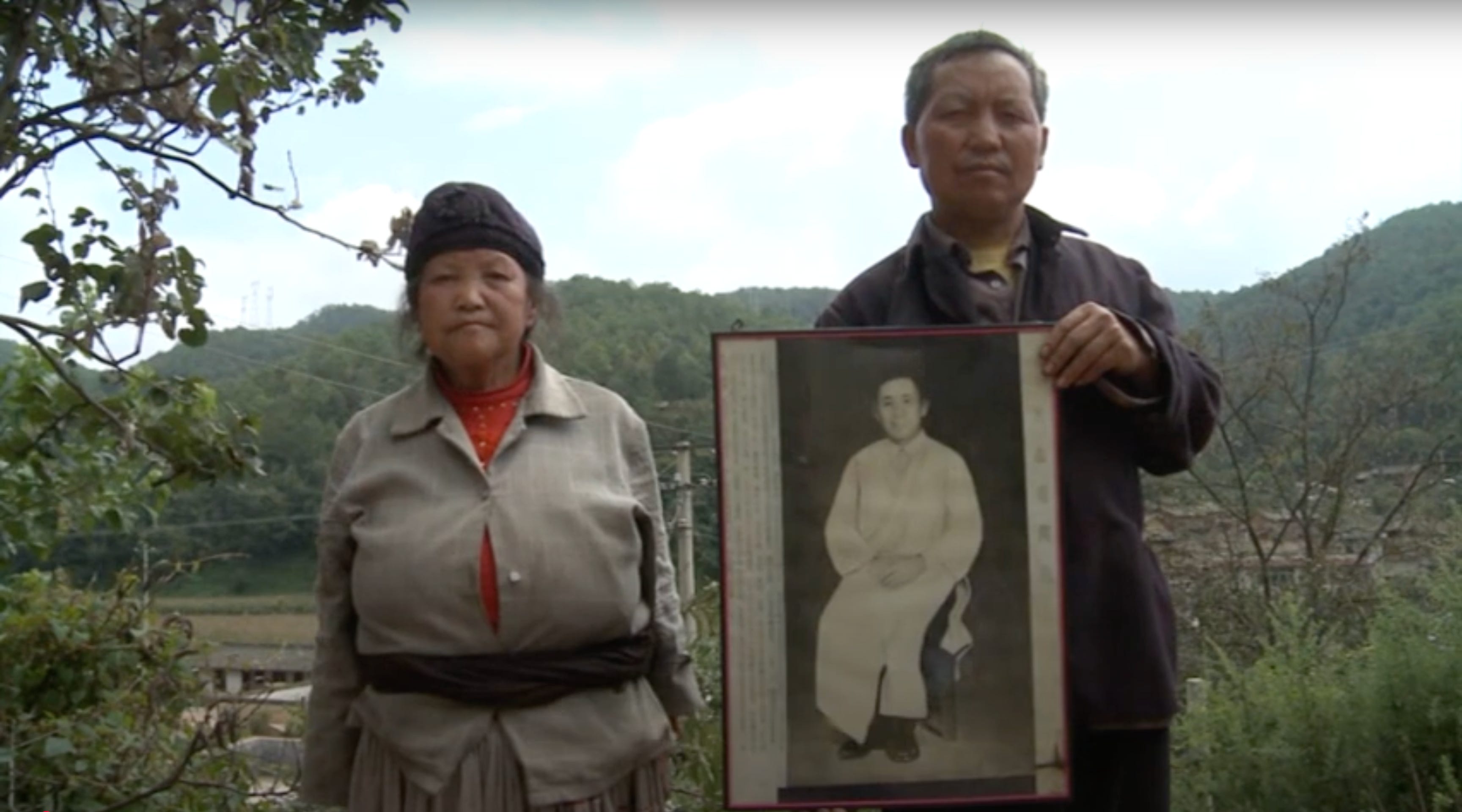
《麦地冲的歌声》里记录的苗族牧师王志明,就是这样一位基督教信徒。他在反右运动后被解除了神职,但仍坚持地下传教,并因为在文革中拒绝放弃宗教信仰、反对“忠于毛主席、忠于毛泽东思想、忠于毛主席的无产阶级革命路线”的“三忠于”活动而被割舌头、游街示众,最终被执行枪决。1980年,政府为王志明牧师平反。1998年,英国威斯敏斯特大教堂将王志明牧师选为二十世纪世界上“十大基督教殉道者”之一。他的雕像永立于教堂西门之上。
影片中所展现出的宗教信仰给人提供的力量,在近年来的中国公民社会中有许多回响。中国有很多知名的公民社会实践者都是基督教徒或受到基督教的影响,如刘晓波、张展、王怡、王炳章、韩东方。宗教信仰和公民社会之间的关联性并不是偶然现象:托克维尔的公民社会理论提出,宗教组织和其他公民组织能够培育一种“心灵的习惯”(habits of the heart),使人们能够以公民精神共同参与政治,维护自由民主的秩序。同时,基督教作为存在于官方话语和思想以外的价值体系,为公民社会的建立提供了独立的思想资源。宗教信仰及其组织亦为公民社会的参与者提供了交际场所、以信任为基础的关系网络和社会资本,壮大了公民社会的实力。影片里,诸如王志明牧师、张志清牧师等“大人物”提供了整个故事的叙事主线,但影片的主体是麦地冲的村民,是那些活过这个动荡岁月的“小人物”。公民社会并非只有几位领袖人物的奔走呼号就能形成,而是需要一个组织、社区里的公民一同参与建造。
当然,基督教与社会运动的关系并非是必然的。毕竟,许多抗争的个体——比如文革中的遇罗克——并非基督教徒。而在教徒中,也并非没有背弃道德理想的人物存在。在当代中国的语境里,宗教组织与国家之间的关系错综复杂。中国政府的控制力不仅来自于对体制的掌控,也来自于对诸如地下教会、家庭教会这些非正式组织的控制。
中国的宗教团体,在经过了文革直接、暴力的迫害,以及八十年代的短暂宽松之后,在九十年代进入了新的存在状态中。1991年的“六号文件”、1994年的“宗教活动场所管理条例”和“境内外国人宗教活动管理规定”、1996年的“宗教活动场所年度检查办法”等国家层面的几份主要文件预示了更加精密的法律和政策系统,并由宗教事务局、公安局和行政法规部门进行细化和执行。宗教从毛时代统战消灭的循环中走出,面对的是以“法律法规”为名的全新镣铐。
习近平上台后,宗教的处境更加艰难。宗教被当作是与普世价值和宪政民主并列的西方和平演变的利器之一。浙江教堂被勒令大规模拆除十字架,从“三改一拆”到“五进五化”,共产党重新进驻教会并监控宗教活动,王怡牧师的秋雨圣约教会也被取缔,多名成员被捕入狱。在西北各省,伊斯兰教问题横切着民族主义和恐怖主义两大议题。新疆建起了再教育营,遍布西北甘肃、陕西、宁夏的圆顶清真寺被削成平顶。文革中,“破四旧”要求消灭一切宗教符号。今天,“宗教标志出现在公共场所,必须移走”。文革中对宗教的军事化暴力在今天取而代之的是宗教局号令下的清真寺整改和关停。国家权力的无孔不入让宗教组织——这个处于私人与国家之间的场域,再一次被国有化。
同时,宗教面对的压力不仅来自于国家权力,还有物质环境的改变。一百年前的麦地冲,教会给人们带来了苗族的文字、知识、医药、信仰,人的生老病死、衣食住行都在宗教的秩序里进行。随着改革开放的发生,村民们去公立学校上课,去公立医院就医,劳动成果要进入市场交易转化为物质收益,村民去远方的城市里打工,在社交媒体上获得精神消费。个人收入和流动性提高在全球普遍意味着对宗教信仰的依赖下降,宗教从一个全能的承诺被不断拆解。在文革时期的严酷镇压之下仍然生存的宗教信仰,到了相对宽松的年月却有些失去了它发展的动能。
《麦地冲的歌声》完成于2014年。到了2019年,在昆明东部宜良县的另一个麦地冲村,中国农业大学为当地的彝族农民打造了“乡村振兴的样板间”。这里的村民们在农大的发展研究专家和博士生的指导下,集体入股村企业,并由农大培训的本地年轻人担任乡村CEO,翻新村里的房屋并转型做旅游业务——烤烟房、牲畜房被改造成了民宿和餐厅。从2022年开始,麦地冲核心试验区的民宿半年营业额超过了25万元,餐厅、农家乐、土特产销售接近50万元,所有收入留在村里,每户分红500元到5000元不等。从空中俯瞰,村落两旁种植了彩稻,一边是起舞的彝族男女,另一边是庄稼拼起来的象征共产主义的镰刀。
官方新闻里反复宣扬的是国家支持下经济发展的麦地冲,而宗教的麦地冲则很难进入公众视野。两个麦地冲在一个不完美、不公平的环境下竞争着,一边代表了政府主导下的新农村建设的样板——一个依靠学术、政策和产业支持,通过企业家光顾和捐赠,实现经济发展,年轻村民返乡做民宿CEO的新型乡村。另一边是宗教信仰生生不息的麦地冲,从那里走出了王志明牧师,苗族老奶奶至今还在用苗语唱着圣经的诗篇。打开百度地图搜索麦地冲,人们可以在云南找到八个村子,都叫麦地冲。《麦地冲的歌声》所记录的,似乎也只是其中一种麦地冲,一种在中国的政治语境下艰难又宝贵地存在着的麦地冲。在当下的中国,是否只能存在建造农家乐的麦地冲,而无法存在建造教堂的麦地冲?
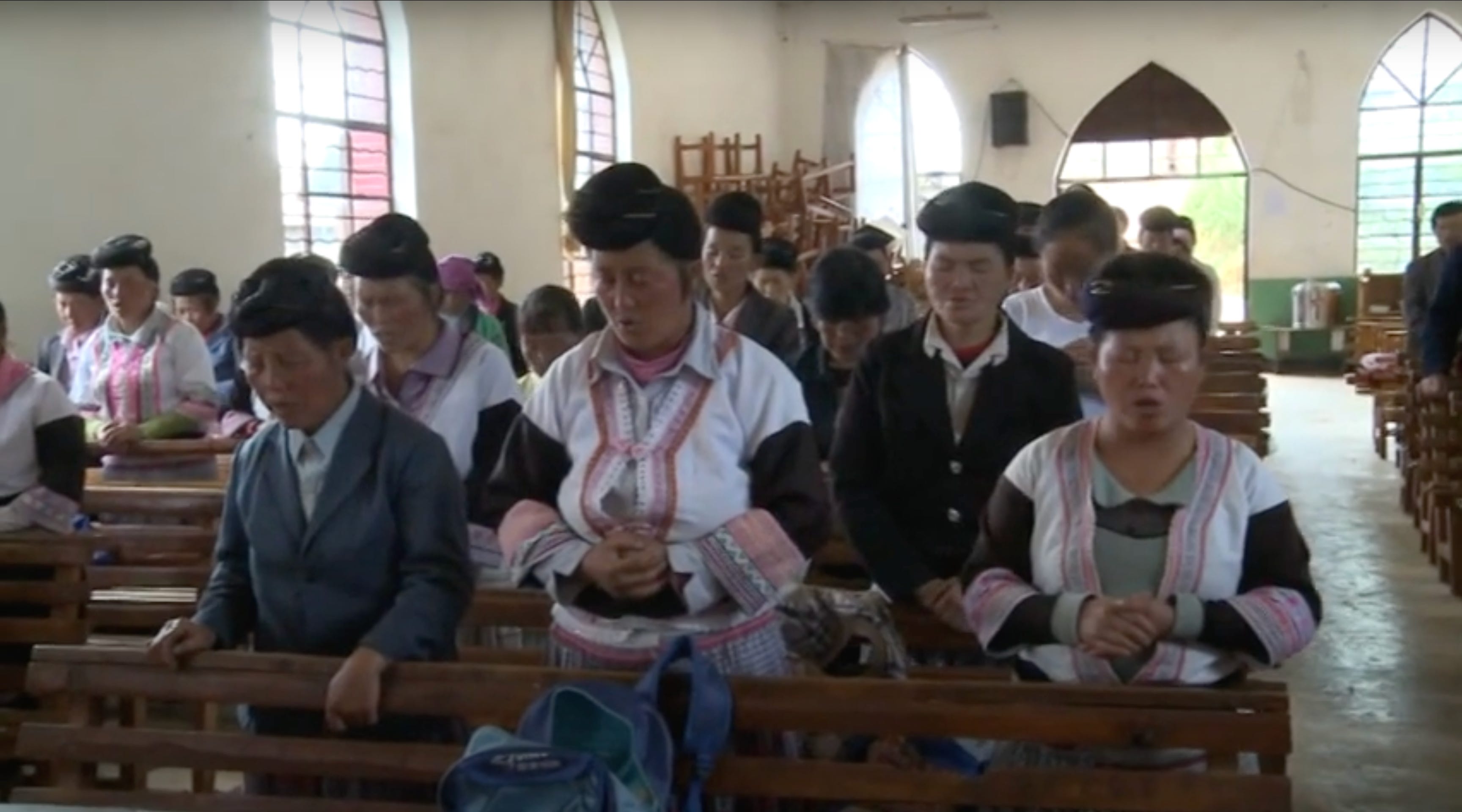
《麦地冲的歌声》画面平静简单,短短80多分钟的影片蕴涵了宗教、国家、个体、家庭、农村之间交互的多种层次,让麦地冲从一个小山村成为了一个超越时代的蕴涵着历史、记忆、人的信仰和精神力量的载体。影片最后一幕里,信徒们在教堂里闭着双眼,虔诚地念着圣经,信仰与精神的力量依然生生不息。
本期档案推荐:
纪录片《麦地冲的歌声》
Catastrophe and Rebirth: Songs from Maidichong
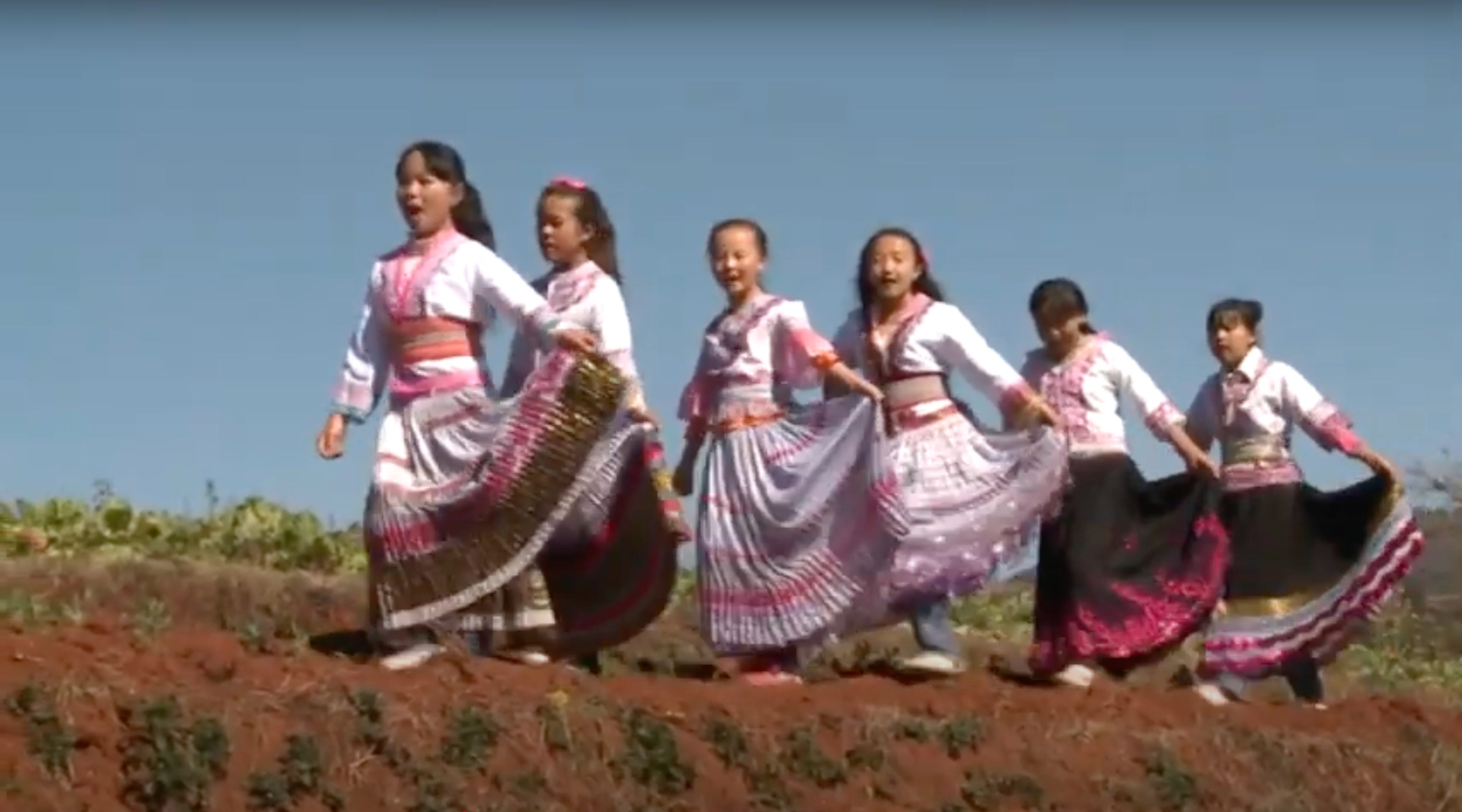
Maidichong, a small mountain village in central Yunnan, stands apart from most Chinese villages due to its predominantly Christian population. Over a century ago, the British missionary Samuel Pollard arrived in Yunnan and preached to the Miao people, then a marginalized group often living in servitude, allowing Christianity to take root in their communities. However, from the Anti-Rightist Campaign through the Cultural Revolution, the believers in Maidichong faced persecution. Miao preachers were imprisoned, some even tortured to death. Following the end of the Cultural Revolution, while the space for religious activities seemingly reopened, believers encountered a drastically altered religious landscape. Hu Jie’s documentary, Songs from Maidichong, chronicles the century-long history of Christianity in this village.
This is not Hu Jie’s first foray into filmmaking concerning Christianity. A notable work, Searching for Lin Zhao’s Soul, recounts the tragic story of Lin Zhao, a Christian believer who was persecuted to death for her criticism of the Communist Party. Hu Jie’s other films, including Spark and Though I Am Gone, also touch upon Christian themes. For the Christians depicted in these films, the compelling force of their religious ethics provided crucial ideological support, enabling them to uphold morality and justice amidst political oppression.
Wang Zhiming, the Miao pastor featured in Songs from Maidichong, exemplifies such a Christian believer. Stripped of his pastoral duties after the Anti-Rightist Movement in the late 1950s, he persisted in underground preaching. During the Cultural Revolution, his refusal to renounce his faith and his opposition to the “three loyalties” campaign (“loyalty to Chairman Mao, loyalty to Mao Zedong Thought, and loyalty to Chairman Mao’s proletarian revolutionary line”) led his executioners to cut out his tongue before they paraded and killed him. In 1980, the government posthumously exonerated Pastor Wang Zhiming. In 1998, Westminster Abbey in the United Kingdom recognized Wang as one of the ten 20th century Christian martyrs worldwide, and his statue stands to this day above the abbey’s west entrance.
The empowering strength derived from religious belief, as portrayed in the film, has found echoes within Chinese civil society in recent years. Many prominent figures in China's civil society are Christians or have been influenced by Christianity, including Liu Xiaobo, Zhang Zhan, Wang Yi, Wang Bingzhang, and Han Dongfang. Many believe that the connection between religious faith and civil society is not coincidental. Tocqueville’s theory of civil society posits that religious and other civic organizations cultivate “habits of the heart,” fostering a civic spirit that enables people to participate collectively in politics and uphold a liberal democratic order. Furthermore, Christianity, as a value system independent of official discourse and ideology, offers distinct intellectual resources for the development of civil society. Religious belief and its organizations also provide participants in civil society with spaces for interaction, trust-based relational networks, and social capital, thereby bolstering the strength of civil society. While the narrative of the film is anchored by significant figures like Pastor Wang Zhiming and Pastor Zhang Zhiqing, its primary focus lies on the villagers of Maidichong, the ordinary individuals who lived through this period of upheaval. Civil society is not solely forged by the activism of a few leaders but necessitates the collective engagement of citizens within an organized community.
However, the relationship between Christianity and social movements is not absolute. Many individuals who resisted, such as Yu Luoke during the Cultural Revolution, were not Christian. Conversely, not all believers have remained steadfast in their moral ideals. In contemporary China, the interplay between religious organizations and the state is intricate and multifaceted. The Chinese government’s control extends beyond its systemic authority to encompass informal organizations like underground and house churches.
Following the direct and violent persecution of the Cultural Revolution and a brief respite in the 1980s, religious groups in China entered a new phase in the 1990s. Several key national-level documents, including “Document No. 6” from 1991, the “Regulations on the Management of Places of Religious Activity” and the “Regulations on the Management of Religious Activities of Foreigners” in 1994, and the “Measures for the Annual Inspection of Places of Religious Activity” from 1996, signaled a more complex legal and policy framework. This framework was further defined and implemented by the Bureau of Religious Affairs, the Public Security Bureau, and administrative regulatory bodies. Emerging from the Mao era’s cycle of united front and suppression, religion faced a new form of constraint in the guise of laws and regulations.
Under Xi Jinping’s rule, the situation for religious groups has become increasingly challenging. Religion is viewed as a tool of the West’s color revolution, alongside universal values and constitutional democracy. In Zhejiang, a large-scale demolition of church crosses was mandated, and policies shifted from “Three Rectifications and One Demolition” to “Five Entries and Five Transformations,” with the Communist Party reasserting its presence in churches and monitoring religious activities. Pastor Wang Yi’s Early Rain Covenant Church was shut down, and numerous members were arrested. In the northwestern provinces, the issue of Islam intersects with the complex dynamics of nationalism and terrorism. Re-education camps were established in Xinjiang, and the distinctive domes of mosques across the northwest in Gansu, Shaanxi, and Ningxia were removed.
During the Cultural Revolution, the “Destroy the Four Olds” campaign aimed to eradicate all religious symbols. Today, “religious symbols appearing in public places must be removed.” The militarized violence against religion during the Cultural Revolution has been replaced by the Bureau of Religious Affairs’ directives for mosque rectification and closure. The pervasive reach of state power has once again led to the nationalization of religious organizations, a sphere traditionally situated between the private and the state.
Simultaneously, religious groups face pressure not only from state authority but also from a changing socio-economic environment. A century ago in Maidichong, the church provided the Miao people with their written language, education, healthcare, and spiritual guidance. Nearly everything in life, from birth to death, as well as daily necessities like clothing, food, and shelter, was within the purview of religious order. With the advent of reform and opening up, villagers began attending public schools, seeking medical care in public hospitals, and engaging in market transactions for their labor, leading to material gains. Villagers traveled to work in distant cities and found spiritual fulfillment on social media. Globally, increased personal income and mobility often correlate with a reduced reliance on religious belief, gradually dismantling religion's all-encompassing role. Religious life, which had endured the severe repression of the Cultural Revolution, somewhat lost its developmental momentum in the relatively more liberal years that followed.
Songs from Maidichong was completed in 2014. In 2019, in another Maidichong village in Yiliang County, eastern Kunming, China Agricultural University developed “model houses for rural revitalization” for the local Yi farmers. Guided by agricultural university experts and doctoral students, the villagers collectively invested in village enterprises. Local young people trained by the university took on roles as rural CEOs, renovating village houses and transforming them into tourism businesses – tobacco drying rooms and livestock sheds became guesthouses and restaurants. Since 2022, the semi-annual turnover of guesthouses in the core experimental area of this Maidichong village has exceeded 250,000 yuan, and sales from restaurants, agritourism, and local products have approached 500,000 yuan. All revenue remains within the village, with each household receiving dividends ranging from 500 to 5,000 yuan. An aerial view reveals fields of colorful rice planted on either side of the village, depicting dancing Yi figures on one side and a communist sickle formed by crops on the other.
Official news consistently promotes the state-supported economic development of this Maidichong, while the religious Maidichong is barred from public visibility. These two Maidichongs exist in an imperfect and unequal environment. One represents a model of state-led new rural construction – a modern village relying on academic, policy, and industrial support, achieving economic growth through entrepreneurial engagement and donations, and attracting young villagers back as guesthouse CEOs. The other is the enduring Maidichong of religious faith, the birthplace of Pastor Wang Zhiming, where elderly Miao women still sing biblical hymns in their native tongue. A search for “Maidichong” on Baidu Maps reveals eight villages with this name in Yunnan. Songs from Maidichong appears to document just one of these, a Maidichong that exists precariously within China’s political landscape. In contemporary China, can there only be a Maidichong that builds agritourism facilities, and not one that builds churches?
The visuals of Songs from Maidichong are serene and straightforward. This 80-plus-minute film encompasses the intricate interplay between religion, the state, individuals, families, and rural communities, elevating Maidichong from a small mountain village to a timeless symbol embodying history, memory, faith, and spiritual strength. The film concludes with a scene of believers in church, their eyes closed in devout prayer, underscoring the enduring power of faith and spirit.
Recommended Archive: