
刘晓波与天安门母亲——《刘晓波生死书》节选
Liu Xiaobo and the Tiananmen Mothers—An Excerpt from The Book of Liu Xiaobo’s Life and Death

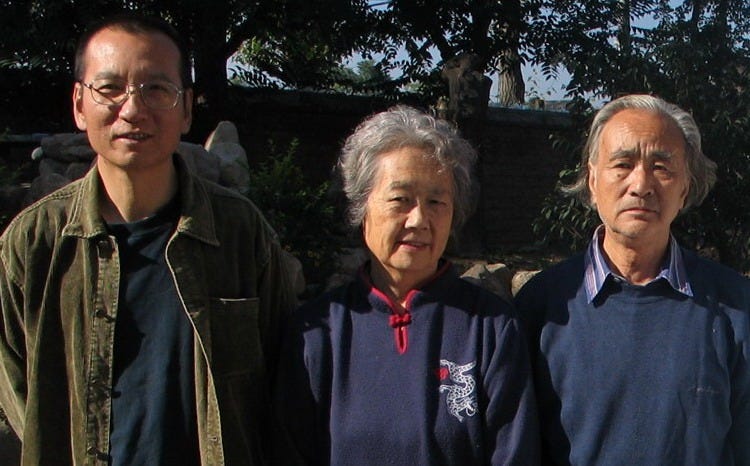
作者:廖亦武
By Liao Yiwu
The English translation follows below.
编者按:
作家廖亦武所著的《刘晓波生死书》中、英、德文版,将于2027年刘晓波离世10周年时出版。本文节选自该书第七章,由作者授权民间档案馆首次发表。文中,廖亦武回顾了1989年“六四”之后,以丁子霖女士为代表的“天安门母亲”,如何年复一年地为“六四”死难者讨寻公道,以及天安门母亲们对2010年诺贝尔和平奖得主刘晓波的深刻精神影响。篇幅所限,发表时有删减和修改,读者们可以在中国民间档案馆网站上读到全文。
2005年初春,我从四川到北京,潜伏在老友忠忠的出租屋里,一个多星期不敢露面。直到三月的北京两会(全国人民代表大会和中国人民政治协商会议)结束了,定点监控由紧绷到松懈,刘晓波才赶过来,带我去仰慕已久的丁子霖和蒋培坤(他们夫妻俩是“天安门母亲”运动主要创始人)老师家。
聊了两个多小时。当然,主要是他们聊,我插不上嘴,就傻瓜似地洗耳恭听。末了,我把刘晓波(他当时是海外网刊《民主中国》的主编)刚刚发给我的4000元稿费掏出来,要捐给“六四”难属群体。丁老师不收,说,你自己都困难。我说不困难,有肉吃有酒喝还有到处乱跑的闲钱。可丁老师依旧不收,说,难属们是需要帮助,我们也不拒绝捐款,但你的作用不是捐款。
看我有些困惑,丁老师就埋头写了一张卡片递给我:“能抽空去看看这对夫妇吗?要不,打个电话也行。你们是同乡。”这卡片上写着的,是“六四”死难青年吴国锋的父母——吴定富、宋秀玲的电话和地址。
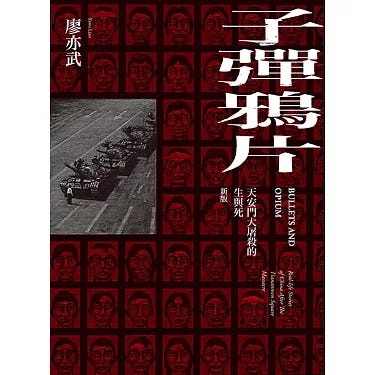
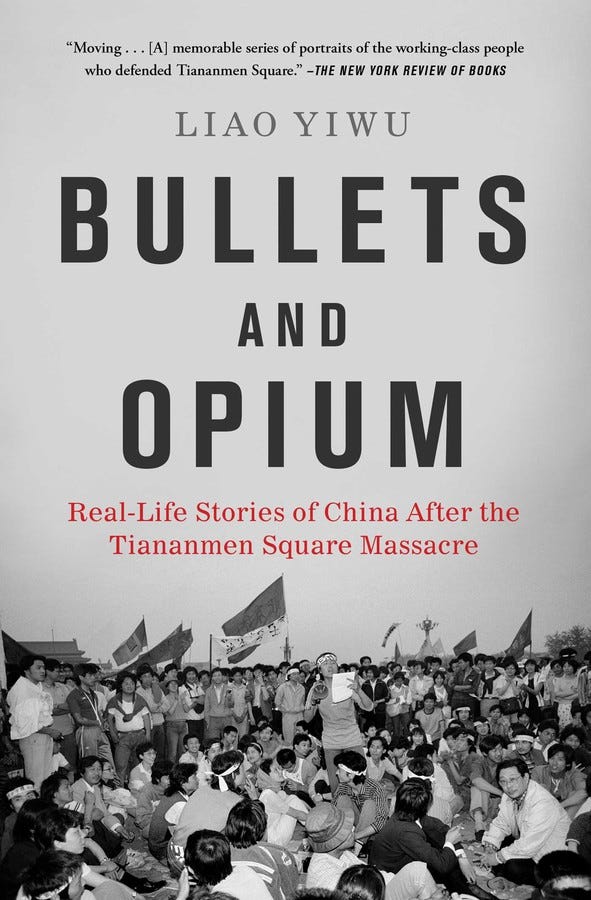
回程途中,我把稿费塞给刘晓波,央求他代转(很快,我就接到收据,丁老师已将这笔钱转给了“六四”难属杨银山和伤残者杨子明)。接下来,几经周折,我去了四川新津县探望吴国锋的父母。这次深度专访,后来收录入我的《子弹鸦片:天安门大屠杀的生与死》一书。文章首发在2005年5月19日的《民主中国》,引起了连锁反应。有多位流亡美国的人士通过各种渠道联系我,说要给因病割除了一个肾脏、生活困难的吴国锋老爸捐款。
其时,我正在阅读2002年诺贝尔文学奖得主凯尔泰斯(Imre Kertész)的代表作——《为一个未出生的孩子祈祷》。凯尔泰斯是匈牙利籍的犹太人,也是奥斯维辛集中营的幸存者。在书中,他写下自己为什么拒绝成为一个父亲。
“不!”我毫不犹豫地脱口而出,毫不犹豫,完全出自本能,是本能反抗着本能,是反本能在起作用,而不是本能本身,这一声“不!”,不是深思熟虑的,也不是一个期望中的回答,表达我的不置可否。
我的妻只是笑我,她理解我,后来她也说,她从心底知道这声“不!”来得多么艰难,尽管我的内心苦苦挣扎想使它成为一声“是!”,而我的回答——我相信我理解她,也知道她在想什么……
不——我孩提时代的经历再也不应发生在另一个孩子身上,
不——我的心中有声音在尖利地叫喊,是可能的,这个孩提时代的经历,应该发生在这个孩子——在你——在我身上。是的,是开始对我的妻讲述我的孩提时代的时候了……
我从以上文字推断,凯尔泰斯没有孩子;在妻子这次堕胎之后,他也再不会要孩子。他拿起了笔,为这个未出生的孩子祈祷,他喊了一连串的“不!”,声泪俱下,因为犹太人一生下来就没有安全感,甚至没有祖国。凯尔泰斯永远记得,一个十四岁的少年,被关入集中营等死,却突然得到一杯热牛奶,他舍不得一口灌下去,而是躲在角落里,小口小口地吮。虽然牛奶的表皮蒙了一层黑灰,这黑灰就是焚尸炉落下来的,但他忽略了这一切,全神贯注地吮吸——这是一种怎样的幸福啊,那种黑牛奶的回味令他多年后想把它写出来……
我的眼眶湿润了,而同时,录音机里,我刚刚访问过的,那个失去孩子的父亲,正在讲述这个孩子的童年。这个叫吴国锋的孩子,长大后去了北京,进了大学,燃起父母对未来的种种梦想,再后来,就是“六四”。他被戒严士兵的刺刀捅死在异乡街头,父母的梦想又成死灰。绝望无尽头。试想,如果把吴国锋的父亲换成凯尔泰斯,这个孩子会生下来吗?当他知道,生下这个孩子,21年后,这个孩子,会死在他的国家,死在士兵的刺刀之下?
再如果,把凯尔泰斯文字中的“犹太人”换成“中国人”,我们也不该生下来,以免只要思想,就会犯罪,连累亲人。可我们生下来了,和一场接一场的灾难一样,繁衍着,耻辱如冰雹一般打得人抬不起头。
“不!”,我关掉了录音机。但是——
“不!”,我还会打开它。
1
《子弹鸦片》是2012年在台湾出版的。它被称之为文学纪实,但其实它更是一本证词。书中我自己最珍视的,是对吴定富夫妇的这篇专访。叙述平淡无奇,只是一对暮年夫妇追忆他们的孩子。这个孩子,很可能是死于天安门屠杀的数千孩子中,最有想法的那一个。在物资匮乏的1980年代,中国有照相机的人还很罕见,不满21岁的吴国锋,不仅逼着父母寄钱买照相机,还拿着相机上街去记录历史——这太超前了。所以刽子手急了,要抢他的照相机,他攥紧不让。对付绝大多数人的,是子弹和坦克,唯独对他,是刺刀直来直去插了七下。他的双手握住刀锋,他倒下,却要坐起来,眼睛大睁着。他的眼睛——那是另一台照相机。
事过多年,我了解并记录了这一瞬间,我只后悔,我的文字还不够有力。
那之后我再次去北京。2005年5月26日下午,经艺术家高氏兄弟介绍,我与画家武文建结识,自此拉开长达数年的寻访所谓“六四暴徒(其实是社会底层抗暴者,政府称他们为暴徒)”和普通政治犯的序幕。
2006年岁末,在北京一家餐馆包间,“天安门母亲运动”发起人丁子霖被授予独立中文笔会第四届自由写作奖。全国各地的三十多名异议作家应邀到场,刘晓波起立鞠躬,致了长达万言的颁奖辞,中途几度哽咽:
痛失爱子的一刻,她站起来,在专制铁钳下,以遇难者家属的身份发出第一声呐喊。从此,她开始了另一种人生,百折不挠地追寻六四死难者,让那些冤魂的家属们从绝望的阴影走到阳光下,以母爱为纽带,互相扶持,互相联络,互相激励,直到十七年后的今天,形成了有一百一十多名六四难属参与进来的天安门母亲运动……
从1994年的《六四受难者名册》、1999年的《见证屠杀,寻求正义》,到最近的这本《寻访六四死难者》,她的浮雕般的文字令所有经历过那场屠杀却刻意回避的社会、历史及新闻学家蒙羞,也令所有自称“幸存者”的知识分子蒙羞,更令那些经历过逃亡、失落、回归,最终大彻大悟,懂得利用国内外、东西方的制度差异,玩弄政治、经济、文化平衡术的时代精英蒙羞。甚至在某种程度上,也令我们这类自以为做得不错的学者和作家蒙羞……
七十岁的丁子霖致答谢辞,她追述了丁氏短寿的家族史,二伯父丁文江,驰名全国的地质学家,四十九岁就去世了。她自叹已活得足够长,比家族里任何长辈都活得长。但是“心脏病越来越严重,不定哪天就长眠不起。”这次她放不下的,不再是自己被杀的孩子,而是同自己一样,年复一年为死去的孩子寻求公平正义的、逐渐老去的父母们。“在座的不少朋友还年轻,大有希望迎来民主曙光。”她说,“如果有一天我不在了,请多多关照他们。”
然后,她坐到我跟前,让我用洞箫吹奏和演唱那首《天安门母亲》。没有人想到,六年后,在法兰克福书业和平奖的颁奖典礼上,我会为近千名德国观众吹奏并演唱同一支歌曲:“人世茫茫,墓草青青,母亲啊,你的叫喊有用吗?”
2
2011年,我逃出中国后,一直在整理那些浩如烟海的资料,和丁子霖、蒋培坤老师一直邮件往来。2015年9月,蒋培坤突发心梗猝然离世,重温我们的通信,我不禁黯然。两位老师曾一道写下《送别儿子》,如今却由丁子霖独自写下这篇《送别丈夫》。
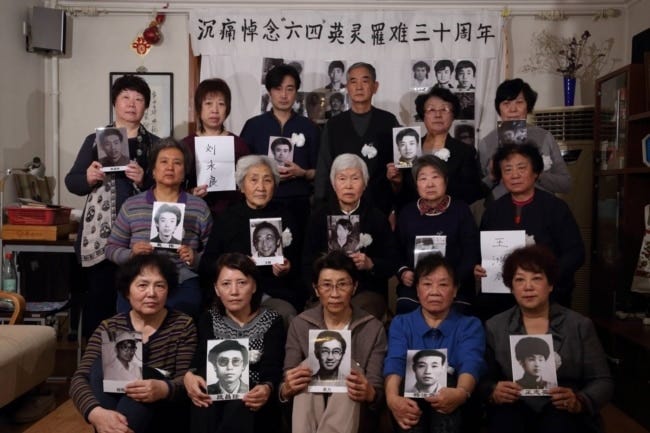
2025年,天安门母亲群体发表了“1989年六四惨案36周年祭”,再次向中共政权提出“真相、赔偿、问责”的要求——这三个词汇、六个汉字,1994年,丁子霖第一次对外公布“六四”死难者和伤残者名单时,就已提出,此后岁岁重复,直至眼下。
没有回应。
就如奥斯维辛的幸存者、匈牙利作家凯尔泰斯在《为一个未出生的孩子祈祷》中的那一声“不!”
“不——我孩提时代的经历再也不应发生在另一个孩子身上……”
“不!”
没有回应。
中共政权没有回应。西方各国政府也没有响应。如果诺贝尔和平奖得主刘晓波今天还活着,情况会不一样吗?
在这篇没有任何回响的祭文中,有这样的描述:
“天安门广场在6月4日凌晨清场后,学生们四人一排从天安门广场往西长安街方向撤离。走到西单六部口遇到部队,北京市民护住学生跪在坦克前,拦住部队,部队打出带有毒气的催泪弹,使得在场的学生、市民晕倒在地不能动弹,一排坦克从这些失去知觉的人群中轧过去,田道民也在其中,他的半个额头带一只眼睛被坦克轧掉,只剩下半个额头及另一只眼睛,身上没有伤痕,当场死亡……三十四年后,田道民的母亲黄定英也因病死亡。”
还有不止一处对死难者情况的目击者描述。
在这篇没有任何回响的祭文末尾,也有两份名单,一份是108个签署祭文的人,另一份,这些年已经陆续死去的母亲们(或其他难属)的名字,已长达79个。
这些名字,与《子弹鸦片》附录的205名死难者和49名伤残者的名单,有同等分量。尽管如此,我还是担心,它们会令自由世界的读者们因难以卒读而厌倦——虽然纽约发生过911恐怖袭击,3000多无辜生命转瞬灰飞烟灭时,每个生者都希望记住他们的名字,并希望把死者的名字永远镌刻在石壁和幕墙——类似的记忆文化,德国人更为擅长,除开纪念碑、博物馆、档案馆、书籍和各种展出,许多街道及墓地上,也有大片同一年,甚至同一天消逝的人名——可“六四”发生在遥远而陌生的中国,大多数中国人自己,都觉得那一天像没发生过一样……
我正在写“刘晓波”,将这事过境迁的名单放在有关他的章节,我想,即使他活着,也不会反对。这也可能是唯一的机会,因为除了我,其他中文作家都不会(也想不到)这样做——地球每天都有珍稀物种面临濒危,“天安门母亲群体”也正走向濒危。时间不多了。
在这个人类大脑已被互联网“碎片化”的时代,作为自诩的“时代录音机”,我不得不将这108位“六四难属”和79位已故难属的名单粘贴在此——在这本后世可能注意到的《刘晓波生死书》中——以争取再过若干年,当失忆虚空笼罩国家和民众,“查无此人”、“查无此事”成为社会常态时,至少还有一本中文、德文或英文书“可查可考”。
3
但是,刘晓波,你已经在天上,所以你的记忆始终完整,特别是关于丁子霖、蒋培坤的记忆……你第一次坐牢出来,只因为说了“没看见天安门死人”这句话,丁子霖就叫你不要再去他们家……你受刺激了之后,完全是你一厢情愿的坚持,深陷其中的忏悔,打动了他们……
在《念念六四——刘晓波诗集自序:来自坟墓的震撼》中,你写道:
丁、蒋二位老师把他们历尽磨难编成的《见证屠杀,寻找正义》送给我俩(其中有155名“六四”死伤者名单和一些遗属的证词)……一进家门,连口水都没顾得上喝,就迫不急待地翻开读起来,从读第一页开始,我的眼睛就湿了。我是在泪水中念给刘霞听的,几乎每读一小段都要因哽咽而中断,我已记不清中断了多少次,每一次中断时的沉默都有死一样的寂静,都能听到亡灵们在地下发出的冤哭,那么微弱、那么无助、那么撕心裂肺……
“六四”的历史真相究竟是什么?为什么以大学生和知识精英为主的八九运动,当惨案发生时,死的都是普通人,被判重刑的也大都是普通人?为什么付出最大的生命代价的默默无闻的人们,无权讲述历史,而那些作为幸存者的精英们却有权喋喋不休?为什么“六四”后,这些普通人的血还要被用来滋养大大小小的投机者,供一些无耻之徒角逐于所谓“民运”的名利场。什么是苦难和牺牲?什么是生命和鲜血的代价?在我们这块土地上,幸福的分配早已有天壤之别。难道苦难作为一种资源,同样的或轻重不同的受难者从中得到也注定有天壤之别吗……
我这十年多来,时时被负罪感所困扰。在秦城监狱我出卖了亡灵们的血,写了悔罪书。出狱后,我还有个不大不小的臭名,得到过多方的关怀。而那些普通的死难者呢,那些至今仍在牢狱之中的无名者呢,他们得到过什么?每每念及此,我都不敢往自己的灵魂深处望一眼,那里面有太多的懦弱、自私、谎言和无耻……
刘晓波,你对自己够狠够绝,我做不到,所以当逃兵了。我知道你在天上瞪着我,在海底瞪着我,死者不需要闭眼,甚至不需要眨眼,做死者最轻松了,只需要像个机器人奴隶主,不分昼夜监督活人干活儿就行了。
(《刘晓波生死书》一书,获得面向全球的S Fischer基金会资助——作者特此感谢。)
本期推荐档案:
《刘晓波与天安门母亲》(未删节版)(选自《刘晓波生死书》第七章)
【作者观点不代表中国民间档案馆立场。】
Liu Xiaobo and the Tiananmen Mothers—An Excerpt from The Book of Liu Xiaobo’s Life and Death
By Liao Yiwu
Editors’ Note:
The Chinese, English, and German editions of The Book of Liu Xiaobo’s Life and Death, written by the author Liao Yiwu, will be published in 2027 to mark the tenth anniversary of Liu Xiaobo’s passing. This article is an excerpt from Chapter 7 of the book, published here for the first time by the China Unofficial Archives with the author’s permission. In this text, Liao Yiwu reflects on how, following the June 4 massacre of 1989, the Tiananmen Mothers—represented by Ms. Ding Zilin—sought justice year after year for the victims of the tragedy. Liao also explores the profound spiritual influence these mothers had on the 2010 Nobel Peace Prize laureate, Liu Xiaobo. Due to space limitations, some cuts have been made for publication; readers can find the full text on our website.
In the early spring of 2005, I traveled from Sichuan to Beijing and went into hiding at the rented apartment of my old friend, Zhongzhong. For over a week, I didn’t dare show my face. It wasn’t until the conclusion of the “Two Sessions” (the National People’s Congress and the Chinese People’s Political Consultative Conference) in March—when the targeted surveillance relaxed—that Liu Xiaobo rushed over. He took me to visit the home of Ms. Ding Zilin and Mr. Jiang Peikun, the husband and wife who were the principal founders of the Tiananmen Mothers movement, whom I had long admired.
We chatted for more than two hours. Of course, they did most of the talking. Unable to get a word in, I just listened respectfully like an idiot. At the end, I pulled out the 4,000 yuan in manuscript fees that Liu Xiaobo (who was then the editor-in-chief of the overseas online journal Democratic China) had just paid me, intending to donate it to the families of the June 4 victims. Ms. Ding refused to accept it, saying, “You are facing difficulties yourself.” I insisted I wasn’t, arguing that I had meat to eat, wine to drink, and plenty of spare cash to travel around. Still, Ms. Ding refused, saying, “The families do need help, and we don’t turn down donations, but your purpose is not to give money.”
Seeing my confusion, Ms. Ding lowered her head to write on a small card and handed it to me: “Can you find some time to visit this couple? Or, if not, just give them a phone call. You are from the same province.” Written on the card were the phone number and address of Wu Dingfu and Song Xiuling—the parents of Wu Guofeng, a young man killed during the June 4 crackdown.
On the return journey, I stuffed the manuscript fees into Liu Xiaobo’s hands and begged him to forward the money on my behalf. (Very soon after, I received a receipt showing that Ms. Ding had already transferred the funds to Yang Yinshan, a victim’s family member, and Yang Ziming, who had been disabled in the crackdown).
Following this, after several twists and turns, I traveled to Xinjin County in Sichuan to visit Wu Guofeng’s parents. This in-depth interview was later included in my book, Bullets and Opium: Real-Life Stories of China After the Tiananmen Square Massacre. The article was first published on May 19, 2005, in Democratic China. Several individuals exiled in the United States reached out to me through various channels, wanting to donate money to Wu Guofeng’s aging father, who had lost a kidney to illness and was struggling to make ends meet.
At the time, I was reading Kaddish for an Unborn Child, by the 2002 Nobel Laureate in Literature, Imre Kertész. Kertész, a Hungarian Jew and an Auschwitz survivor, explained in his book why he refused to become a father:
“No!” I said, and I didn’t think about it for a single moment, it came completely out of instinct, or rather, not out of instinct, but against instinct, as an anti-instinct, so to speak. This “No!” didn’t require any contemplation, it was not the product of a well-considered standpoint, and it didn’t want to represent neutrality.
My wife just laughed, she understood me, and later she also said she knew exactly how hard it was for me to say that “No!”, even though everything inside me was struggling to say “Yes!”. And I, I think I understood her, I knew what she was thinking…
No—what happened to me as a child must never happen to another child.
No—a voice inside me screamed that it could happen to this child—to your child, to my child. Yes, it was time to start telling my wife about my childhood…
From these words, I inferred that Kertész had no children, and that following his wife’s abortion, he would never want them. He picked up his pen to pray for this unborn child, crying a torrent of tears as he shouted a series of “No’s!” because a Jew has no sense of security from birth, nor even a motherland. Kertész would forever remember being a fourteen-year-old boy, imprisoned in a concentration camp and waiting for death, who suddenly received a cup of hot milk. He couldn’t bring himself to gulp it down all at once, so he hid in a corner, sipping it in tiny mouthfuls. Even though the surface of the milk was coated in a layer of black ash drifting down from the crematoriums, he ignored it entirely, focusing all his attention on savoring it. What a profound kind of happiness that must have been—the lingering aftertaste of that black milk made him want to write about it decades later.
My eyes grew moist. Simultaneously, from my tape recorder, the bereaved father I had just interviewed was recounting his own child’s youth. This child, Wu Guofeng, had grown up, gone to Beijing, and entered college, igniting all kinds of dreams for his parents’ future. Then came June 4. He was stabbed to death by the bayonets of martial law soldiers on the streets of a distant city, and his parents’ dreams turned back to ashes. Their despair was bottomless. Imagine if Wu Guofeng’s father had been Kertész—would this child have ever been born? If he had known that 21 years after giving birth to this boy, the child would die in his own country, pierced by a soldier’s bayonet?
Furthermore, if we replace the word “Jew” in Kertész’s writing with “Chinese,” then perhaps we shouldn’t be born either—lest merely having thoughts be deemed a crime that implicates our loved ones. Yet, we were born. Just like one disaster following another, we multiply, while shame beats down on us like hail, making it impossible to lift our heads.
“No!” I turned off the tape recorder. But—
“No!” I knew I would open it again.
1
Bullets and Opium was published in Taiwan in 2012. It is described as a literary documentary, but in reality, it is a collection of testimonies. What I treasure most in the book is that specific interview with Wu Dingfu and his wife. The narrative is entirely ordinary, just an elderly couple remembering their child. Yet this child was likely the most independent-minded of the thousands who died in the Tiananmen massacre. In the resource-scarce 1980s, owning a camera in China was exceedingly rare. Yet Wu Guofeng not only badgered his parents into sending money to buy one, but he actually took that camera onto the streets to document history. He was far ahead of his time. This terrified the executioners, who tried to wrench the camera from him, but he gripped it tightly and refused to let go. While the vast majority were dealt with by bullets and tanks, he was singled out to be stabbed seven times by a bayonet. He gripped the blade with his bare hands as he fell, yet he still tried to sit up, his eyes wide open. Those eyes of his—they were another camera.
Years later, I uncovered and recorded that final moment. My only regret is that my writing was not powerful enough.
After that, I returned to Beijing. On the afternoon of May 26, 2005, through an introduction by the Gao Brothers (Gao Qiang and Gao Zhen, who was detained in 2024 and put on trial in 2026), I met the painter Wu Wenjian. This marked the beginning of a years-long journey to find and interview the so-called “June 4 thugs” (who were actually working-class citizens resisting the violence, though labeled thugs by the government) and ordinary political prisoners.
At the end of 2006, in a private room of a Beijing restaurant, Ding Zilin, the founder of the Tiananmen Mothers Movement, was presented with the Independent Chinese PEN Center’s Fourth Free Writing Award. More than thirty dissident writers from across the country were invited to attend. Liu Xiaobo stood up, bowed, and delivered an acceptance speech of nearly ten thousand words, choking back tears several times along the way:
“At the devastating moment of losing her beloved son, she stood up. Beneath the iron pincers of autocracy, she uttered her first cry in the capacity of a victim’s family member. From that moment on, she embarked on a different path in life, indefatigably tracing the June 4 victims and leading the families of those wronged souls out from the shadows of despair and into the sunshine. Using maternal love as their bond, they have supported, contacted, and encouraged one another. Today, seventeen years later, this has culminated in the Tiananmen Mothers movement, which now includes more than 110 families of June 4 victims...
From the 1994 Roster of June 4 Victims and the 1999 Witnessing the Massacre, Seeking Justice, to her most recent book, Searching for the June 4 Victims, her deeply etched words put to shame all those sociologists, historians, and journalists who lived through the massacre yet deliberately looked away. Her words shame all the intellectuals who call themselves ‘survivors,’ and they shame the elites of our era who experienced exile, disillusionment, and return, only to arrive at a ‘grand awakening’ that taught them how to exploit the institutional differences between East and West to play balancing games with politics, economics, and culture. To some extent, her words even shame scholars and writers like us, who flattered ourselves into thinking we were doing quite well...”
The seventy-year-old Ding Zilin then delivered her remarks of thanks. She recalled the short-lived history of the Ding family, noting that her paternal uncle, Ding Wenjiang—a geologist famous nationwide—had passed away at the age of forty-nine. She mused that she had already lived long enough, outliving any elder in her family. “But my heart disease is worsening,” she added, “and there is no telling what day I will fall into my eternal sleep.” This time, what she couldn’t let go of was no longer her own slain child, but the aging parents who, like her, had spent year after year seeking fairness and justice for their dead children. “Many of the friends sitting here today are still young,” she said, “and you have a great chance of witnessing the dawn of democracy. If one day I am no longer here, please take good care of them.”
2
In 2011, after I left China, I kept organizing the materials and kept in touch via email with Ms. Ding and Mr. Jiang. In September 2015, Jiang Peikun passed away suddenly from a myocardial infarction. Rereading our correspondence now, I am overcome with sorrow. The two teachers had once written “Seeing Off Our Son” together; now, Ding Zilin was left to write “Seeing Off My Husband” entirely alone...
In 2025, the Tiananmen Mothers group issued their “Eulogy for the 36th Anniversary of the June 4 Tragedy of 1989,” once again demanding “truth, compensation, and accountability” from the Chinese Communist regime. These three terms—six Chinese characters—were first put forward by Ding Zilin in 1994 when she released the initial list of the dead and disabled. They have been repeated year after year, right up to this very day.
There has been no response.
It is exactly like the word “No!” shouted by the Auschwitz survivor, Hungarian writer Imre Kertész, in Kaddish for an Unborn Child:
“No—what I experienced in my childhood should never happen to another child...”
“No!”
There is no response.
The Chinese Communist regime does not respond. Western governments do not react. If the Nobel Peace Prize laureate Liu Xiaobo were still alive today, would things be any different?
In that completely unacknowledged eulogy, the following scene is described:
“After Tiananmen Square was cleared in the early morning hours of June 4, the students retreated from the square toward West Chang’an Avenue in rows of four. When they reached Xidan Liubukou, they encountered the troops. Beijing citizens stepped forward to shield the students, kneeling before the tanks to block their advance. The troops then fired tear gas canisters containing toxic gas, causing the students and citizens on the scene to collapse to the ground, paralyzed. A row of tanks then rolled directly over the unconscious crowd. Tian Daomin was among them. Half of his forehead and one of his eyes were crushed completely off by a tank, leaving only the remaining half of his forehead and his other eye. There were no other wounds on his body; he died instantly on the spot... Thirty-four years later, Tian Daomin’s mother, Huang Dingying, also passed away from illness.”
There is more than one such eyewitness account detailing the state of the victims... At the very end of this echo-less eulogy, two lists are appended. One contains the names of the 108 individuals who signed the memorial; the other lists the mothers and other relatives who have passed away over the years—a roster that has now grown to 79 names.
These names carry the exact same weight as the list of the dead and disabled in the appendix of Bullets and Opium. Even so, I worry that readers in the free world will grow weary of them, finding them too painful to read. When the 9/11 terrorist attacks occurred in New York and more than 3,000 innocent lives vanished into ash in an instant, every survivor wanted to remember their names, engraving them permanently onto stone and monument walls. The Germans are particularly adept at this culture of remembrance; beyond monuments, museums, archives, books, and exhibitions, many of their streets and cemeteries display vast rows of names of people who perished in the same year, or even on the exact same day. Yet “June 4” took place in a distant, unfamiliar China, and most Chinese people themselves act as though that day never even occurred...
I am currently writing about Liu Xiaobo, and I intend to place this list of past tragedies in the chapters dedicated to him. I believe that even if he were alive, he would not object. This might be the only opportunity to do so, because no other Chinese-language writer would think to take this step. Every day on Earth, rare species face extinction; the Tiananmen Mothers are likewise facing extinction. Time is running out.
In an age where the human mind has been fragmented by the internet, I—as a self-appointed recorder of that era—feel compelled to paste the names of these 108 June 4 relatives and 79 deceased family members here. By embedding them within the pages of this book on the life and death of Nobel laureate Liu Xiaobo—a book likely to draw the attention of future generations—I hope to ensure that years from now, when an engineered amnesia shrouds the nation and “no such person” or “no such event” becomes the societal norm, there will be at least one book in Chinese, German, or English where the truth can still be verified.
3
But Liu Xiaobo, you are already in heaven, so your memory remains forever intact—especially your memories of Ding Zilin and Jiang Peikun... When you were released from prison the first time, simply because you stated that you “did not see anyone die in Tiananmen Square,” Ding Zilin told you never to come to their house again. You were deeply shaken by that. Afterward, it was entirely your single-minded persistence and your profound, agonizing repentance that finally moved them.
In his essay, Remembering June 4—Author’s Preface to Liu Xiaobo’s Poetry Collection: Shaking from the Grave, you wrote:
“Teacher Ding and Teacher Jiang gave the two of us a copy of Witnessing the Massacre, Seeking Justice, which they had compiled through countless hardships (it contained a list of 155 dead and wounded from June 4, along with testimonies from their surviving families)... The moment we stepped through the door, before even taking a sip of water, I urgently flipped it open and began to read. From the very first page, my eyes welled with tears. I read it aloud to Liu Xia through my weeping, forcing myself to stop every few paragraphs because I was choking up. I can no longer remember how many times I broke down. The silence during each of those pauses was as quiet as death itself; one could almost hear the wronged souls crying out from beneath the earth—so faint, so helpless, so utterly heartbreaking...
What is the historical truth of June 4? Why is it that in the 1989 movement, which was led primarily by university students and intellectual elites, it was ordinary citizens who died when the tragedy struck, and ordinary citizens who received the heaviest prison sentences? Why are the nameless people who paid the ultimate price with their lives denied the right to recount history, while the elite survivors retain the right to chatter endlessly about it? Why is it that after June 4, the blood of these ordinary people is still used to nourish opportunists big and small, providing shameless figures with capital to compete for fame and fortune in the so-called ‘democracy movement’? What is suffering and sacrifice? What is the cost of life and blood? On this land of ours, the distribution of happiness has long been separated by a chasm as vast as heaven and earth. Must suffering be treated as just another resource, where victims of equal or varying degrees of trauma are destined to receive returns that are poles apart?...
For more than a decade, I have been perpetually haunted by a sense of guilt. In Qincheng Prison, I betrayed the blood of those deceased souls and wrote a confession of repentance. After my release, I retained a certain degree of notoriety that brought me care and attention from many quarters. But what about the ordinary victims? What about the nameless individuals who remain behind bars to this day? What have they received? Whenever I think of this, I dare not look into the depths of my own soul, for inside it lies far too much cowardice, selfishness, falsehood, and shame...”
Liu Xiaobo, you were incredibly harsh and absolute with yourself. I couldn’t match that, which is why I chose to become a deserter. I know you are staring down at me from the heavens, staring up at me from the bottom of the sea. The dead have no need to close their eyes, or even to blink. Being dead must be the easiest thing of all; you get to act like a robotic slave-driver, supervising the living as they toil day and night.
(The Book of Liu Xiaobo’s Life and Death received a grant from the S. Fischer Foundation, which operates globally—the author wishes to express his sincere gratitude.)
Recommended archives:
Liu Xiaobo and the Tiananmen Mothers (full-length version in Chinese, from the upcoming book The Book of Liu Xiaobo’s Life and Death by Liao Yiwu)
Bullet in the Opium: Real-Life Stories of China After the Tiananmen Square Massacre
I Have No Enemies: The Life and Legacy of Liu Xiaobo
Documentary: The Gate of Heavenly Peace
The Democratic Movement on Tiananmen Square 1989
Chronicle of Major Events of the 1989 Tiananmen Movement
[The views expressed by the author of this article do not necessarily reflect the position of the China Unofficial Archives.]
On the other hand, some do hope to perish in this existence, ideally while doing something worthwhile, in the uncertain hope that they'll be "reincarnated" into someone else, an existence where they can get the things they never had in their previous lifetime. For example, intimacy...
The dead have no need to do anything, no desire to do the things they did when they were living, much less become "robotic slave-drivers".