

何殷震与《天义》报:百年前的中国女权主义思想先驱
He-Yin Zhen and the Journal Tien Yee: A Pioneer of Chinese Feminist Thought From a Century Ago

作者:欧伦
By Ou Lun
The English translation follows below.
提到中国20世纪初的女权活动家,很多人会首先想到女权主义者、革命家秋瑾。这位“鉴湖女侠”不屑封建礼法、主张男女同权、反抗满清专制,为追求民主自由献出年轻的生命,成为后世广为人知的民族英雄和中国女权活动的先驱。
1907年7月15日,时年31岁的秋瑾在绍兴轩亭口被清廷以谋乱通匪的罪名处决。在她就义后不久,日本的中国活动人士为秋瑾和其他烈士举办了追悼会,在东京创刊的《天义》报更是连续数期刊登纪念秋瑾的文章。这些悼念活动背后的组织者,是与秋瑾同时代的何殷震。她早在20世纪初就高屋建瓴地提出立足于本土的性别理论,指出“男女有别”系“习惯使然,教育使然”,比提出性别建构理论的波伏娃早了近半个世纪。这样一位女权理论家,以及社会主义、无政府主义思想家和活动家,其生平与思想却鲜为人知。
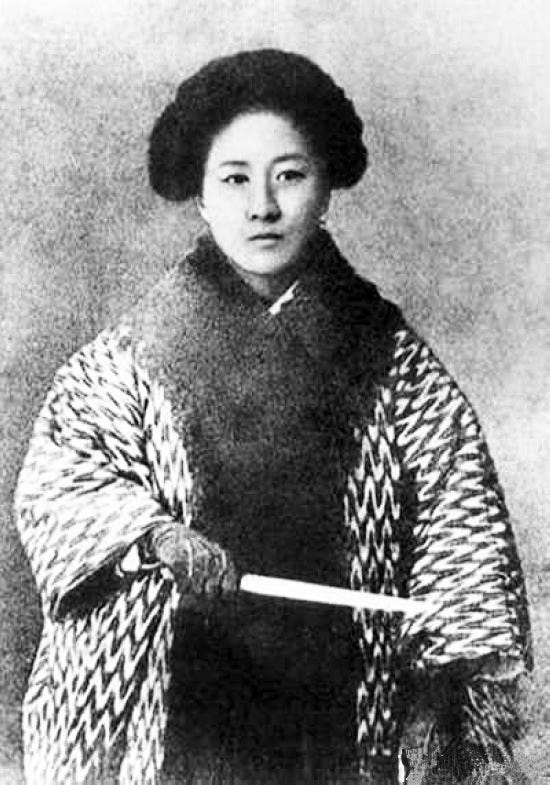
1886年,何殷震出生于扬州一个地方官员家庭,原名何班。她的丈夫是被称为国学大师的经学家、无政府主义思想家刘师培。1904年二人婚后即前往上海,在那里加入光复会,投身革命。何殷震还进入光复会创始人之一蔡元培主持的上海爱国女学就读,期间接触到新式女学。1907年,何氏夫妇东赴日本,加入流亡东京的中国革命者,也是从那时开始接触到国际上各种激进思潮。受无政府主义及社会主义思想影响,以及斯宾塞《女权篇》的启发,何殷震开始积极提倡男女平等。在爱国女学就读期间改名为何震的她主张“生当今时者,当并从父母得姓”,遂在名字里加上母亲的姓氏殷,于是有了何殷震这个名字。
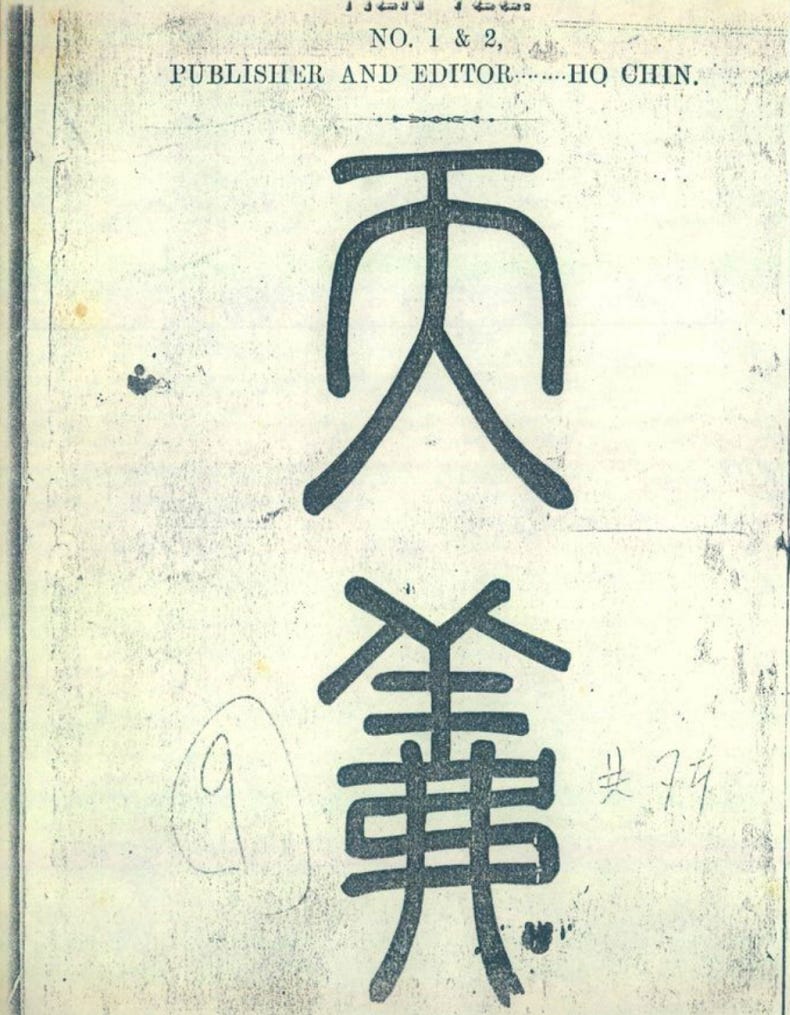
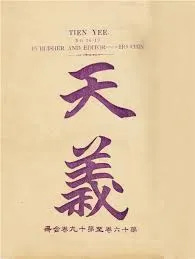
在日期间,何殷震积极参与和组织社会活动,包括参与社会主义讲习会、共同创办以反帝为宗旨的亚洲和亲会,以及女子复权会等,并于1907年6月在刘师培的协助下创办、主编《天义》报,作为女子复权会的机关刊物。因日本政府加强镇压无政府主义活动,《天义》报在发行19期后,于1908年初被迫停刊。
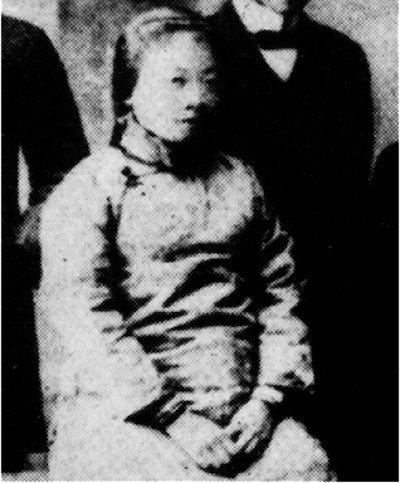
此后,何殷震夫妇又筹措资金创办了无政府主义刊物《衡报》,因此被日本警察确认为革命党人,活动受到监视,《衡报》也遭到日本警方查封,两人返回中国。在此期间,何殷震夫妇与章太炎和其他革命党人交恶,并随着清政府立宪运动的发展投靠满清高官端方门下。此后,何殷震的身影逐渐消失于历史舞台,只是作为刘师培的跟随者出现。1919年刘师培病逝后,关于何殷震只剩下零散流言,但实情不得而知。
《天义》报早期宗旨为“破坏固有之社会,实行人类之平等”,“于提倡女界革命外兼提倡种族政治经济诸革命”;自八、九、十卷合册起,改宗旨为“破除国界种界实行世界主义;抵抗世界一切之强权;颠覆一切现近之人治;实行共产制度;实行男女绝对之平等”。该报倡导女子解放、介绍女权主义、社会主义、马克思主义,和无政府主义等激进学说, 被认为是中国最早的无政府主义女权刊物,也是最早将《共产党宣言》部分翻译成中文并发表的刊物。《天义》报发行后受到一些国际关注,美国无政府主义者艾玛·古德曼(Emma Goldman)曾提及注意到日本出版的这本刊物,其内容亦被日本其他激进杂志转载。
何殷震现存的文章,最初几乎都发表在《天义》报上。这些文章中,充满当时少有的对于政治经济、资本主义、现代国家以及父权制的女权主义批判分析,并提出完全不同于当时占主导地位的男性女权倡导者的思想理论。刘禾、瑞贝卡·卡尔和高彦颐在《中国女权主义的诞生》(The Birth of Chinese Feminism)一书中指出,历史学家往往将1903年男性教育家兼政治活动家金天翮的《女界钟》作为中国女权主义的开端,其中将女子教育作为民族自强和重振中国男性权威的手段。包括秋瑾在内的晚清女权主义者也大多认可民族解放势必伴随妇女解放的观点。而何殷震的无政府女权主义则与这种国家主义观点截然不同,她虽然支持民族革命,但并不认为民族革命能够带来妇女解放。她对欧美社会基于自由主义的有限性别平等感到怀疑,并在此基础上发展出对资本主义私有财产制度,以及为其提供保护的国家制度的严厉批判,将妇女解放从国族话语中独立出来。
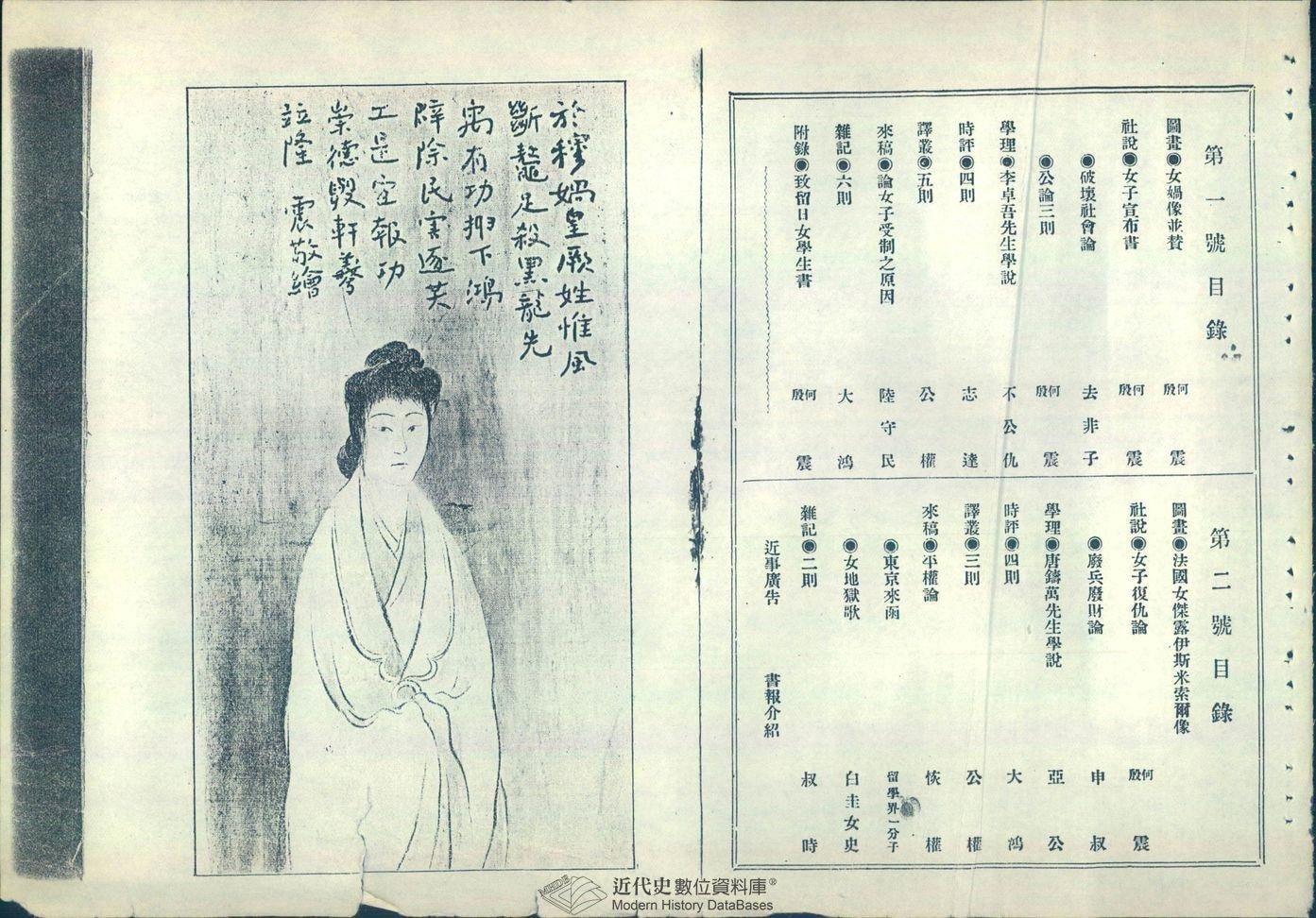
何殷震的旧学功底和她对国际激进思潮的了解为她提供了超越传统与现代、东方与西方简单对立的分析视角。《天义》报创刊号扉页刊登了何殷震画的女娲像,并题有诗词,强调女娲“断鳌足,杀黑龙”之救世功绩,应与黄帝、伏羲并隆,彰显其从中国传统文化中寻找女权主义资源之意图。她在《女子解放问题》等文章中批判儒家思想中的“男女有别”概念,被《中国女权主义的诞生》一书的编者们认为是比西方后来出现的性别、性、交叉性等理论更具有包容性的分析框架,可以用来描述父权制之下所有不平等的社会关系。
不仅如此,何殷震更是将妇女解放与对私有财产制和资本主义的批判紧密结合。她在《女子劳动问题》中指出,当时中国社会存在的蓄婢和卖淫问题的根源在于私有财产制度造成的财富分配不均,来自贫困家庭的妇女因为没有田地或其他财产而缺乏生计,只能出卖身体和劳力给富人。面对欧美国家妇女可以自由选择在工厂做工谋生的观点,她尖锐反驳:由于资本家已经通过掠夺与积累偷走人们的生活和生产资料,妇女除在工厂做工以外并无其他生计机会,只能屈从于资本家的剥削。不同于当时女权思潮普遍把参政作为目标,《天义》报最早提出性别与阶级问题,将底层妇女纳入“女界”范畴和公共讨论。
这样一个思想超前而深刻的理论家,其身影却完全淹没于历史之中,有很长一段时间学术界甚至误认为《天义》报的主编是她的丈夫刘师培。关于何殷震生平留下的资料极少,在互联网上她大多是以刘师培妻子的身份出现,且大部分文章和视频都将她刻画为一个爱挑拨事端、为丈夫带来厄运的美艳悍妇。历史上女性的命运如此相似,无论多么杰出,被允许留下的却总是流言与污名。
一百多年后的今天,我们在历史中寻访何殷震,是为了一睹那个思潮激荡的年代里,这位中国女权主义思想先驱的真实风采,期待她的思想与洞见能为当下社会和妇女的处境带来新的启发与反思。需要注意的是,简单化的历史叙事倾向于把某个领域的发展归因到具体个人——大多是男性——的思想,仿佛他们的思想完全是个人天才独创,而忽视任何思想的背后都有着无数的对话与争论,以及为这些思想提供智识资源和物质基础、却被抹杀和压迫的边缘存在,何殷震的思想当然也不例外。这种个人英雄主义叙事往往会进一步巩固力量至上和男性中心的观念。因此,让女性思想家显身于历史只是一个起点,而让边缘回到中心,使简单个人叙事让位于复杂历史情景和社群的相互依存关系,才能真正打破父权制的魔咒。
本期推荐档案:
延伸阅读:
刘禾、瑞贝卡·卡尔和高彦颐:《中国女权主义的诞生》(The Birth of Chinese Feminism)(英文),哥伦比亚大学出版社,2013年。该书导言部分的中文翻译刊于澎湃新闻网站:
何殷震与安那其女性主义(下):20世纪早期中国女性主义的多重世界
【本文为中国民间档案馆首发,转载时请务必在正文之前注明“本文首发于中国民间档案馆”,并加上原文在中国民间档案馆网站或者中国民间档案馆Substack的链接。】
【作者观点不代表中国民间档案馆立场。】
He-Yin Zhen and the Journal Tien Yee: A Pioneer of Chinese Feminist Thought a Century Ago
By Ou Lun
When thinking about Chinese women’s rights activists of the early 20th-century, many people first think of the feminist and revolutionary Qiu Jin. She was a charismatic figure who held feudal rites and laws in contempt, advocated for equal rights between men and women, and resisted the Qing autocracy, ultimately giving her life in the pursuit of democracy and freedom. Qiu is a widely known national hero and a pioneer of Chinese feminism for future generations.
Qiu Jin’s life, however, was so dramatic that it overshadowed a generation of equally important and inspiring figures who deserve at least as much attention as Qiu. On July 15, 1907, the 31-year-old Qiu was executed on charges of plotting rebellion and consorting with bandits. Soon after, Chinese activists in Japan held memorial services for Qiu and other martyrs; the Tokyo-founded journal Tien Yee also published articles commemorating Qiu for several consecutive issues.
The organizer behind these memorial activities was He-Yin Zhen, a contemporary of Qiu Jin. As early as the beginning of the 20th century, she proposed a sophisticated, locally-grounded gender theory, pointing out that “the distinction between men and women” is “the result of habit and the result of education”—ideas that predate by half a century western feminists, such as Simone de Beauvoir, who proposed a similar theory of gender construction. Despite being such a path-breaking feminist theorist, as well as a socialist and anarchist thinker and activist, He-Yin Zhen’s life and ideas remain little known.
He-Yin Zhen, originally named He Ban, was born in 1886 to a local official’s family in Yangzhou. Her husband was Liu Shipei, a scholar known as a master of Chinese classics and an anarchist thinker. After their marriage in 1904, the couple went to Shanghai, where they joined the Restoration Society and committed themselves to the revolution.
He-Yin Zhen also enrolled in the Shanghai Patriotic Women’s School, presided over by Cai Yuanpei, one of the founders of the Restoration Society, where she came into contact with modern women’s education. In 1907, the He-Liu couple traveled to Japan to join Chinese revolutionaries in exile in Tokyo, and it was from that time that they began to encounter various radical international trends of thought.
Influenced by anarchist and socialist ideas, and inspired by “The Rights of Women” chapter in Herbert Spencer’s work, He-Yin Zhen began to actively advocate for equality between men and women. Having changed her name to He Zhen while studying at the Patriotic Women’s School, she argued that “those born in the present age should take surnames from both parents,” subsequently adding her mother’s surname, Yin, to her name, thus becoming He-Yin Zhen.
During her time in Japan, He-Yin Zhen actively participated in and organized social activities, including taking part in socialist study groups and co-founding the Asia Solidarity Association—whose purpose was anti-imperialism—as well as the Women’s Rights Recovery Association. In June 1907, with the assistance of Liu Shipei, she founded and edited the journal Tien Yee as the official publication of the Women’s Rights Recovery Association. Due to the Japanese government’s intensified suppression of anarchist activities, Tien Yee was forced to cease publication in early 1908 after issuing 19 numbers.
Subsequently, the couple raised funds to found the anarchist publication Hengbao (Equity); as a result, they were identified as revolutionaries by the Japanese police and their activities were monitored. After Hengbao was shut down by the Japanese police, the two returned to China. During this period, He-Yin Zhen and her husband fell out with Zhang Taiyan and other revolutionaries, and as the Qing government’s constitutional movement developed, they sought patronage under the high-ranking Manchu official Duanfang.
From then on, He-Yin Zhen gradually vanished from the historical stage, appearing only in relation to Liu Shipei. After Liu died of illness in 1919, only scattered rumors remained regarding He-Yin Zhen, but scholars agree that the actual facts are unknown. Her ideas, however, live on in Tien Yee and are worth exploring.
The early mission of Tien Yee was to “destroy the existing society and implement equality for humankind,” and “to advocate for racial, political, and economic revolutions in addition to advocating for a women’s revolution.” Starting from the combined volume of issues eight, nine, and ten, the mission was changed to: “abolish national and racial boundaries to implement cosmopolitanism; resist all world powers; subvert all modern human governance; implement a communist system; and implement absolute equality between men and women.”
The journal advocated for women’s liberation and introduced radical doctrines such as feminism, socialism, Marxism, and anarchism; it is considered China’s earliest anarchist-feminist publication and was also the first to translate and publish portions of the Communist Manifesto in Chinese. After its release, Tien Yee received some international attention; the American anarchist Emma Goldman once mentioned having noticed this publication from Japan, and its content was also reprinted by other radical Japanese magazines.
Almost all of He-Yin Zhen’s extant articles were originally published in Tien Yee. These articles are filled with feminist critical analyses of political economy, capitalism, the modern state, and patriarchy—analyses that were rare at the time. They also proposed ideas and theories completely different from those of the dominant male advocates of women’s rights. In the book The Birth of Chinese Feminism, Lydia H. Liu, Rebecca E. Karl, and Dorothy Ko point out that historians often cite the 1903 work The Women’s Bell (Nüjie Zhong) by male educator and political activist Jin Tianhe as the beginning of Chinese feminism, which framed women’s education as a means for national strengthening and the revitalization of Chinese male authority.
Most late-Qing feminists, including Qiu Jin, also accepted the view that national liberation would inevitably be accompanied by women’s liberation. He-Yin Zhen’s anarcho-feminism, however, was starkly different from this nationalist perspective; while she supported national revolution, she did not believe that it would naturally bring about women’s liberation. She was skeptical of the limited gender equality based on liberalism in European and American societies, and on this basis, she developed a harsh critique of the capitalist private property system and the state system that protects it, making women’s liberation independent from nationalistic discourse.
He-Yin Zhen’s foundation in classical learning and her understanding of international radical trends provided her with an analytical perspective that transcended the simple opposition between tradition and modernity, or East and West. The inside cover of the inaugural issue of Tien Yee featured an image of Nüwa painted by He-Yin Zhen, accompanied by a poem emphasizing Nüwa’s world-saving achievements of “breaking the legs of the giant turtle and killing the black dragon,” asserting that she should be as celebrated as the Yellow Emperor and Fuxi. This highlighted her intention to find feminist resources within traditional Chinese culture.
In articles such as “The Problem of Women’s Liberation,” she critiqued the Confucian concept of “the distinction between men and women.” This was regarded as an analytical framework more inclusive than later Western theories of gender, sexuality, and intersectionality, which can be used to describe all unequal social relations under patriarchy.
He-Yin Zhen also closely integrated women’s liberation with a critique of the private property system and capitalism. In “The Problem of Women’s Labor,” she pointed out that the root of the problems of domestic servitude and prostitution in Chinese society at the time lay in the unequal distribution of wealth caused by the private property system; women from poor families, lacking land or other property, had no means of livelihood and could only sell their bodies and labor to the rich.
Confronted with the view that women in European and American countries could freely choose to work in factories for a living, she countered sharply: since capitalists had already stolen people’s means of living and production through plunder and accumulation, women had no other livelihood opportunities besides working in factories and could only submit to capitalist exploitation. Unlike the prevailing feminist trends that set political participation as the goal, Tien Yee was the first to raise the issues of gender and class, bringing grassroots women into the scope of womanhood and public discussion.
The figure of such a forward-thinking and profound theorist, however, has been completely submerged in history. For a long time, the academic community even mistakenly believed that the editor-in-chief of Tien Yee was her husband, Liu Shipei. Very little data remains regarding He-Yin Zhen’s life; on the Internet, she mostly appears as “Liu Shipei’s wife,” and most articles and videos portray her as a beautiful but fierce woman who loved to stir up trouble and brought misfortune to her husband. The fate of women in history is so similar: no matter how outstanding they are, what is allowed to remain is always rumor and stigma.
Today, more than a hundred years later, we search for He-Yin Zhen in history to catch a glimpse of the true grace of this pioneer of Chinese feminist thought in that era of emerging ideas, hoping that her thoughts and insights can bring new inspiration and reflection to the current situation facing society and women.
Simplified historical narratives tend to attribute the development of a field to the ideas of specific individuals—mostly men—as if their ideas were entirely the original creations of personal genius, while ignoring that behind any idea lie countless dialogues and debates, as well as marginalized existences that provided the intellectual resources and material foundations for these ideas but were erased and oppressed.
He-Yin Zhen’s ideas are no exception. This narrative of individual heroism often further consolidates the concepts of power-supremacy and male-centrism. Therefore, allowing female thinkers to become visible in history is only a starting point; only by bringing the margins back to the center and allowing simple individual narratives to give way to complex historical contexts and community interdependence can the spell of patriarchy truly be broken.
Recommended archive:
Extended Reading:
Lydia H. Liu, Rebecca E. Karl, and Dorothy Ko, eds.: The Birth of Chinese Feminism, Columbia University Press, 2013.
[This article first appeared in China Unofficial Archives. When reposting, please ensure that the following is included at the beginning of the reposted text: “This article was first published by the China Unofficial Archives,” accompanied by a link to the original article on the China Unofficial Archives website or Substack.]
[The views expressed by the author of this article do not necessarily reflect the position of the China Unofficial Archives.]
Thank you, what a rarity, a Chinese critic of patriarchy!