

从大学、海关到打印店——中国如何消音文革记忆?
From Universities and Customs to Copy Shops: How China Silences the Memories of the Cultural Revolution

作者:费常道
By Fei Changdao
The English translation follows below.
2026年5月16日,北京什刹海附近的南门涮肉馆。80岁的张德华一边喝茶,一边等待着和两位老友聚会,祝贺他的八十岁生日。
老张没有等来他的朋友——老刘和老郑先后打来电话,说警察警告他们:当天不能聚会。因为60年前的那天,是中共中央发表“五一六通知”,宣布文化大革命正式开始的日子。
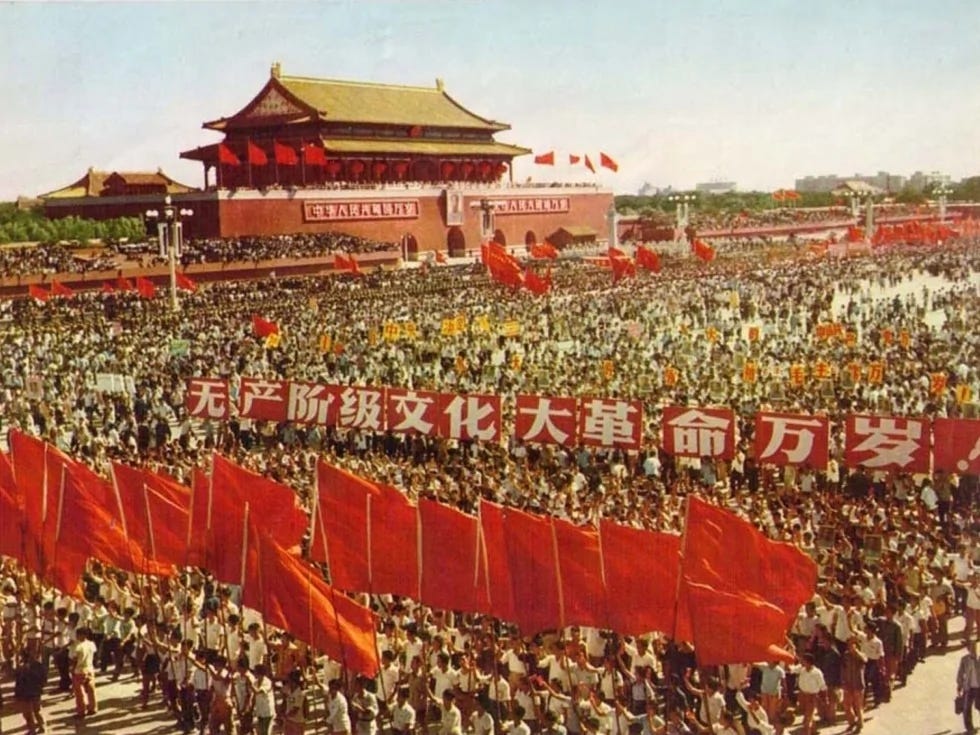
看来这生日是过不成了。老张掐指算算,接下来就是6月4日“天安门事件”纪念日,然后是“七一”(共产党的生日),再接下来,是文革的几个重要纪念日——对党来说,都是敏感日子。事实上,就像本文作者在全国范围内的寻访所发现的一样——2026年,中国针对文革信息的管控,以及相关的思想镇压,正在普遍地发生着,且并无掩饰。
消音文革:罚款查抄、警察上门、子女连坐
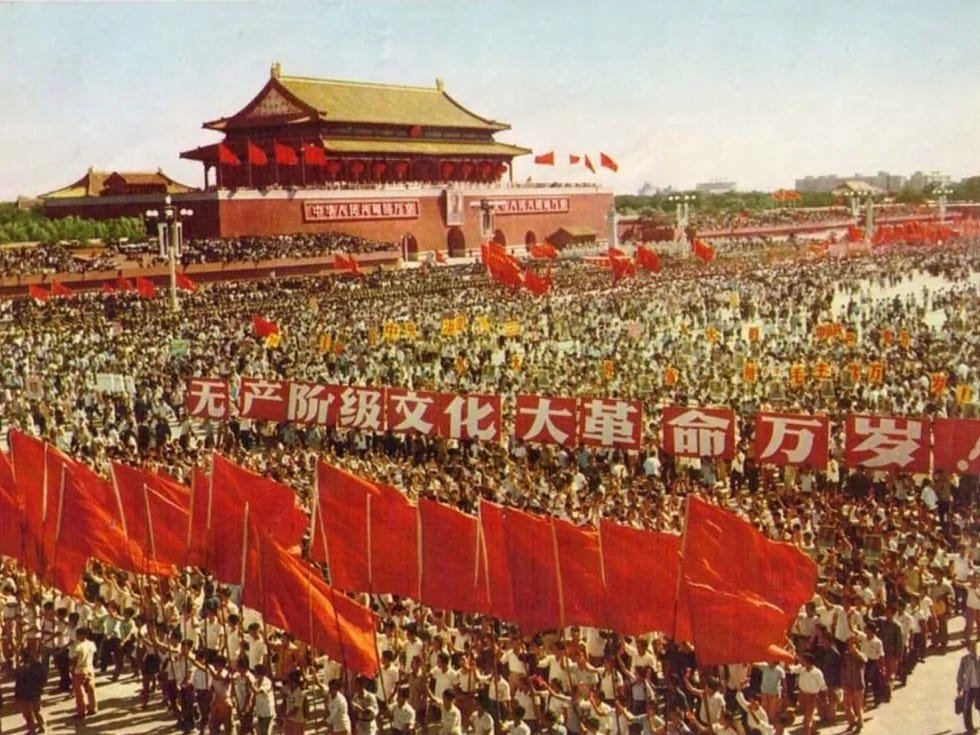
张德华的遭遇在习近平的中国并不罕见。1966年爆发、1976年结束的文化大革命,隔着六十年的光阴,至今依影响着今天中国人的生活。
在老张被禁止和朋友聚会的13天后,2026年5月29日,居住在广西柳州市、75岁的韦文德,接到了当地政府对他的《行政处罚决定书》。韦文德因为在微信里向读者介绍《难忘的岁月——广西柳州文革纪实》一书,被柳州公安局找上门,不仅被没收了手里的114本书,还被罚款8000元人民币。印刷这本书的工厂,则被政府罚款15万元。
韦文德收到的这份《行政处罚决定书》称:“2025年8月,我局接到举报,称此书内容涉政、涉文革,疑似违禁书籍,我局向自治区新闻出版局申请鉴定该图书样本是否存在违禁内容。2025年8月27日,该局出具鉴定书,证实此书含有损害国家荣誉和利益等国家禁止的内容,属于违禁出版物……”
事实是,这本书于2013年8月由中国文史出版社出版,书中根据广西政府的内部机密档案与亲历者回忆,记录了文革期间柳州地区的派系斗争及其它重大历史事件,对地方史的研究有重要价值。
2026年是文革爆发60周年。60周年在中国被称做一个甲子。中国传统史观认为,历史是在治与乱之间周期性的循环,每个甲子初年的到来,都意味着循环的开始。 或许因为这种周期重启、历史更替的含义,加之当下中国高压的政治环境,当局的信息管控比往年更为严厉——纪念文革60周年的言论,则成为重中之重——所有的维稳部门都积极行动起来,试图将一切可疑的苗头掐死在萌芽状态。
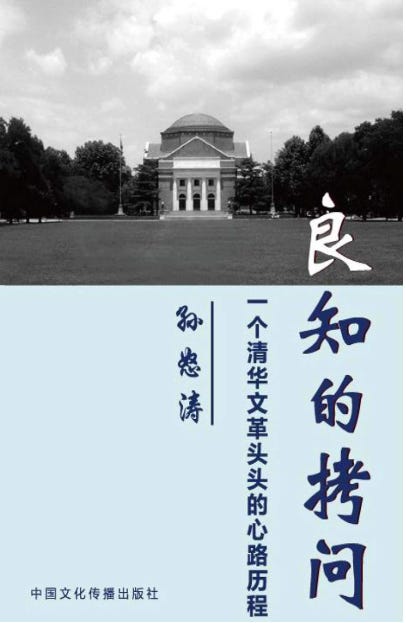
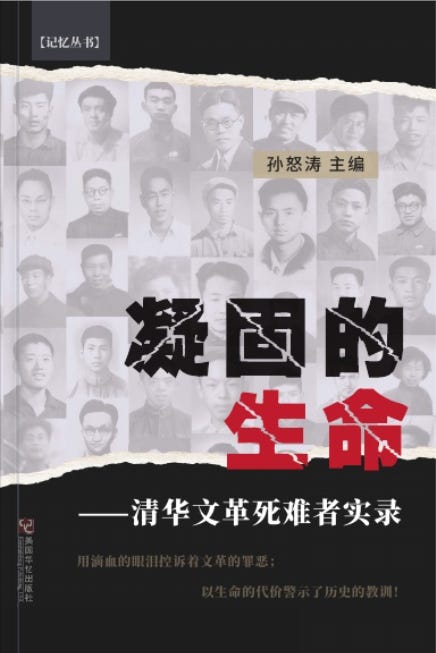
清华大学的退休教授孙怒涛和他的同事,用了近十年的时间,呕心沥血,编辑了14卷本的《清华大学文革资料》一书,收集了大量资料,记录下毛泽东如何以权谋对待知识分子,以及清华大学师生在文革中付出的鲜血与冤屈。但此书即将推出时,主编受到了官方严厉的警告——不准传播、出版。孙怒涛也是《良知的拷问——一个清华文革头头的心路历程》、《凝固的生命——清华文革死难者实录》等书的作者。
其实,早在2016年,文革爆发50周年的时候,中国体制内包括在大学和研究院所的文革学者,已几乎被完全控制住了。让当局头疼的是,民间的文革研究者分散在全国各地,且大部分都是退休人员,他们中的很多人,虽然年逾古稀,仍旧在抢救记忆——从搜集文革资料到撰写文革回忆,从发表研究论文,到出版文革书籍。为了控制他们,主管部门通过当地党的宣传部门和地方的的公安局和派出所,对他们实施监控甚至上门胁迫。
以家住陕西宝鸡的章铎女士为例。章出生于1944年,1963年考入北大生物系,毕业后长期在陕西宝鸡有色金属加工厂工作。作为一位民间历史学者,她用30年的时间,收集资料,研究母校北京大学的文革史,引起官方的恐慌。2016年起,当地四个部门对她实行监控。她所在单位的党委、公安保卫处,以及宝鸡市宣传部、扫黄打非办公室,还有她所在小区的片警和居委会主任,几乎每周都会敲开家门,要求她停止收集资料,或交出写好的书稿,并警告她不得在境外发表——理由是“会被境外反动势力利用,煽动国内的不满情绪。”
据笔者调查,面对官方的骚扰,章铎曾拿出1981年邓小平公布的彻底否定文革的《历史决议》(即《中国共产党中央委员会关于建国以来党的若干历史问题的决议》),据理力争,但没有起到什么作用。警方依然查扣她的快递;她外出受到跟踪;经常为她开车的司机告诉她,上面要求他报告她的行踪,以及与什么人来往。面对这些,章女士不肯让步,党委就用切断退休金来威胁她。看她仍然不为所动,当地警方找到她在北京工作的儿子和女儿,让他们出面劝说母亲——如果母亲不听,他们会被炒鱿鱼。
顶住重重压力,章女士于2020年通过美国华忆出版社,自费出版了《北京大学文革资料选编》(全三册);2022年又出版了《北京大学文革资料续编》、《北京大学文革研究文选》以及上下两卷本的《北京大学文革史榷》。2024年,章女士患病去世,当地宣传部、北京大学党委和陕西警方终于松了一口气。
在中国,维稳的全面性和有效性,让一个即使已熟知监控存在的人也会震惊——不管你是在广西的四线城市,还是内蒙古的草原;不管是退休的老人,还是正在上大学的学生;不管你是回忆录的写作者,还是病危老人的采访者,如果你开始试图自己去寻访或研究历史,就会得到官方精准的“关照”——在北京,作家陈先生出了两本关于毛时代的书,为学界所重,官方随即叫停了他查阅档案的资格,并将他的另外两本书列为禁书。
据笔者调查,今年5月,文革“五一六通知”发布60周年纪念日的前夕,三位上了年纪的女士,只因在微信里讨论“西方的一些学术研究误解了文革派系的性质”,就招来警察登门造访。被警察谈话时,她们才发现,自己的人生经历、家人信息,以及日常购物、看病的生活细节,警方都了如指掌。
类似事件并非只发生在北京、上海等大城市。据笔者调查,在山东临沂,早年毕业于山东大学的钟先生,花费五年心血,写了一本文革回忆录,托朋友在海外出版,但书到手仅一周,就被当地的文化执法大队上门没收,在他再三恳求下,执法者给他留下了一本;在河北邯郸,王女士在海外出版了一本造反派口述,就遭到当地警方的连番审讯,书被查没,一本也没给她留下;在云南,一位七旬老太在香港跟某位出版商吃了一顿饭,回到昆明的当晚,就被警察从被窝里叫起来,盘问到半夜——为了当事人的安全,笔者只能在此隐去他们的名字。
据了解,这些民间历史学者,虽然住在不同的地方,但在被官方约谈或警察调查时,他们都会被要求“三不准”:不准传播文革信息;不准出版文革书籍;不准见外国记者。
中国式维稳:从大学、出版社、海关到街头打印店
本文作者长期从事历史研究工作,深知中共对文革研究领域的管控其实从未放松过——自1976年文革结束,毛泽东夫人江青沦为阶下囚,中共就意识到,中国人对文革的回望与质疑,可能动摇他们的合法性基础。
1978年启动改革开放之后,中共在学术层面曾一度鼓励探索、讨论历史与理论问题(包括敏感议题),但也一直强调政治方向与意识形态边界。1989年“六四”事件之后,中共进一步认识到,文革是自身合法性的命门,如果研究无禁区,就会动摇主流的政治叙事。
所以,从邓时代对文革研究的有限开放,到江胡时代的“研究无禁区,发表有纪律”,再到习近平时代的“研究有禁区,发表不允许”。可以说, 对文革研究的管控,一直是中共思想言论管控的重点。
2012年底习近平上台后,在媒体、出版、印刷、网络、海关的多重监控之下,文革研究更成了不可触碰的红线。出版社、互联网、印刷厂甚至打印店都成了重点监控对象。
1997年以后,中国的民办印刷厂必须有官方开出的“准印许可证”才能印书。对于民间的回忆录、家史、传记、画册、摄影集等,官方要求印厂将委托人的各种信息登记在案。
2000年代中后期,公安系统将印刷业列入“特种行业管理”之中,街头的快印店也成为管控对象。公安要求店主张贴《警示公告》,这类公告的内容包括:“严禁印刷含有反动、煽动颠覆国家政权、危害国家安全、泄露国家秘密的内容。”以及“严禁印刷国家明令禁止出版、印刷的其他非法内容。”这意味着,那些谈论毛时代历史的文本,都无法在快印店打印或复制出来。
对印刷业的经营者来说,在本职工作之外,他们还要承担验证、登记、保管、交付和残次品销毁等义务。经营者还有义务向公安部门报告——中宣部下属的“扫黄打非办公室”规定,凡举报非法印刷物的,可获得10万元以上的奖励,重大案件能达到或超过20万。违反规定的,则将面临停业整顿、罚款、吊销许可证等处罚,还可能坐牢。2024年,北京海淀图书城“家谱传记图书公司”的创办人涂金灿先生,因承印了海外某华人的回忆录,据称已被判3年半有期徒刑。如今不仅公司关门,职工星散,为其他客户印刷的书籍也被封存。
公安局下属的“文化执法大队”会突击检查快印店,一旦发现所谓的违纪违规,轻则罚款,重则停业。在敏感时期(如六四、文革周年、两会、领导人(如江泽民、李克强)逝世等),公安片警、文化执法大队和扫黄打非办会全体出动,上门检查,提醒快印店经营者不得打印控告信、上访材料和任何政治敏感的内容。
不屈服的民间历史研究者:沉井三百年又如何?
2002年8月5日,北京人朱元涛从香港返回北京时,首都机场海关查扣了他从香港购买的高华著作《红太阳是怎样升起的——延安整风运动的来龙去脉》,称这本书是“禁止入境物品”,对朱予以行政处罚,没收该书。
朱元涛为此状告首都机场海关,向北京市第二中级人民法院提起行政诉讼,官司一直打到北京高院。2003年9月,北京高院宣判,朱元涛胜诉。尽管朱最终没有拿回自己的书,但此案表明,在江胡时代,法院还有一点可怜的独立性——至少公民还能通过诉讼挑战官方的禁书行为。
到了习时代,这样的事情已经不可能发生——海关往往以“内部掌握”、“印刷品审查”和“敏感内容”为由,任意查没图书,而被扣书的人已不再寄希望法院保护自己的权利。
2013年10月,原中组部常务副部长李锐的女儿李南央,从香港返京,被海关扣押了50多本香港出版的《李锐口述往事》。李南央再三交涉无果,将海关告上了法庭。北京市中级法院接案后,一直拒不开庭审理,至今已经13年。李南央催问北京法院开庭审理的信已达百封,她戏称此事可上“吉尼斯大全”。李锐作为中共元老,其回忆录仍被视为禁书,说明习时代言论审查的任意性和扩大化。
2024年,年过八旬的陈吟吟用了20年时间,完成了一部记录家族四代人经历的百万字著作,名为《夜吟应觉月光寒》。因国内出版无望,作者自费交美国的世界华语出版社出版。2024年11月,沈阳邮政海关收到了这家出版社寄来的18套样书(每套三册,共计54本)后,以书中有敏感内容为由,全部没收。陈吟吟从北京三次前往千里之外的沈阳海关交涉,在她“上访”和“上网”的威胁下,海关被迫把书退还她。但到她手里的,只有书的前两册,涉及到毛时代的第三册拒不退还。
从李、陈两位的遭遇可以看到,习时代的言论控制已从“特定禁书”扩大到所有涉及毛时代的印刷品。个人家史或回忆录成了禁区,而且审查机构一视同仁,无论是中共元老还是退休老者都不会放过。法院的独立性全无,行政权力成为绝对强势的存在。
而与此同时,官方对大学的控制更是变本加厉。2010年,中国高校已达到3100多所,其中200多所设有人文综合专业。这些大学曾有学者关注文革,也出版过一些有独立见解的学术著作,但如今,关于文革的论文和著作根本无法发表和出版,硕博研究生在选择课题时,也自觉远离毛时代的主题。
而官方的株连政策,更扩大了这一灾难性后果——在海外发表文革文章,或文革著作的教师或研究人员,不但本人要受到行政处罚,其所在的学校也可能受到株连——减少拨款,压缩课题。例如一向敢言的资中筠女士,她所在的单位(中国社会科学院美国研究所)就得到了有司明确的警告——如果资女士再发表言论,美国研究所的科研经费将大幅度减少,研究人员将被限制出国访学。
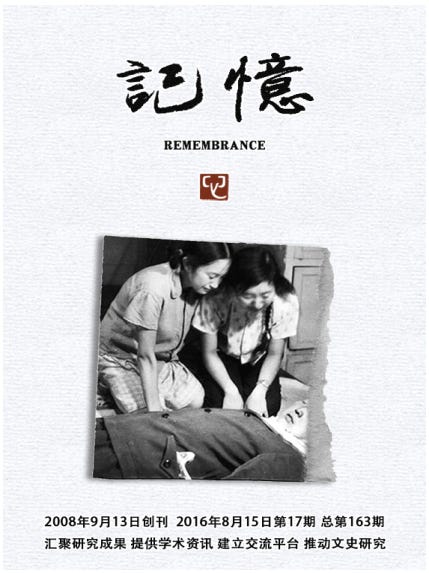
高压之下,如今的中国高校,文革研究成为绝响,其应有的功能丧失殆尽。如今只有一南一北两所大学——北京大学国史中心和华东师范大学当代史资料中心,还在小心翼翼地做着与文革沾边的工作,但也仅限于收集资料。文革研究的重任落在了民间学者肩上——例如,甘肃天水一对夫妇,退休后致力于历史研究,一直是《记忆》杂志的作者,老两口被当地严密管控,在外地工作的子女都受到威胁,但他们并不屈服——如今,老先生已经去世,但他身后留下了和妻子合著的十本书,四本资料集。
宋朝末年,写下《铁函心史》一书的学者郑思肖,因著述无法出版,曾用铁函将书封存,沉入深井,一直到300多年后的明朝,书才被人发现。郑思肖曾留下一首诗,后两句是“宁可枝头抱香死,何曾吹落北风中”。今天中国的这些民间历史学者,他们可能无法看到凝聚自己心血的书出版,但他们和郑思肖一样,也有把作品“沉井三百年”的意志。
(本文作者为历史研究学者。为保护受访者,部分信息做了处理。)
本期推荐档案:
《记忆》杂志(中国民间档案馆已收藏300余期,欢迎查看、收藏、分享)
《凝固的生命——清华文革死难者实录》(孙怒涛)
《北京大学文革史榷》 (胡宗式 章铎)
【本文为中国民间档案馆首发,转载时请务必在正文之前注明“本文首发于中国民间档案馆”,并加上原文在中国民间档案馆网站或者中国民间档案馆Substack的链接。】
【作者观点不代表中国民间档案馆立场。】
From Universities and Customs to Copy Shops: How China Silences the Memories of the Cultural Revolution
By Fei Changdao
On May 16, 2026, at the Nanmen Hot Pot Restaurant near Shichahai in Beijing, eighty-year-old Zhang Dehua sipped his tea. He was waiting to meet two old friends to celebrate his eightieth birthday.
But Old Zhang waited in vain. Instead of his friends arriving, Old Liu and Old Zheng called him one after the other to report that the police had warned them not to gather that day. Exactly sixty years earlier, on that very date, the Central Committee of the Chinese Communist Party had issued the “May 16 Notification,” marking the official start of the Cultural Revolution.
It was clear the birthday celebration was ruined. Counting the days on his fingers, Old Zhang realized that the June 4 anniversary of the Tiananmen Square crackdown was just around the corner, followed by the Party’s anniversary on July 1, and then several key anniversaries of the Cultural Revolution—all highly sensitive dates for the regime. Indeed, as the author of this article discovered during travels across the country, pervasive and blatant state control over information regarding the Cultural Revolution, along with accompanying ideological crackdowns, has reached unprecedented levels in 2026.
Silencing the Cultural Revolution: Fines, Home Raids, Police Harassment, and Punishing the Next Generation
Zhang Dehua’s experience is far from unique in Xi Jinping’s China. Sixty years after it began, the Cultural Revolution (1966–1976) continues to cast a long shadow over the daily lives of the Chinese people.
On May 29, 2026—just thirteen days after Old Zhang was barred from meeting his friends—75-year-old Wei Wende, a resident of Liuzhou in Guangxi, received an official Administrative Penalty Decision from the local government. Wei’s offense was sharing an introduction to the book Unforgettable Years: A Record of the Cultural Revolution in Liuzhou, Guangxi on WeChat. Local public security officers raided his home, confiscated 114 copies of the book, and fined him 8,000 RMB. The printing house that produced the book was hit with a 150,000 RMB government fine.
According to the Administrative Penalty Decision, “In August 2025, our bureau received a report that this book contained politically sensitive material regarding the Cultural Revolution and was suspected of being a banned publication. We requested an official appraisal of the book from the regional Press and Publication Bureau. On August 27, 2025, the bureau issued its assessment, confirming that the book contains content prohibited by the state—such as harming national honor and interests—and is therefore a banned publication.”
In reality, the book had been published back in August 2013 by the official China Culture and History Press. Based on confidential internal archives of the Guangxi government and firsthand accounts, the book documented factional struggles and other major historical events in the Liuzhou region during the Cultural Revolution, making it an invaluable resource for local history.
The year 2026 marks the 60th anniversary of the outbreak of the Cultural Revolution, a milestone known in China as a jiazi, a full sixty-year cycle. Traditional Chinese historiography views history as a cyclical progression between order and chaos, meaning the start of a new jiazi symbolizes a potential reset of the cycle. Likely driven by the symbolic weight of historical recurrence and the current high-pressure political climate, the authorities have tightened information control more aggressively than in previous years. Suppressing any commemoration of the 60th anniversary of the Cultural Revolution has become a top priority, with security agencies working tirelessly to nip any suspicious activities in the bud.
Sun Nutao, a retired professor from Tsinghua University, spent nearly a decade working alongside colleagues to compile the 14-volume Historical Materials of the Cultural Revolution at Tsinghua University. The collection contains vast documentation of how Mao Zedong manipulated intellectuals and records the immense suffering and bloodshed endured by Tsinghua’s faculty and students. Yet, just as the book was prepared for release, the chief editor was handed a stern official warning: the material must not be distributed or published. Sun is also the author of An Interrogation of Conscience: The Journey of a Tsinghua Cultural Revolution Rebel Leader and Solidified Life: Records of the Victims of the Cultural Revolution at Tsinghua University.
By 2016, during the 50th anniversary of the Cultural Revolution, establishment scholars at Chinese universities and research institutes had already been silenced. What continues to frustrate the authorities, however, are the independent, grassroots historians scattered across the country. Though most are retired and well into their seventies, they remain dedicated to preserving historical memory—collecting raw materials, writing memoirs, publishing research papers, and printing books. To rein them in, the state deploys local Party propaganda departments, public security bureaus, and local police stations to monitor them and conduct intimidating home visits.
Consider Ms. Zhang Duo of Baoji, Shaanxi Province. Born in 1944, Zhang was admitted to the Biology Department of Peking University in 1963 and spent her career at a non-ferrous metal processing plant in Baoji. As a grassroots historian, she spent thirty years gathering materials to document the Cultural Revolution at Peking University, a project that deeply unnerved the authorities. Starting in 2016, four separate government departments placed her under surveillance. Representatives from her former employer’s Party committee, the security department, the Baoji Municipal Propaganda Department, the local “Anti-Pornography and Anti-Illegal Publications” office, the neighborhood beat cop, and the community committee director knocked on her door almost weekly. They demanded she stop collecting materials, order her to hand over her manuscripts, and warned her against publishing overseas, claiming her work “would be weaponized by hostile foreign forces to stir up domestic discontent.”
The author’s investigation revealed that during these confrontations, Zhang Duo would try to argue her case using the 1981 “Resolution on Certain Questions in the History of Our Party Since the Founding of the PRC”—the official document under Deng Xiaoping that thoroughly condemned the Cultural Revolution—but her efforts were in vain. The police intercepted her mail, tailed her whenever she left home, and pressured her regular driver into reporting her daily movements and associates to his superiors. When Ms. Zhang refused to back down, the Party committee threatened to cut off her pension. When that failed to move her, the police targeted her son and daughter, who were working in Beijing, warning them to convince their mother to stop or face being fired from their jobs.
Despite the intense pressure, Ms. Zhang persevered. In 2020, she self-funded the publication of the three-volume Selected Materials on the Cultural Revolution of Peking University through the U.S.-based Remembering Publishing. In 2022, she followed up with Sequel to the Materials on the Cultural Revolution of Peking University, Selected Research Papers on the Cultural Revolution of Peking University, and the two-volume A Study of the Cultural Revolution History of Peking University. When Ms. Zhang passed away from an illness in 2024, the local propaganda department, the Peking University Party committee, and the Shaanxi police finally breathed a sigh of relief.
The sheer scale and efficiency of China’s stability-maintenance apparatus would shock even those well-accustomed to state surveillance. Whether you reside in a fourth-tier city in Guangxi or on the grasslands of Inner Mongolia; whether you are a retired senior or a university student; whether you are writing a memoir or simply interviewing a dying elder, the moment you begin researching history independently, you receive highly targeted official attention. In Beijing, after a writer named Mr. Chen published two highly acclaimed books on the Mao era, the authorities immediately revoked his access to historical archives and banned his other two books.
According to the author’s investigation, in May of this year, on the eve of the 60th anniversary of the “May 16 Notification,” three elderly women were visited by police simply for discussing on WeChat how “some Western academic research misunderstands the nature of Cultural Revolution factions.” During their interrogation, they were horrified to discover that the police possessed detailed files on their lives, family members, and even their daily shopping and medical records.
Such incidents are not confined to major hubs like Beijing and Shanghai. In Linyi, Shandong, a Shandong University alumnus named Mr. Zhong spent five years writing a Cultural Revolution memoir and had a friend publish it overseas. Within a week of receiving his copies, the local cultural enforcement squad raided his home and confiscated them all, leaving him with a single copy only after he begged them. In Handan, Hebei, Ms. Wang was subjected to repeated police interrogations and had all her books seized, without even a single copy returned, after she published an oral history of rebel factions overseas. In Yunnan, a seventy-year-old woman who met a publisher for dinner in Hong Kong was awoken in her Kunming home by police the night she returned and interrogated until midnight. To protect their safety, their real names have been omitted.
Despite living in different parts of the country, these independent historians all faced the same “Three No’s” mandate during their interrogations and official chats: no distributing information about the Cultural Revolution, no publishing books on the subject, and no meetings with foreign journalists.
The Machinery of Stability Maintenance: From Universities and Publishers to Customs and Copy Shops
As a long-time historian, I know that the Chinese Communist Party’s grip on Cultural Revolution research has never actually loosened. Ever since the movement ended in 1976 and Mao’s wife, Jiang Qing, was imprisoned, the Party has recognized that public reflection and questioning of the era could undermine its very legitimacy.
During the early days of reform and opening up in 1978, the Party occasionally tolerated academic debates on sensitive historical and theoretical issues, but always maintained strict ideological boundaries. Following the Tiananmen Square crackdown in 1989, the Party realized that the Cultural Revolution was a critical vulnerability. If research were left unrestricted, it would inevitably threaten the official historical narrative.
Consequently, control over the subject has evolved from the limited academic openness of the Deng Xiaoping era, to the Jiang Zemin and Hu Jintao era’s policy of “no forbidden zones for research, but strict discipline for publication,” and finally to the Xi Jinping era’s policy of “forbidden zones for research, and no publication permitted.” Suppressing Cultural Revolution research has remained a central pillar of the Party’s ideological control.
Since Xi Jinping took power in late 2012, this research has become an absolute red line, policed through a multi-layered apparatus spanning media, publishing, printing, the Internet, and customs. Publishing houses, online platforms, printing factories, and even local copy shops are now subject to rigorous surveillance.
Since 1997, private printing houses in China have been required to obtain an official permit for every book they print. For independent memoirs, family histories, biographies, and photo albums, printers must log detailed personal information about the clients.
By the mid-to-late 2000s, the public security apparatus placed the printing industry under “special industry management,” extending this control to street-side copy shops. Owners are required to display prominent warning signs stating: “It is strictly forbidden to print materials containing reactionary content, incitement to subvert state power, threats to national security, or state secrets,” and “It is strictly forbidden to print other illegal materials banned by the state.” This ensures that any personal writings discussing the Mao era cannot even be photocopied.
Printers must act as state deputies, taking on the burden of verifying, registering, storing, and destroying defective copies, as well as reporting suspicious clients to the police. The “Anti-Pornography and Anti-Illegal Publications Office” under the Central Propaganda Department offers rewards starting at 100,000 RMB—and up to 200,000 RMB for major cases—to anyone who reports illegal printing. Violators face business suspension, fines, loss of licenses, or imprisonment. In 2024, Tu Jincan, founder of the Genealogy and Biography Book Company in Beijing’s Haidian Book City, was reportedly sentenced to three and a half years in prison simply for printing a memoir for an overseas Chinese client. His business was shuttered, his employees let go, and books printed for other clients were sealed and seized.
Undercover inspections by the public security’s cultural enforcement squad are common. Any perceived infraction leads to heavy fines or closure. During sensitive periods—such as the Tiananmen Square anniversary, Cultural Revolution milestones, the Two Sessions, or the passings of major political figures like Jiang Zemin and Li Keqiang—local police, cultural enforcement teams, and anti-illegal publication officials conduct sweep inspections of copy shops to ensure no petition letters or politically sensitive documents are processed.
The Unyielding Grassroots Historians: Prepared to Wait Three Hundred Years
On August 5, 2002, Beijing resident Zhu Yuantao returned from Hong Kong only to have Capital Airport Customs confiscate Gao Hua’s landmark book, How the Red Sun Rose: The Origin and Development of the Yan’an Rectification Movement. Customs declared it a “prohibited import” and issued an administrative penalty.
Zhu sued the Capital Airport Customs, launching an administrative lawsuit that went all the way to the Beijing High People’s Court. In September 2003, the High Court ruled in Zhu’s favor. Although he never recovered the book, the case proved that during the Jiang and Hu eras, the judiciary still retained a modicum of independence, allowing citizens to legally challenge state censorship.
Under the Xi administration, such a legal recourse is unthinkable. Customs officials now routinely seize books under vague pretexts of “internal guidelines,” “printed matter inspection,” or “sensitive content,” and citizens no longer look to the courts to defend their rights.
In October 2013, Li Nanyang, daughter of the former Executive Deputy Head of the Central Organization Department Li Rui, returned to Beijing from Hong Kong with over fifty copies of The Oral History of Li Rui. When customs confiscated them, she sued. Thirteen years later, the Beijing Intermediate Court has still refused to hold a trial. Having sent over a hundred letters urging the court to hear the case, Li jokingly remarks that the delay belongs in the Guinness World Records. That the memoirs of a Party elder like Li Rui are treated as contraband illustrates the arbitrary and expansive nature of modern censorship.
In 2024, eighty-year-old Chen Yinyin completed a million-word, four-generation family history titled Night Chanting Should Feel the Chill of Moonlight, a project twenty years in the making. Knowing it could never be published in China, she self-funded its publication through the U.S.-based World Chinese Publishing House. In November 2024, the Shenyang Postal Customs intercepted eighteen sets of the book (fifty-four volumes in total) sent by the publisher and confiscated them all for “sensitive content.” Chen traveled over a thousand miles from Beijing to Shenyang three times to confront customs. Only after she threatened to petition and expose the matter online did they return her books—but they kept the third volume, which covered the Mao era.
As the experiences of Li and Chen demonstrate, speech control under Xi has broadened from specific banned works to any printed material touching upon the Mao era. Personal memoirs and family histories have become forbidden zones, with censorship agencies targeting Party veterans and ordinary citizens alike. Judicial independence has been entirely hollowed out, leaving administrative power absolute.
Meanwhile, state control over universities has intensified. By 2010, China had over 3,100 higher education institutions, with more than 200 offering comprehensive humanities programs. Scholars at these universities once produced independent research on the Cultural Revolution, but today, publishing such work is impossible. Graduate students now actively avoid Mao-era topics when selecting thesis subjects.
The state’s policy of collective punishment has worsened this chilling effect. Academics who publish articles or books on the Cultural Revolution overseas face personal penalties, and their home institutions suffer guilt-by-association—often through funding cuts and rejected research grants. For instance, the Institute of American Studies at the Chinese Academy of Social Sciences, where the outspoken scholar Zi Zhongyun worked, was explicitly warned that if she continued to speak out, the institute’s research funding would be slashed and its researchers barred from traveling abroad.
Under this intense pressure, independent research on the Cultural Revolution has vanished from Chinese academia. Only two institutions—the National History Research Center at Peking University and the Contemporary History Data Center at East China Normal University—still gingerly compile archives, but their work is strictly limited to preservation. The burden of active research has fallen entirely on independent, grassroots historians. In Tianshui, Gansu, a retired couple who regularly wrote for Memory magazine faced relentless local surveillance and threats against their children’s careers, yet they refused to yield. Although the husband has since passed away, he and his wife left behind ten co-authored books and four compiled archives.
At the end of the Southern Song Dynasty, the scholar Zheng Sixiao wrote Tiehan Xinshi (The Heart History in an Iron Box). Unable to publish his work, he sealed the manuscript in an iron box and sank it into a deep well, where it remained hidden for over three hundred years until it was discovered during the Ming Dynasty. Zheng wrote a famous poem containing the lines: “I would rather die holding fragrance on the branch / Than ever be blown down into the cold north wind.” Today’s independent historians in China may never see their life’s work published, but like Zheng Sixiao, they possess the quiet resolve to let their writings wait in a well for three hundred years.
(The author is a historical researcher. Some identifying details have been modified to protect the safety of the interviewees.)
Recommended archives:
Sun Nutao: An Interrogation of Conscience: The Journey of a Tsinghua Cultural Revolution Rebel Leader
Sun Nutao: Solidified Life: Records of the Victims of the Cultural Revolution at Tsinghua University
Hu Zongshi, Zhang Duo: A Study of the Cultural Revolution History of Peking University
[This article first appeared in China Unofficial Archives. When reposting, please ensure that the following is included at the beginning of the reposted text: “This article was first published by the China Unofficial Archives,” accompanied by a link to the original article on the China Unofficial Archives website or Substack.]
[The views expressed by the author of this article do not necessarily reflect the position of the China Unofficial Archives.]