

我归来,我受难,我幸存:《一滴泪》与毛时代的中国知识分子
I came, I suffered, I survived: A Single Tear and Chinese Intellectuals under Mao

作者:海伦
By Hai Lun
本文原文为英文。
The English original follows below.
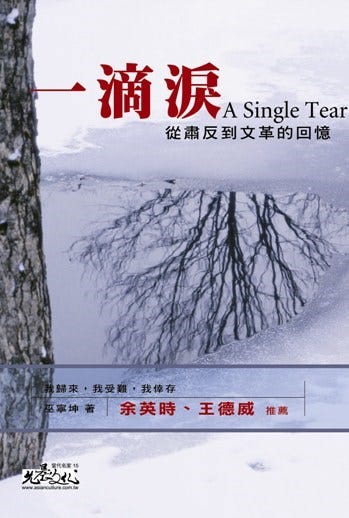
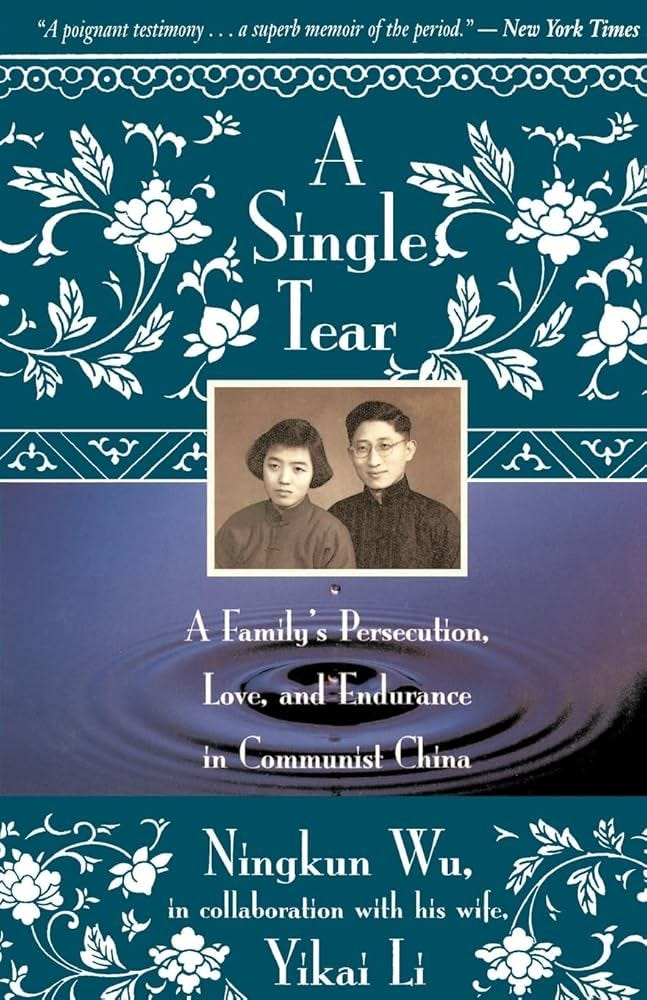
1951年,30岁的巫宁坤正在芝加哥大学英美文学系攻读博士。他收到一份来自北京的电报,邀请他回国。两年前刚刚成立的中华人民共和国,此时正需要人才,号召像他这样的海外学子归国,为建设“新中国”贡献所长。作为一名曾在二战期间担任美国“飞虎队”翻译的爱国青年,巫宁坤欣然接受了邀请。然而,随之而来的,是他在毛泽东时代的中国所遭遇的,长达近三十年、几乎从未间断的迫害与艰辛。巫宁坤在他1993年出版的回忆录《一滴泪》(A Single Tear)中详述了这段往事,并将其总结为:“我归来,我受难,我幸存。”
作为翻译家的巫宁坤,将这部最初用英文写就的回忆录又译成中文,并于2002年在台湾出版。至今,20多年过去了,该书始终未在大陆正式出版,但其扫描版则一直在互联网上流传,供那些在中国可以翻墙,也想追寻“毛时代”社会真相的人阅读。随着时间推移,这本书也积累了大量的读者,成为反映毛泽东时代知识分子苦难的著名回忆录之一。在中国,巫宁坤书中记述的许多内容,尤其是文化大革命,至今仍无法被自由讨论。今年是文革爆发60周年,以及文革结束50周年的纪念年份,重新审视这本书,有着重要的意义。
即使以那个时代的标准衡量,巫宁坤遭受的苦难也远超常人。事实上,从美国归来不久,他就在1950年代中国频繁的政治运动中成为斗争对象,只因为他曾在西方接受教育,并曾经和国民党军队有联系(主要与他曾任“飞虎队”随军翻译有关)。回国后,他一开始在燕京大学(后北京大学)任教,1951年11月任教于南开大学,1956年调任北京外事干部学校(后来的北京国际关系学院)。1957年中共发动的“反右运动”中,他响应党的号召,发表了一些批评意见,旋即被划为“极右分子”。此后的三年里,他被迫远离妻儿,去接受劳动改造。一开始他被押送去了臭名昭著的东北兴凯湖农场,后来,又被转往北京附近的一所监狱。正值大饥荒期间,在那里他几近饿死。
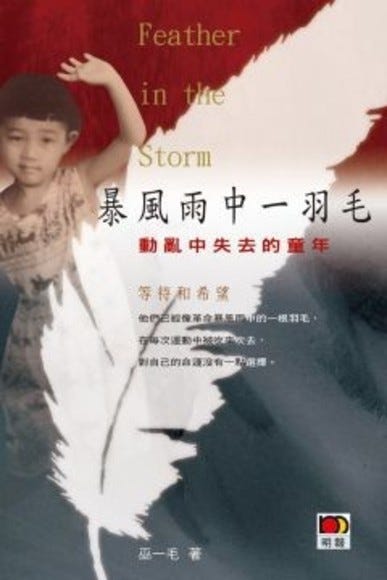
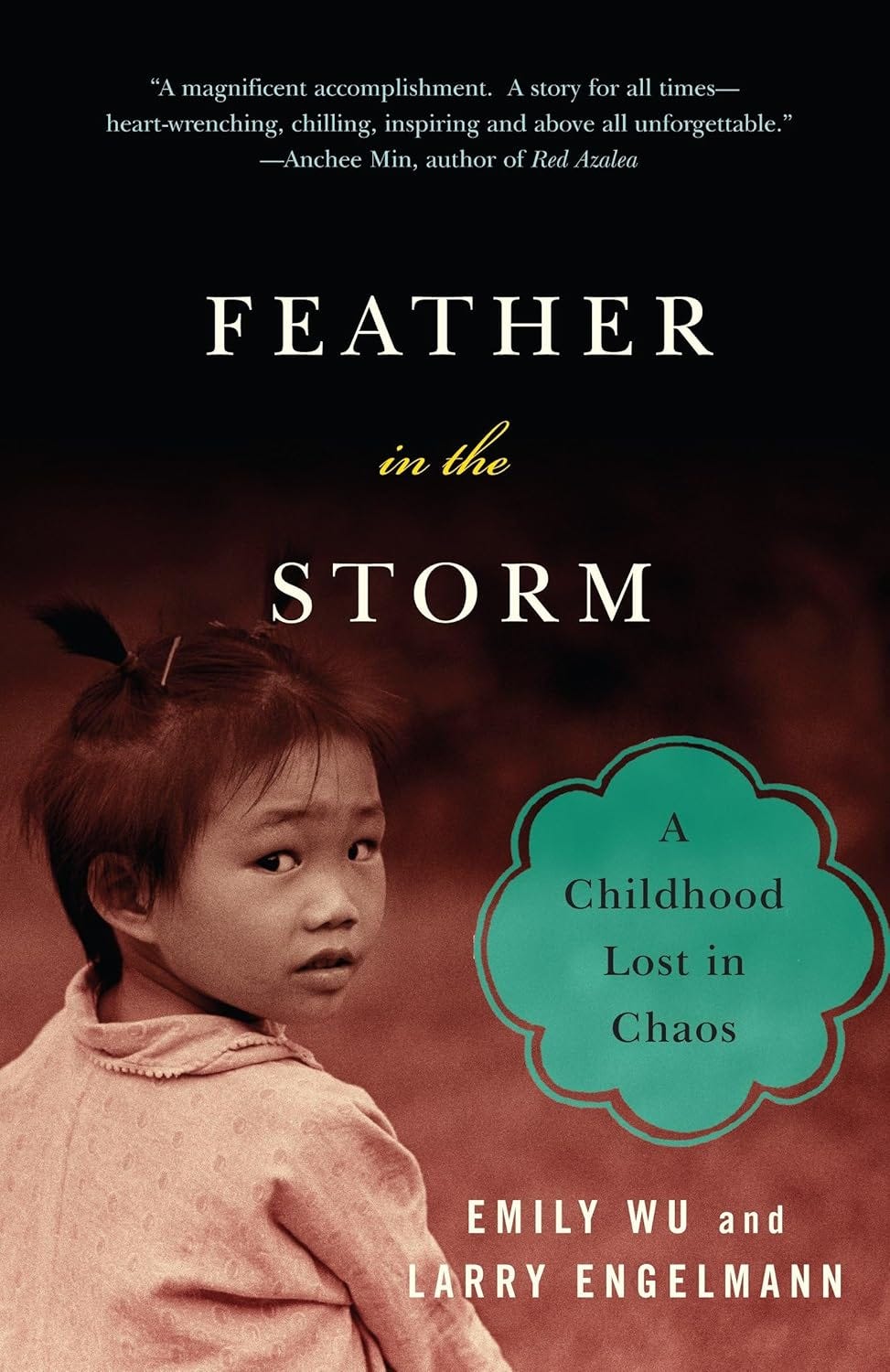
1961年获释后,巫宁坤被送往他妻子任职的安徽大学,终于和家人短暂团聚。好景不长,文革爆发,此时他的“右派”身份再次成为梦魇,他被关进了改造阶级敌人的“牛棚”。“牛棚”的日子同样难熬,在严密的监管之下,他不得不进行无休止的自我批评。与此同时,他的家庭也几乎分崩离析。他的女儿巫一毛,文革开始时才是个8岁的孩子,父母的遭遇让她失去了一切庇护。一直到中年之后,她写下自己的回忆录《暴风雨中一羽毛》,并在其中提及惨痛的往事:1966年,无人照顾的她,在看完病独自回家的途中,遭到一名解放军强奸。时隔一年之后,她再度遭到强奸,这次施暴者是他父亲的一名老同事。
后来,巫宁坤与全家一同被下放到农村。直到1979年,巫宁坤的“极右”帽子才被摘掉。此时的他,已年近六旬,戴着“阶级敌人”的帽子生活了22年。在饱受摧残的岁月里,巫宁坤觉得自己就像“一根会思想的芦苇,听任社会主义政治风云的摆布”。作为接受了西方教育的学者,巫宁坤对中国共产党的那套政治运作一窍不通。从始至终,他既没有通过给自己编造罪名来取悦审讯者的天赋,也不擅长为了保护自己而假装忏悔。
他回忆,每当他被迫交待罪行时,总会在心中默诵那些西方文学经典中的名句。对他而言,批斗会上歇斯底里、无比狂热的群众,正如莎士比亚所言,“充满了喧哗与骚动,却毫无意义”。他拒绝承认强加在他头上的反革命指控,因为他信奉林肯的教诲:“当该抗议时却保持缄默,这种罪行足以让人变成懦夫。”
当巫宁坤被送往劳改农场,背着木柴蹒跚走过冰原时,他曾想象莎士比亚戏剧《麦克白》中的场景:“从伯南森林来的移动丛林,向被围困在邓西嫩‘紫禁城’里的麦克白推进”。
这些文学典故,在西方读者看来或许有些脱离语境,如同在掉书袋,但正是他早年的英美文学训练,那些经典文学,让巫宁坤得以在精神上和正在遭遇的惨痛处境保持距离。这种保持自我的能力——无论这个自我与环境多么格格不入——是一个人能在毛泽东时代残酷的政治运动中存活下来的关键。正是凭借这种能力,巫宁坤才没有像他的许多同侪那样陷入愤怒与绝望。他的书中,就记录了许多这样的悲剧:著名学者赵萝蕤(也正是她请当时的燕京大学校长写信请巫宁坤回国),在丈夫陈梦家被划为右派后精神失常;巫宁坤安徽大学一名同事的妻子江楠,在乡下被强奸,因为当地医生拒绝为她实施堕胎手术,她自缢身亡。
巫宁坤最终幸免于难,但后来的人生中,他始终在艰难地尝试与自己的痛苦达成和解。那些中共的老革命们,经常宣称自己将苦难视为对信仰的考验——但巫宁坤不是虔诚的共产主义信徒,他无法接受这种说法,他深知自己的心在别处——当在“反右运动”中遭受数轮围攻之时,他得知妻子怀上了他们的第二个孩子。
“我毕竟是一个有妻儿老小的凡人, 我没有当殉道者的准备。”他在心里想,“我的血肉之躯是软弱的。” 也正是这样的心路经历,让巫宁坤最终转向了写作。他在序言中写道,自己记录下这一切,只是为了回答一个问题:“我的受难与幸存是否徒劳?”
为了回答这个问题,巫宁坤细致追忆半个世纪前的往事。他在描述1950年代至1970年代间自己反复遭受迫害的场景时,指名道姓,并大段引用当时的对话,读来宛如直接取自日记。
和其他毛时代的知识分子回忆录——如杨绛的《干校六记》或高尔泰的《寻找家园》——相比,《一滴泪》似乎并没有致力于升华那些痛苦的记忆,而更倾向于史实式的记录。巫宁坤写下了他能记住的一切:他对自己所遭遇苦难背后的权力结构,或者那些施暴者身份背景的信息描述并不多——或许是因为长期身处排斥与孤立中,让他难以洞察这些内幕。但他不遗余力地记录下所见所闻,如清河监狱的饿殍,或红卫兵对安徽大学同事的暴行——这些个体生命的故事,若不是他的记录,早已湮没于历史。
巫宁坤笔下的经历也不全是纯粹的残暴。文革期间,他在农村合作社劳动时,惊喜地发现,负责监视他的贫下中农学生竟然热爱阅读。两人在深夜畅谈鲁迅和《红楼梦》,并因此结下了友谊。然而,这很快给那名学生带来了灾难——也成了攻击目标,巫宁坤被迫参加了一场针对这名学生的恶毒的批斗会。
后来,监管人员换成了另一个贫下中农学生——一个心软的孤儿。这个学生从来不对被监管的人大声呵斥。他向巫宁坤说,当村民们奉命“挖资本主义墙角”,而砍掉他心爱的桃树时,他哭了。就在那时,他知道自己“永远成不了一个好的革命者”。因缺乏革命精神,这名学生被送回了生产队,而他那些更积极革命的同学,则被提拔并进了城。
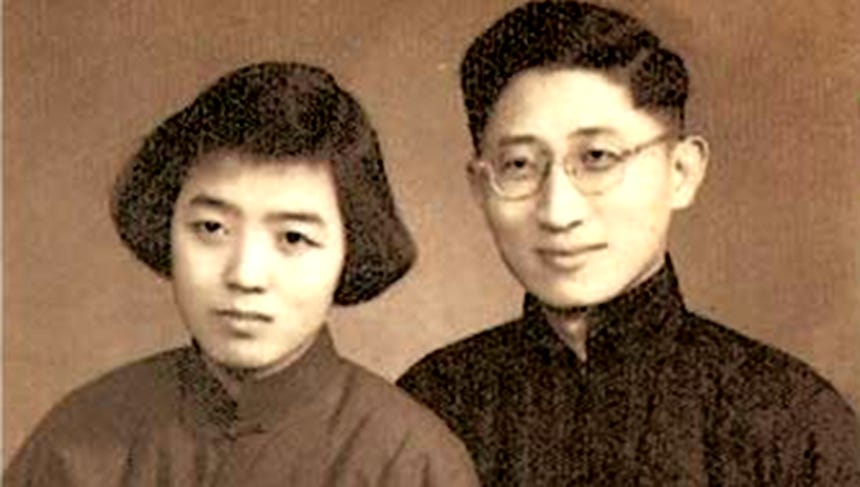
巫宁坤的妻子李怡楷是他生命中持久的慰藉与支柱。书中有几章内容正是基于她的叙述。她在南开大学是巫宁坤的学生,1954年毕业后和他成婚。不止一次,是李怡楷的机智与坚毅将巫宁坤从深渊中救起。三年大饥荒期间,当巫宁坤在劳改农场因营养不良濒死时,李怡楷不懈地奔走,最终帮助争取到了保外就医。1973年,当巫宁坤在农村“接受再教育”时,李怡楷跨省奔波,为丈夫争取更好的待遇。正是这些努力,最终促成了巫宁坤被调回城市,重返教职。
当1951年回到中国时,巫宁坤曾以为等待他的,将是在燕京大学的课堂上,为学生讲授乔叟和莎士比亚的教学生涯,然而,命运为他准备的却是革命与流放。他被发配到东北的冰原和安徽的穷乡僻壤,被工人欺辱,也被农民算计——这的确是一种“再教育”,他几乎因此丧命。
但巫宁坤并没有沉溺于“如果当年……”的假设。书中写道,在他刚从作为右派被劳改三年释放后的一天,妻子曾问他是否后悔回国。
巫宁坤说:“我不可能作出其它选择。我的这个决定,是我的一生,我的梦与幻想,我的长处和短处,以及一切因缘际会的结果。”
话虽如此,1979年,巫宁坤摘掉右派帽子后,在北京与一位美国老友重逢的场景,仍然让人唏嘘。那位朋友正是诺贝尔奖得主李政道。两人曾是芝加哥大学的同窗,1951年巫宁坤回国时,李政道到港口为他送行,当时李政道直言自己不打算回国,因为“不想被洗脑”。
28年后,在北京一家宾馆里,巫宁坤看着坐在桌子对面的李政道,感到这一切太过讽刺:对方“在‘美帝国主义的堡垒’安居乐业,回到共产中国荣膺‘爱国主义者’的桂冠……我响应号召回到祖国,却被划为人民公敌,受尽无产阶级专政下劳动改造和牛棚的煎熬,几乎成为饿莩,葬身一抔黄土。”
1993年,当《一滴泪》在美国出版时,内容激怒了北京当局,其中包括当时将巫宁坤划为右派的北京国际关系学院的退休干部。校方随即停发了巫宁坤夫妇的退休金,并收回了他的住房,令这对老夫妇一度无家可归。漂泊两年后,他们最终定居在美国弗吉尼亚州莱斯顿的一家老年公寓里。在那里,巫宁坤似乎终于找到了平静。在2014年的一份自述中,他写道:“一间简单的卧室就是我们的天堂,一个远离世俗纷扰的避风港。”晚年的他,享受着老友以及前学生时期同事的造访,其中还包括来登门致歉的当年的施暴者。
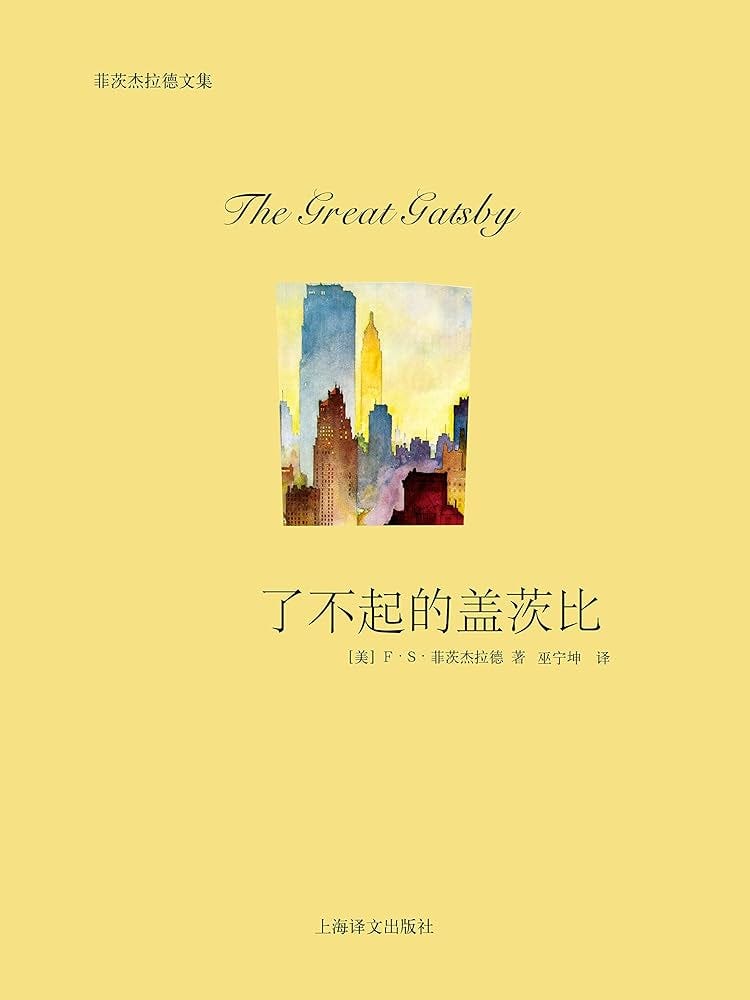
2019年巫宁坤去世时,他的故事在大陆鲜为人知。人们了解他多是通过他翻译的西方名著,其中包括《了不起的盖茨比》。当年在燕京大学,这本书曾是他被批斗的“罪证”,激进的学生指责他用这本书“毒害新中国青年的思想”。
几十年后,随着中国国门开启、经济腾飞,人们正是通过巫宁坤精妙的译笔,才了解了不受约束的资本主义带来的可能性和危险性。巫宁坤翻译此书也有个人寄托——他在译后记中写道,菲茨杰拉德深陷于他的时代,却能冷静地描绘出那个时代的冷酷与沉沦。在这本书的作者和他一起被划为“阶级敌人”后,巫宁坤觉得他欠这位爵士乐时代的记录者一个公道,因此要“为他平反,还他公正”。
一次,在陪妻子去马里兰州罗克维尔参加弥撒时,巫宁坤偶遇了菲茨杰拉德的墓地。那是一个毫不起眼的合葬墓,墓碑上刻着菲茨杰拉德和妻子泽尔达的名字,紧邻着车水马龙的街道。墓碑前的石板上刻着《了不起的盖茨比》那句著名的结尾。巫宁坤与妻子在墓前徘徊。他指着那行字,妻子轻声读了出来:
“于是我们奋力向前,逆水行舟,被浪潮不断地推向过去。”
本期推荐档案:
【本文为中国民间档案馆首发,转载时请务必在正文之前注明“本文首发于中国民间档案馆”,并加上原文在中国民间档案馆网站或者中国民间档案馆Substack的链接。】
【作者观点不代表中国民间档案馆立场。】
I came, I suffered, I survived: A Single Tear and Chinese Intellectuals under Mao
By Hai Lun
Wu Ningkun was 30 years old and a third-year PhD student in American and English literature at the University of Chicago in 1951 when he received a cable from Beijing inviting him to return home. The People’s Republic of China, founded two years earlier, was calling for overseas Chinese like Wu to contribute their expertise to building the New China. A patriot who served as a translator for the American Flying Tigers during the Second World War, Wu happily accepted the invitation. What followed was close to three decades of near-unremitting persecution and hardship in Mao’s China, which he recounted in his 1993 memoir A Single Tear and summed up as “I came, I suffered, I survived.”
A Chinese version of A Single Tear, which Wu translated from English himself, came out in Taiwan in 2002. Although the book has never been published in Mainland China, scanned versions of it have circulated on the Internet, available to people interested in learning about the Mao era and equipped with the technology to circumvent the Great Firewall. Over time it acquired a sizable readership and became one of the best-known memoirs on intellectuals’ sufferings under Mao. Much of what Wu wrote about, chief among them the Cultural Revolution, still cannot be freely discussed in China. As the 60th anniversary of the outbreak of the event arrives this year, it is worth revisiting the book.
Even by the standards of the time, Wu suffered more than most. Because of his Western education and links to the Nationalist Army, Wu became a target for attack soon after his return. After brief stints teaching English in universities in Beijing and Tianjin, he was labeled an “ultra-rightist” during the Hundred Flowers campaign for the criticisms of the party he had been coaxed into giving by school authorities. He spent the next three years doing hard labor, away from his wife and small children, first in the notorious Xingkai Lake prison farm in the northeast, then in a prison near Beijing, where he nearly starved to death.
Upon his release in 1961, Wu was sent to Anhui University, where his wife was working at the time. Family life resumed, only briefly. Wu’s rightist label came back to haunt him when the Cultural Revolution broke out, condemning him to the “cow shed” — a term for makeshift holding cells for those the party deemed class enemies, where he was monitored constantly and forced to go through repeated self-criticisms. The family was scattered. His daughter, Emily Yimao Wu, who was eight years old when the Cultural Revolution started, later revealed in her memoir Feather in the Storm that she was raped twice in 1966 and 1967, once by a People’s Liberation Army soldier and once by a former colleague of her father’s.
Later sent down to the countryside with the rest of his family, Wu was not cleared of his ultra-rightist charge until 1979, after the end of the Cultural Revolution. By then nearly 60, Wu had lived as a class enemy for 22 years. Throughout his years of persecution, Wu felt himself “a thinking reed at the mercy of the whim of the socialist political wind.” A West-trained academic unacquainted with the ways of the Chinese Communist Party, Wu had no talent of drumming up past sins to satisfy his interrogators, nor was he good at performing contrition on demand.
When he was under pressure to confess, Wu had a way of recalling to himself lines from famous works of Western literature. To him, the mass hysteria at a struggle session was “full of sound of fury, signifying nothing,” as Shakespeare put it. He refused to acquiesce to the counterrevolutionary accusations leveled against him, for he stood by Lincoln’s words “To sin by silence when they should protest makes cowards out of men.”
Later, Wu was sent away to a labor farm, where, trudging across icy plains with a bundle of chopped wood on his back, he fancied himself “part of the moving grove from Birnam wood advancing upon Macbeth besieged in his ‘Forbidden City’ of Dunsinane.”
Those literary references may strike western readers as pedantic and out of context, but they were crucial in helping Wu to mentally distance himself from his harrowing experiences. The ability to preserve an inner self, however at odds with its surroundings, proved critical to surviving Mao’s brutal campaigns. Thanks to it, Wu was able to resist succumbing to the anger and hopelessness that consumed many of his peers, whose tragic stories littered the book: Lucy Chao, a famous literary scholar and Wu’s colleague at Yenching University, developed schizophrenia after her husband, the archeologist Cheng Mengjia, was labeled a rightist. Jiang Nan, the wife of one of Wu’s colleagues at Anhui University, hanged herself after she was raped by workers in the countryside and refused abortion by local doctors.
Wu survived in the end, but he struggled to come to terms with his sufferings. Unlike the diehard revolutionaries who saw their tribulations under Mao as tests to their faiths, Wu, never a devout Communist, could not bring himself to that view. He knew his heart lay elsewhere. In the aftermath of the Hundred Flowers campaign, during which Wu suffered numerous rounds of attacks, he discovered his wife was pregnant with his second child.
“I was a family man now and I was not prepared to be made a martyr,” Wu thought to himself, “for my flesh was very weak.” In the end, Wu turned to writing. He wrote in the book’s prologue that documenting his experiences was his attempt to answer the question: “Have I suffered and survived in vain?”
This purpose shows in the meticulousness with which Wu recounted events dating back as long as half a century ago. His descriptions of repeated victimization between the 1950s and the 1970s, crowded with names and extended dialogues in direct quotes, could have been lifted directly out of his diary.
Compared to other noted memoirs of the period, such as Six Chapters from My Life ‘Downunder’ by Yang Jiang or In Search of My Homeland by Gao Ertai, A Single Tear seems less interested in sublimating painful memories than in historic record keeping. Wu wrote down all he could remember: He provided little contextual information, like the power dynamics in his workplaces or the backgrounds of his torturers, perhaps because the ostracism and isolation he faced meant he had little insight into those questions. But he took pains to record what he saw, like the deaths by starvation at Qinghe Prison or the Red Guards’ violence towards his colleagues at Anhui University, individual stories that would otherwise have been lost to history.
Wu showed that there was more to his experience than sheer brutality, though those respites tended to be fleeting. When Wu lived in an agricultural commune during the Cultural Revolution, he was delighted to discover that the peasant student assigned to watch him had a love for reading. The two bonded over late-night conversations about Lu Xun and The Dream of the Red Chamber. That soon made the student a target of attack himself, in a vitriolic struggle session Wu was forced to attend.
The handler was soon replaced by another peasant student, a soft-hearted orphan who never raised his voice at his charges. The orphan knew he “would never make a good revolutionary,” he confessed to Wu, when he teared up at the deaths of his favorite peach trees in the hands of villagers ordered to “dig up roots of capitalism.” Deemed lacking revolutionary spirit, the student was sent back to his rural commune while his more zealous classmates won promotions to urban work units.
A lasting source of solace and support in Wu’s life was his wife Li Yikai, whose narration of her own experience forms the basis of several chapters of the book. She met Wu when she took his class at Nankai University and married him after her graduation in 1954. More than once, it was Li’s resourcefulness and resolve that saved Wu from the abyss. During the Great Famine, when Wu was dying of malnutrition in state prison, Li tirelessly lobbied Wu’s former work unit to intervene on Wu’s behalf, eventually helping to secure his release. In 1973, when Wu was confined to the countryside during Mao’s initiative to have intellectuals “receive reeducation from peasants,” Li travelled across provinces to plead and wrangle with party bureaucrats for better treatments for her husband. Those efforts led to Wu’s return to the city and reinstatement to the ranks of university faculty.
Wu had come back to China expecting a career teaching Chaucer and Shakespeare in the ivory tower of Yenching University. Instead, revolutions and exiles took him to the frozen plains of Manchuria and the rural hamlets of eastern Anhui. They put him under the mercy of bullying workers and scheming peasants. It was a reeducation of a kind, and it nearly cost Wu his life.
But Wu knew better than to indulge in counterfactuals. Once, having just been released from a three-year imprisonment following the Hundred Flowers campaign, Wu was asked by his wife whether he regretted returning to China.
“I could have made no other choice than the one I did,” he said. “My decision was a natural outcome of my life, my dreams and illusions, my virtues and failings, and the chance of circumstance.”
Yet one cannot help but feel for Wu when, soon after shedding his rightist label in 1979, he had the chance to reunite with a friend from America who was visiting Beijing. The friend was Tsung-Dao Lee, a Chinese-American physicist who won the Nobel Prize in 1957. A native of Shanghai and contemporary of Wu’s at University of Chicago, Lee saw Wu off when he boarded the China-bound ship in 1951, saying that he personally would not consider returning home because he “did not want to have his brain washed.”
Twenty-eight years later, as Wu sat across the table from Lee in his Beijing hotel, the irony was hard swallow: Lee, “secure in the ‘imperialist fortress of America,’ was hailed as a patriot in Communist China” on his visit and “an honored guest of the state,” Wu thought to himself. Whereas he, “recalled to serve the motherland, was denounced as an enemy of the people and had survived labor camps, starvation, and proletarian dictatorship.”
When the book was published in the United States in 1993, its revelations angered authorities in Beijing, among them retired cadres at the University of International Relations, where Wu was labeled an ultra-rightist in 1957. The school suspended pensions for Wu and his wife and confiscated their apartment, rendering the elderly couple homeless. After two years of drifting, the couple permanently settled in a senior living facility in Reston, Virginia. There Wu seemed to finally find peace. “A simple one-bedroom was our paradise, a place to escape demoralizing worldly affairs,” he wrote in a self-published memoir in 2014. In retirement, he enjoyed visits from friends, former students and colleagues, and on several occasions, attackers from the past who came to apologize for their offenses.
When Wu passed away in 2019, his life story was little known inside Mainland China. Instead, he was best remembered as a translator of Western fiction, most notably The Great Gatsby. The book had been a piece of incriminating evidence in one of Wu’s earliest sessions, in which activist students at Yenching University accused him of using it to “corrupt the young minds of the New China.”
Decades later, when China opened up and its economy began to soar, it was to Wu’s masterful translation of the book that people turned to understand the possibilities and perils of untrammeled capitalism. Wu had his personal reasons for translating the book: Fitzgerald was deeply embedded in his time, Wu wrote in its epilogue, and yet he was able to coolly depict it in all its amorality. Having together been condemned to the ranks of class enemies, Wu felt he owed it to the chronicler of the Jazz Age to “rehabilitate him and give him back justice.”
Once, while accompanying his wife to a mass in Rockville, Maryland, Wu chanced upon F. Scott Fitzgerald’s grave. An unassuming headstone inscribed with the names of Fitzgerald and his wife Zelda stood on a small plot next to a street where cars zipped by. In front of it lay a ledger stone that bore the famous last line of The Great Gatsby. Wu lingered at the grave with his wife. He pointed at the sentence, and his wife spoke the words softly:
“So we beat on, boats against the current, borne back ceaselessly into the past.”
Recommended archive:
[This article first appeared in China Unofficial Archives. When reposting, please ensure that the following is included at the beginning of the reposted text: “This article was first published by the China Unofficial Archives,” accompanied by a link to the original article on the China Unofficial Archives website or Substack.]
[The views expressed by the author of this article do not necessarily reflect the position of the China Unofficial Archives.]
Another fine, touching post of those living through monster Mao's Democide, thank you.