

2025年的“悼明”风潮:当年轻人在历史里寻找替罪羊
Mourning the Ming: When China’s Young People Seek Scapegoats in History

作者:王不骧
By Wang Buxiang
The English translation follows below.
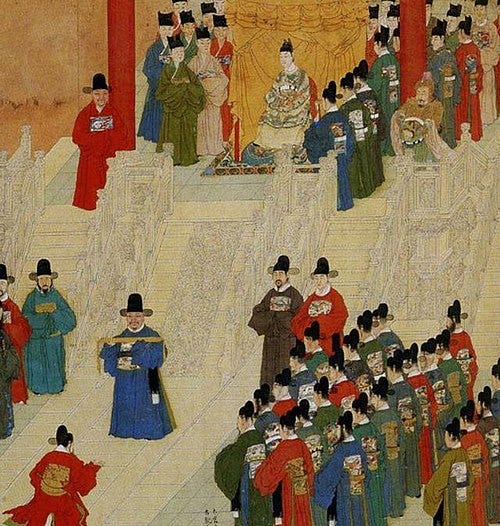
2025年末,中国社交媒体上意外出现了一股“反清复明”的潮流。满清王朝在灭亡了100多年后,再度招来汉人主体民族的忿恨。以抖音用户“吃瓜蒙主”为代表的意见领袖,在短视频平台上传播了一整套备受欢迎的历史叙事——被称为“1644史观”。
概括而言,这套叙事分为两部分,第一部分是历数清朝的无恶不作:1、满清政权不认为自己是中国;2、满清政权实行了大量针对汉人的歧视性政策(比如设立专供满人居住的满城、屠杀汉人、大兴文字狱);3、清朝毁灭了大量明朝留下的重要典籍,让明朝积累的先进科技成果毁于一旦,使得中国在近代快速衰落,否则今天的中国应该是世界第一强国,中国人民应该过上了“上四休三”的幸福生活,中国的衰落应该从1644年满清入关开始算起;4、清朝签订了大量丧权辱国的条约。
第二部分是怀念明朝的种种伟大之处,其中当然有许多穿凿附会或阴谋论的内容:1、明朝有开明、接纳批评的政治环境;2、明朝女性地位高(证据是有女将军、女官,女性平民出嫁时可以穿皇室的衣服);3、明朝有先进的科技成果,许多西方的发明(蒸汽机、微积分)都是抄袭自明朝的《永乐大典》,这一部分和早已流行的“西方伪史论”循环论证,在抖音、小红书等社交媒体开启了病毒式传播。
皇汉、新清史与官方话语:谁在解构中国的历史合法性
短视频博主“吃瓜蒙主”是这股风潮中的核心人物,她的抖音粉丝在一个月内涨到500万。有网民表达自己的情感受到了冲击,“崩溃了,每天起来都时不时流泪哭泣,悼汉人之荣光,恐满妖之残忍……”而这并非孤例,有网民说自己跟同事讲满清之恶但同事都不愿意听,有人接话“好多人都麻木了”。在受“吃瓜蒙主”影响的人眼中,“悼明”、揭露清朝的罪恶是一种觉醒、一种启蒙。
“吃瓜蒙主”是一个典型的爱国博主,她所发的短视频,涵盖了主流意识形态喜闻乐见的内容。有仇日的、批判LGBTQ的、攻击“境外势力”的,嘲讽美国、印度的。即便如此,她还是被全网封禁了,自11月后不再更新视频。
在“悼明”的话题引发巨大讨论后,2025年12月底,浙江省委宣传部在其官方账号“浙江宣传”上发表文章,批评1644史观“与境外某些旨在解构中国历史连续性的叙事形成了呼应,为那些试图否定中国统一多民族国家历史合法性的论述提供口实”。浙江宣传点名美国的新清史学派,认为其强调清朝的“满洲特性”,是为分裂论调提供依据。
2013年,中国中央办公厅印发了一份内部文件《关于当前意识形态领域的通报》,提出在意识形态领域有七大危险。包括西方宪政民主、普世价值、公民社会、新自由主义、西方新闻观、历史虚无主义、质疑改革开放。
当时官方忌惮的历史虚无主义,主要是针对中共党史、中华人民共和国史的非官方解读,比如否定毛泽东、肯定国民党抗日战争中的“正面战场”。直到2024年中国社科院的清史研究中心成立,才开始有阵地、旗帜鲜明地把新清史当成历史虚无主义的靶子来反对。
如果要做一个极其粗糙的概括,可以说,中国官方认可的清史研究,是主张清朝统治者成功地进行了“汉化”,所以清朝并非一个异族政权;而新清史研究认为清朝保留了大量满洲性,这种满洲性是清朝得以成功统治的原因。
在中国官方的视角里,2025年底的民间民粹力量(“皇汉”群体)仇视满清、鼓吹反清复明,和西方历史学家研究清朝的满洲性、内亚性,本质上都是在动摇中共统治下的中国的合法性——如果清朝的统治是异族入侵中国,继承了清朝国土版图的中华人民共和国也变得十分尴尬,而且西藏、新疆等非汉人族群地区的独立主张也变得合乎逻辑。
尽管新清史学派的代表学者之一欧立德(Mark C. Elliott),在他于2016年台湾中央研究院史语所的一个演讲中曾回应:“据我所知,无论是我,柯娇燕、罗友枝还是濮德培,没有人这么说(清朝不等于中国),恐怕这是一种误解。”——他提及的这几位学者,被认为是美国第一代新清史研究的代表。不过这不妨碍去学术脉络化的新清史的研究,在中国官方眼中成为一种有分裂中国立场的学术生产。
从“入关学”到“悼明”:赢的时候是满清,输的时候怪满清
有意思的是,民间的观念是如何再度燃起“反清”的意识的?
在中国互联网上,“反清复明”的潮流已经不是第一回,甚至是一再出现。2008年,研究清史和满学的历史学家阎崇年在签售会上被掌掴。掌掴者随后以“大汉之风”为笔名,在天涯论坛发表了《我为什么掌掴阎崇年》一文,指控阎崇年常常站在满清统治者角度讲话,发表“辱汉言论”,“当满洲人杀汉人时则兴高采烈”,是一个“清遗”。
“大汉之风”在文章中引用人民网做的一次投票,认为阎崇年该打占91.9%。他从拘留所出来后,受到“汉网”网友的热烈欢迎。从天涯到百度贴吧,再到微信公众号,现在在短视频平台,“满清不是中国”、“满清残害汉人“一类的叙事从不缺讨论的土壤。
官方平台“浙江宣传”称之为“狭隘的汉族中心主义”,“浙江宣传”避而不谈的是,这种汉族中心主义,和中国政府持之以恒地对西藏、新疆、乃至内蒙古的非汉族族群的打压和污名化有强烈关系。对这些地区的语言的剥夺、宗教的限制、习俗的损毁,所依赖的不仅有体制的暴力,还有对民粹力量的持续召唤。最近通过的所谓“民族团结进步促进法”,正是官方体制加持汉族中心主义的明证。
今天偶尔在社交媒体上,会有年轻网民像发现新大陆一样,惊呼原来新疆人在外地很难租房、住酒店警察一定会上来检查,后面跟着的评论必定会认为这是必要的防范,这是他们“咎由自取”。
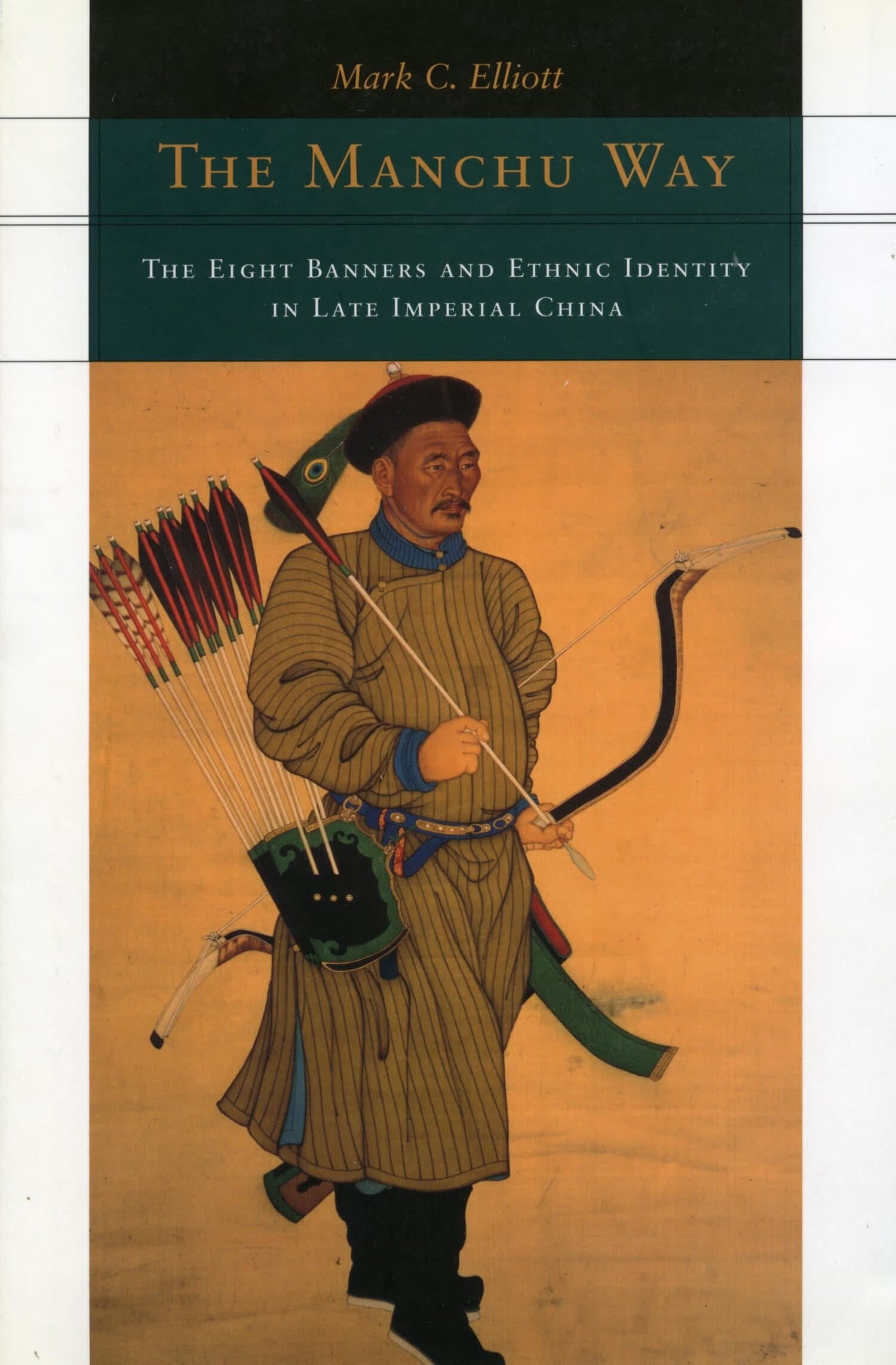
这种长期构建的“我者”(汉族)和“他者”(少数民族)的区别,和欧立德在《满洲之道》中分析的满清统治者依赖八旗制度维持满汉族群边界,可以说是异曲同工。
若借用民间舆论在否定女权主义时常用的句式——“不是性别问题,而是阶级问题”,我们也可以说,今天的“汉族中心主义”、“反清复明”潮流,实际上并不是民族问题,而是阶级问题,其社会心理仍然在于年轻网民在为自己的“不顺利”寻找一个替罪羊。
比如说,在畅想明朝科技领先,但被清朝打断、被西方窃取的叙事时,舆论一再指向如果不是清朝,今天年轻人过的就是欧美水平的生活——上四休三,工作轻松,收入不少。
“清朝”成为经济下行时期年轻人处境不佳的最大凶手。这个逻辑看起来十分荒谬,因为经济好的时候,传播的叙事是中国用40年的时间完成了欧美200年的进步。经济不好的时候,干脆直接往前跳了几百年去找原因。
这种流行叙事有明显的悲观色彩。前几年,舆论场曾经流行的“入关学”,是一种完全相反的高歌猛进叙事。“入关学”讲的是,美国就像气色已尽的明朝,中国就像兵强马壮的满清,中国终将入关,取而代之。至于正统性的问题怎么解决,入关学说,“自有大儒为我辩经”,意思是学者会用“汉化”的理论来论证满清也是中国。
可以看到,“入关学”和今天的“悼明”,是完完全全相反的两套叙事,前者是赢了再说,后者则是充满防御性的“为什么输了”。比起“分裂”倾向,可能中国执政者更应该警惕这种流行叙事里的隐藏的中国年轻人对当下处境的深深失望。
本期推荐档案:
欧立德:《满洲之道——八旗制度与清代的民族认同》
Mark C. Elliott: The Manchu Way: The Eight Banners and Ethnic Identity in Late Imperial China (Stanford University Press)
延伸阅读:
【本文为中国民间档案馆首发,转载时请务必在正文之前注明“本文首发于中国民间档案馆”,并加上原文在中国民间档案馆网站或者中国民间档案馆Substack的链接。】
【作者观点不代表中国民间档案馆立场。】
Mourning the Ming: When China’s Young People Seek Scapegoats in History
By Wang Buxiang
At the end of 2025, a surprising “oppose the Qing, restore the Ming” trend appeared on Chinese social media. Over a century after the fall of the Qing dynasty, which was run by a northern people, the Manchus, Han Chinese once again expressed outrage toward it. Opinion leaders such as Douyin user “Chigua Mengzhu” spread a widely popular historical narrative in short videos, referred to as the “1644 historical view” (1644 was the year the Qing dynasty was established).
This narrative has two parts. The first catalogs what these writers see as the Qing dynasty’s evils: (1) it did not consider itself Chinese; (2) it enacted numerous discriminatory policies against Han Chinese (e.g., establishing Manchu-only settlements, massacring Han people, and launching literary inquisitions); (3) the Qing destroyed large quantities of important Ming texts, causing the loss of advanced technological knowledge accumulated under the Ming. As a result, China declined rapidly in the modern era. Otherwise, today China would be the world’s strongest nation, its people enjoying a happy life of “four days on, three days off” every week. The decline of China should therefore be counted from the Qing entry in 1644; and (4) the Qing signed numerous humiliating treaties that compromised national sovereignty.
The second part glorifies the Ming dynasty, though it includes many speculative or conspiratorial claims: (1) the Ming offered a liberal political environment open to criticism; (2) women held high status (e.g., female generals and officials, and common women could wear royal-style clothing at weddings); (3) the Ming achieved advanced technological knowledge, with many Western inventions (steam engines, calculus) allegedly derived from the Yongle Encyclopedia. This argument overlaps with the long-circulating “Western Pseudohistory Theory,” a fringe theory that questions the authenticity and reliability of Western history. On platforms like Douyin and Xiaohongshu, it went viral.
Imperial Han, New Qing History, and Official Discourse: Who Is Deconstructing China’s Historical Legitimacy?
The short-video blogger “Chigua Mengzhu” became central to this trend, gaining five million Douyin followers in one month. Some users reported emotional impact: “I’ve broken down, waking up every day crying intermittently, mourning Han glory and fearing the cruelty of the Manchu demon…” This was not isolated. Some said colleagues refused to listen when they spoke of Qing atrocities, replying, “many people have become numb.” For those influenced by “Chigua Mengzhu,” “mourning the Ming” and exposing Qing crimes represented awakening and enlightenment.
“Chigua Mengzhu” is a typical patriotic influencer, posting content aligned with mainstream ideological tastes: anti-Japanese, anti-LGBTQ, attacking “foreign forces,” mocking the U.S. and India. Yet she was banned from the platform and stopped posting videos after November 2025.
Following the heated discussion around “mourning the Ming,” at the end of December 2025, the Zhejiang Provincial Propaganda Department published an article on its official account “Zhejiang Propaganda,” criticizing the “1644 historical view” for “echoing certain foreign narratives aimed at deconstructing China’s historical continuity, providing justification for those who seek to deny the historical legitimacy of a unified, multi-ethnic China.” Zhejiang Propaganda specifically mentioned the U.S.-based “New Qing History” school, claiming that emphasizing the Qing’s “Manchu characteristics” could support separatist arguments.
In 2013, China’s General Office issued an internal document, Notification on the Current Ideological Sphere, identifying seven major ideological risks: Western constitutional democracy, universal values, civil society, neoliberalism, Western journalistic perspectives, historical nihilism, and questioning reform and opening up.
At the time, the official concern with “historical nihilism” mainly targeted unofficial interpretations of Communist Party history and the PRC, such as denying Mao Zedong’s achievements or emphasizing the “positive front” of the Kuomintang’s anti-Japanese war. Only after the 2024 establishment of the Qing History Research Center at the Chinese Academy of Social Sciences did New Qing History become a clear target for official criticism as historical nihilism.
In a rough summary: official Chinese Qing studies argue that Qing rulers successfully “Sinicized,” so the Qing were not a foreign regime. By contrast, New Qing History scholars emphasize that the Qing retained significant Manchu characteristics, which enabled their rule.
From the perspective of Chinese authorities, the late-2025 populist forces (Imperial Han groups) that hated the Qing and promoted restoring the Ming, and Western historians who study Qing Manchu or Inner Asian characteristics, are both undermining the legitimacy of China under Communist Party rule. If the Qing were a foreign invader, then the People’s Republic’s territorial inheritance becomes awkward, and separatist claims in Tibet, Xinjiang, and other non-Han areas gain logic.
Even though Mark C. Elliott, a leading New Qing History scholar, publicly stated in a 2016 lecture in Taiwan, “As far as I know, Pamela Kyle Crossley, Evelyn Rawski, Peter C. Perdue, and I never claimed [the Qing was not China], which is likely a misunderstanding,” this did not prevent the decontextualized New Qing History from being labeled by Chinese authorities as academically supporting the division of China.
From “Entering the Pass” Studies to “Mourning the Ming”
The interesting question is: how did popular sentiment reignite anti-Qing consciousness?
On the Chinese Internet, “oppose the Qing, restore the Ming” trends have occurred repeatedly. In 2008, Qing historian Yan Chongnian was slapped at a book signing. The attacker, under the pseudonym “Great Han Wind,” posted on Tianya Forum Why I Slapped Yan Chongnian, accusing him of siding with Qing rulers, making “statements that insulted the Han,” and celebrating Manchu killings of Han people. After being released from detention, he was celebrated by Han online commentators. From Tianya Forum to Baidu Tieba to WeChat official accounts and now short-video platforms, narratives like “the Qing was not China” or “the Qing harmed Han people” have always found a receptive audience.
Official media, like Zhejiang Propaganda, labeled this “narrow Han-centric nationalism,” avoiding the fact that such Han-centric sentiment is closely related to persistent government suppression and stigmatization of non-Han groups in Tibet, Xinjiang, and Inner Mongolia. Restrictions on language, religion, and customs rely not only on institutional power but also on continual calls to populist forces. The recently passed law on controlling ethnic minorities, which the Chinese government ironically calls the “Law on the Promotion of Ethnic Unity and Progress,” reflects the strength of this trend.
Occasionally on social media, young commentators are shocked to discover conditions in Xinjiang: renting an apartment or staying in a hotel triggers police checks. The comments often rationalize this as necessary prevention—a “they brought it on themselves” mentality.
This long-term construction of “self” (Han) versus “other” (minorities) parallels Elliott’s analysis in The Manchu Way, showing how Qing rulers relied on the Eight Banners, the Manchu structure of social organization, to maintain ethnic boundaries between Manchu and Han.
Using a common phrase from anti-feminist discourse—“It’s not a gender issue, it’s a class issue”—we could similarly say today’s Han-centric “oppose the Qing, restore the Ming” trend is not truly an ethnic issue, but a class issue. Psychologically, it reflects young netizens seeking a scapegoat for their own difficulties.
For instance, narratives imagining Ming technological superiority interrupted by the Qing and stolen by the West repeatedly imply that if not for the Qing, young people today would live Western-level lifestyles. The Qing has become the chief culprit for young people’s struggles during economic downturns. The logic is absurd: when the economy is good, the narrative celebrates China’s 40 years of progress surpassing Western nations; when bad, blame leaps back centuries.
This popular narrative is distinctly pessimistic. A few years ago, the “Entering the Pass” narrative—also known online as Ruguanism, which refers to the Qing entering the Shanhaiguan pass (the easternmost pass of the Great Wall) from northeastern China to central China and conquering the Ming—prevailed, celebrating historical progress: the U.S. resembled a waning Ming, China a strong Qing, destined to “enter the pass” and replace it. Legitimacy issues were handled by scholars claiming “Sinicization” proved the Qing were Chinese.
Clearly, “Entering the Pass” and today’s “Mourning the Ming” are completely opposite narratives: one celebrates victory, the other defensively asks, “Why did we lose?” Compared with separatist tendencies, authorities may be more concerned with the deep disappointment of Chinese youth toward their current circumstances expressed in these trends.
Recommended archive:
Mark C. Elliott, The Manchu Way: The Eight Banners and Ethnic Identity in Late Imperial China (Stanford University Press)
[This article first appeared in China Unofficial Archives. When reposting, please ensure that the following is included at the beginning of the reposted text: “This article was first published by the China Unofficial Archives,” accompanied by a link to the original article on the China Unofficial Archives website or Substack.]
[The views expressed by the author of this article do not necessarily reflect the position of the China Unofficial Archives.]
I wonder, if at least a regional war comes, these young people, especially the men of course, would volunteer to serve, not because of their PRC loyalty but because they'd no longer have anything else to lose.