

T恤上的香港历史:在“既近又远”的台湾留存一份档案
History Printed on Cotton : The Story Hong Kong’s Civil Society Told Through Iconic T-Shirts

作者:梁启智
The English version follows below.
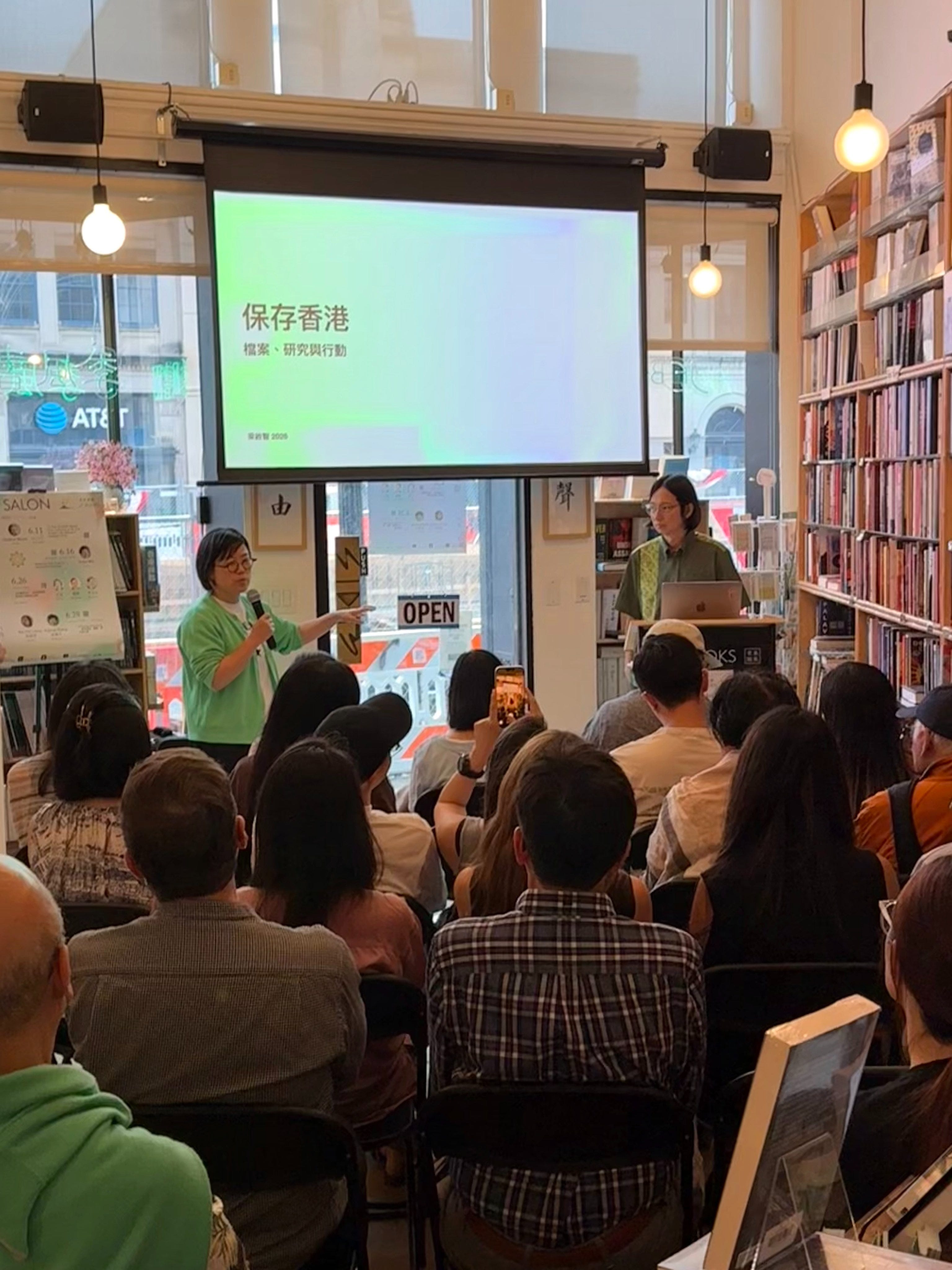
2021年12月,我离开自己生活40年的香港,来到台湾。如今,我在台湾的中央研究院从事香港研究和资料保存的工作。在香港巨变之后,今天我们如何在台湾留存香港记忆?每次我向公众讲述时,都会从几件T恤讲起——它们离开了香港,但每一件都与香港历史上一个重要时刻紧密相连。
过去,香港的社运人士、社区团体和公民社会组织,都习惯用T恤来纪念和表达,以及传递倡议。人们在集会和示威中,穿上这些T恤,表示彼此之间的团结与支持。许多团体也会售卖T恤筹募经费。随着时间推移,这些T恤成为香港曾经充满活力的公民社会象征,承载着集体记忆、政治参与,以及香港人的社群精神。
近几年来,随着香港政治生活巨变,这些T恤也没有了容身之所。不过如今在台湾中央研究院的香港资料库,你可以看到它们。这些T恤不仅串联起香港的故事,也反映出公民社会为保存香港档案的努力。
T恤上的历史转折:1989
很多时候,我的介绍会从1989年的一件T恤开始。
这件T恤出现在北京学生运动最高潮时期的香港。1989年的天安门运动,对香港而言,是一次深刻的民主觉醒,并在往后数十年间深深影响了香港的政治发展。
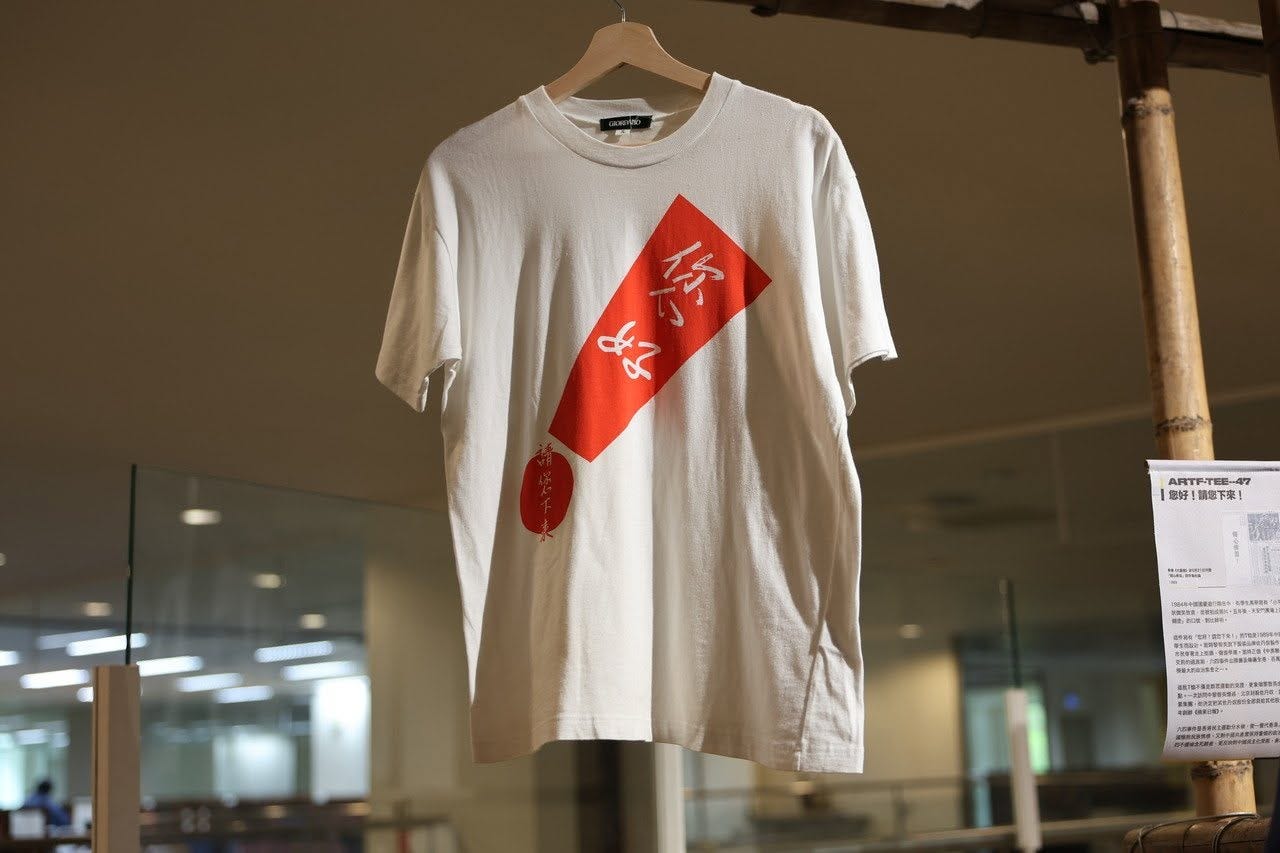
T恤上的文字“您好,请您下来!”看起来似乎十分温和。但其实,这是借用1984年的一句政治标语——1984年中国国庆阅兵期间,北京街头曾经出现一面写着“小平您好”的大型横额,表达民众对中国领导人邓小平的支持。到了1989年,这句话的意思被完全颠倒了过来。“您好,请您下来!”传达的是另一层意思:邓小平已经“待得太久”,中国人民如今希望他交出权力,退出政治舞台。
值得注意的是,T恤的上方写着Giordano,这是佐丹奴的英文名。佐丹奴是香港当时最著名的休闲服饰品牌之一,公司的创办人就是黎智英。黎智英后来创办了《苹果日报》,并使其成为香港最具影响力的民主派报章之一。1989年,黎智英只是一位商人,还不是媒体大亨。天安门运动深深触动了他,他决定公开表达立场,支持学生运动。他的故事,也反映了香港此后经历的巨大政治变迁。
2021年,《苹果日报》资产遭政府冻结而被迫停刊;黎智英其后亦因《香港国安法》及其他相关控罪遭到起诉,目前已在多宗案件中被判有罪,累计刑期达20年。
反基本法23条: 香港的公民参与“黄金年代”
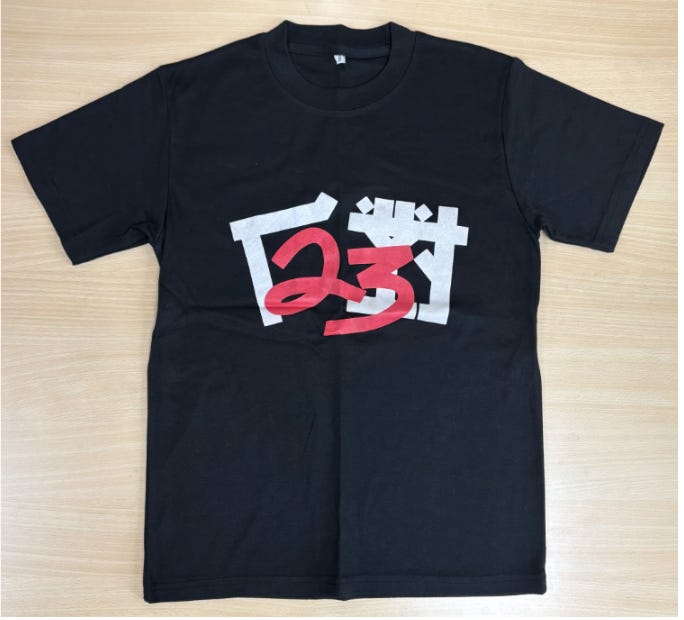
我们收藏的一件T恤上,写着“反对23”,这里“23”指的是《香港基本法》第23条,也就是香港宪制文件中要求香港自行立法维护国家安全的条文。2003年,香港政府提出相关立法,以履行这项宪制责任。然而,无论是法案内容,还是政府处理咨询工作的方式,都迅速引发巨大争议。许多香港市民担心,这项法例将削弱公民自由,限制言论自由。
2003年7月1日,约50万香港市民走上街头抗议,成为香港历史上规模最大的示威之一。面对空前的民意压力,政府最终撤回法案。
许多人认为,这场抗争揭开了香港公民参与的“黄金年代”序幕。随后十多年里,大量公民社会组织、倡议团体及草根运动相继成立,共同塑造出一个充满活力、政治参与度极高的公共空间。
今天,我们已身处一个截然不同的时代。2020年,北京在香港实施《国安法》;2024年,香港政府亦根据《基本法》第23条完成本地国家安全立法。这两部法律共同彻底改变了香港的政治与公民社会面貌,也让今天的香港,与这件T恤诞生时所处的社会氛围形成鲜明对比。
T恤上的香港文化保育以及社区认同
在香港,并非所有抗议的运动都直接围绕着民主发展或宪政改革。有不少抗议运动,关注的是市民的日常生活,例如城市规划与都市更新。
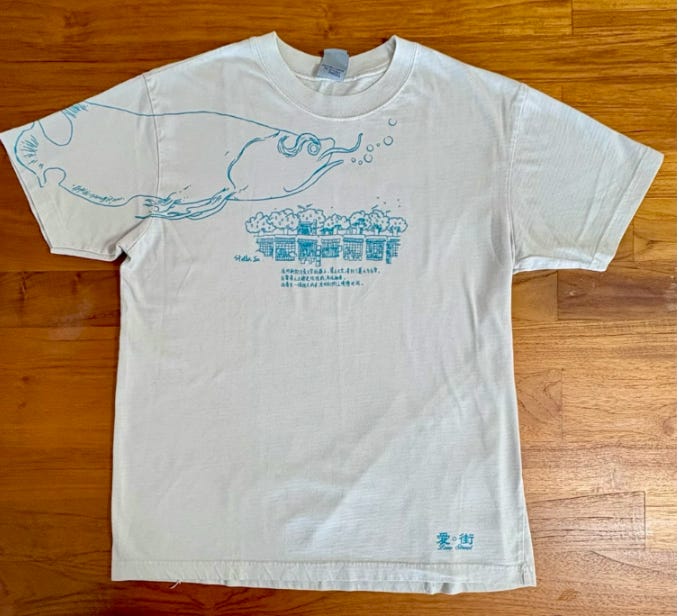
我们收藏的一件“利东街”T恤就是如此。它印着一幅充满想像力的图像:一条鱼飞翔在利东街上空。这个街道有一个更被香港人熟知的名字——囍帖街。这里曾是香港著名的印刷街,但在2000年前后被政府纳入市区重建计划。
几十年来,香港市民都在这条街上印制喜帖、贺卡及各种传统礼仪用品。这条街不仅具有经济价值,也承载着深厚的文化意义。当政府宣布重建计划时,居民和关注者们并没有只要求提高赔偿金额。相反,他们提出了更深层的问题:城市究竟应该如何规划?他们要求保留社区网络、保存地方文化,让市民真正参与城市规划的决策过程。
今天看来,这些理念似乎十分理所当然,但在当时的香港,却是相当新的城市发展观念。这场运动也促使更多香港人开始思考文化保育、社区认同,以及以人为本的都市规划。从许多角度来看,它也象征着香港新一代都市社会运动的开端。
最终,行动未能阻止重建政府计划。利东街仍然遭到拆除,原址如今已变成商业购物区。然而,这场运动留下了深远的影响——它改变了许多香港人对于发展、社区,以及市民是否有权塑造自己生活环境的理解。
雨伞运动:持续79天 争取真普选
2014年,香港争取普选运动来到重要转折点——占领中环运动(Occupy Central),这场运动,在国际上更广为人知的名称是雨伞运动(Umbrella Movement)。
2014年8月31日,中国的全国人大公布了香港行政长官普选的框架。乍看之下,这似乎是一项重大进展,因为方案允许香港市民一人一票直接选举行政长官。然而,一项重要限制是:所有候选人都必须先经提名委员会批准,才能正式参选。许多香港市民认为,这套提名机制将使北京得以实际控制哪些人可以参选,所以并不是真正的普选。
在这样的背景下,占领中环运动爆发。自2014年9月底开始,示威者占领了香港多处主要道路及公共空间。整场占领行动持续了79天,成为香港历史上规模最大的公民抗命运动之一。
最终,政府提出的政改方案在立法会遭到否决。支持运动的人士认为,方案限制过多,无法接受;政府则认为,这是一条务实且可行的前进道路。结果,香港陷入了一场政治僵局——方案遭到否决,但新的改革方案也没有出现。香港距离普选并没有更进一步。
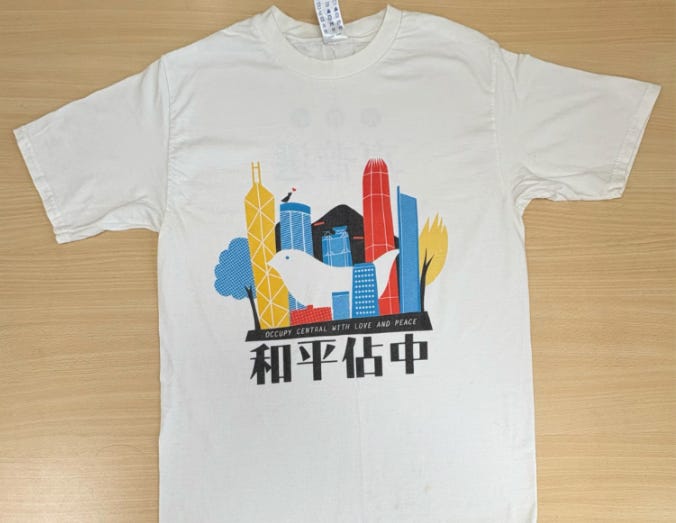
我们收藏的这件文物,正来自那个许多香港人仍相信民主改革近在咫尺的年代。回头来看,它既象征了香港民主理想的高峰,也象征着此后政治两极化与社会冲突逐渐加剧的开始。
2019反修例:香港历史上最大的公民抗命运动
2019年的反修例运动,可以说是香港历史上规模最大、影响最深远的公民抗命运动。
2019年初,香港政府提出《逃犯条例》修订,允许将刑事嫌疑人移交至香港没有正式引渡协议的司法管辖区,包括中国大陆。许多香港市民担心,这项修订将削弱香港与中国大陆司法制度之间原有的界线,而这种司法制度的分隔,长期以来一直被视为香港最重要的制度保障之一。反对声浪迅速扩大,2019年6月,一连串大型游行相继举行。
据主办单位估计,6月9日的游行有超过100万人参与,是香港历史上规模最大的示威之一。尽管有如此庞大的民意反对,政府最初仍然坚持推动修例。
就在社会气氛日益紧张之际,一名示威者梁凌杰攀上商场外的棚架抗议。结果他从高处坠下,其后伤重不治。许多人将他的离世视为香港政治危机的悲剧象征,也象征政府始终未能回应市民的诉求。
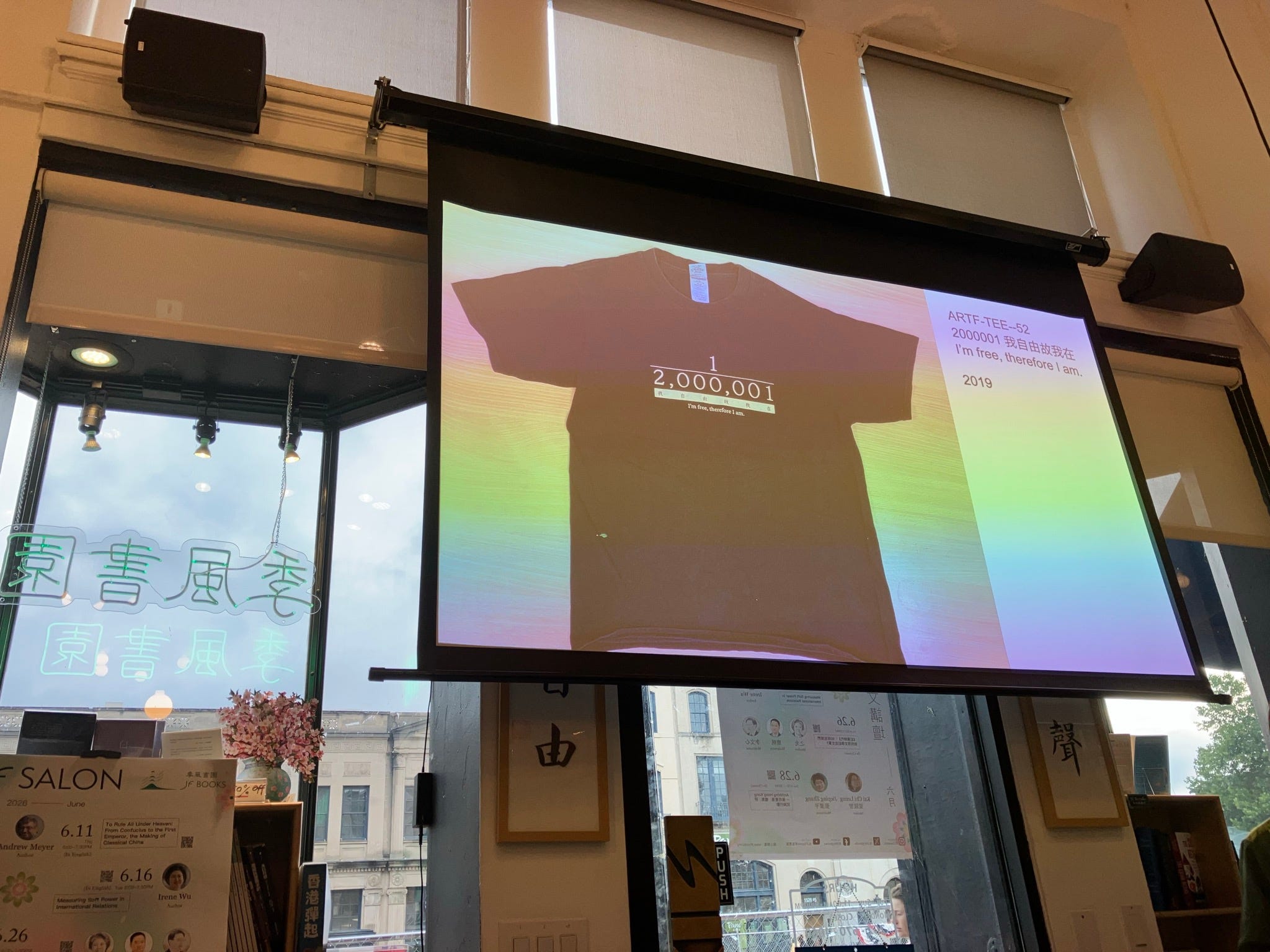
一星期后,更大规模的游行再次举行。主办单位估计,接近200万人参与。我们收藏的这件T恤正是为纪念那次游行而制作。上面的口号写着:“二百万零一人”。其中的“一”,指的正是梁凌杰。这句口号的意思是:即使他已离世,他的精神仍与所有参与者同行。通过在“二百万”之后加上“零一”,这句口号把原本的一个政治数字,转化为一种集体追思,也同时表达了香港人的悲伤与团结,成为整场运动中极具代表性的象征。
作为文物的香港T恤
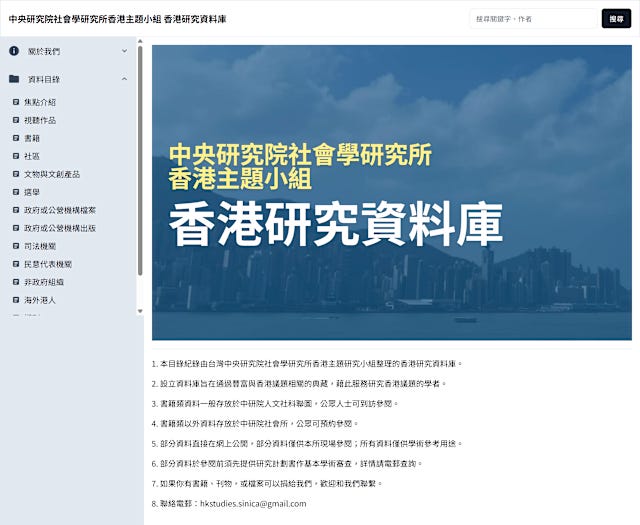
2023年7月,设立于台湾中央研究院的香港研究资料库启动。资料库设立于社会学研究所的香港主题小组之下,如今已保存了超过100件与香港社会运动相关的T恤。
不过T恤只是香港研究资料库典藏的一部分。资料库同时收藏各类与香港研究相关的资料,包括书籍、小册子、传单、报章,以及期刊、影音资料、照片、海报,以及许多不同形式的研究素材。
因这些香港记忆的承载物正处于消逝之中,资料库所做的,其实是一份抢救工作。
香港政府近年大规模下架各种承载香港公民社会记忆的资料。例如由社运人士和反对派政治人物撰写的书籍,在各个公立图书馆被下架。又如各种官方的审计、调查和研究报告,也大规模地从政府网站上面消失。这改变不单限于政府部门,也延伸到大学校园。香港公营广播部门香港电台的纪录片,就在香港各大学的图书馆中下架。如果不尽快抢救,以后的研究者就不一定能看得到。
不仅仅是政府出版的资料面对消失的风险。过去数年,大批公民社会团体相继解散。他们过去收藏的资料,以及他们自己生产的资料,都面对着散失的巨大风险。
过去在网上可以随时下载取阅的资料,如今变成要在指定地点和预约时间取阅。另外,不少关心香港的学者和记者,已无法再进入香港境内,例如2023年10月,香港中文大学副教授何晓清就被香港政府拒绝入境。要让这些研究者有机会看到过去的资料,唯一的方法就是在香港境外建立备份。
在香港,也有不少潜在的资料捐赠者,他们也希望把资料捐到香港以外的地方去。因为一些可能被认为“敏感”的资料,如果捐到香港本地的博物馆或图书馆,很大可能会被闭架收藏,不被公开展出或让公众查阅,使收藏失去价值。
“很近,同时又很远”:台湾收藏香港档案
我常觉得,台湾和香港很近,同时也很远。举例而言,今天很多台湾人是看香港的周星驰电影长大的,随便说一句电影里的台词,台湾人都能接下去。但同时,台湾人对香港也知之甚少,例如很多人不知道香港也使用繁体字。“很近,同时又很远”。这或许也可以显示在台湾推动香港研究的特点:有先天优势,但还有很多后天要努力的地方。
我们的调查发现,目前有4000多位香港学生在台湾的高等院校就读,早几年最高峰时,有9000多人。在台湾,每年生产出来的硕士和博士论文中,差不多有70篇以香港为题材,能看出,不少台湾学生对香港研究有兴趣,对研究资源有很大需求。但台湾几所主要大学,开设的香港相关课程并不多,学生了解香港的学习渠道相对有限。
在这些背景下,中央研究院社会所研究所成立了香港研究计划,推动台湾的香港研究。2023年,举办了“当香港研究走向全球”的国际研讨会,有75篇论文发表,300多人出席。2024年和2025年,又分别在东京和台北再次召开相关的会议。
研究计划的另一个重点,就是成立香港研究资料库,这可以算是香港研究的基础建设之一。
台湾是重要的华文出版基地。近年来,许多不能在香港出版的书在台湾出版,丰富了两地的学术交流。台湾本身是华文社会,处理香港研究材料本来就比较方便。当我们收到一箱香港议题的专书捐赠,交给台湾的图书馆便可以处理,因为他们都懂得华文。在其它地方,就有语言的门槛要跨过。当然,台湾的地理位置也很重要,两地距离很近,可以让不同的人得以见面,对推动研究工作十分有利。
T恤之外
目前,香港资料库登录的项目已经有3万多条。我们收集的资料重点,并不限于书,而是各种不同的资料,例如报告、档案,以及各种出版物等等。关注点是反映香港公民社会变迁,并专注寻找以下的材料:在各个界别有代表性的;纪录重大事件的;和已解散和正休眠的组织相关的;在香港的流通受到限制的,以及能代表一个时代的宏观政治和社会脉络的资料。
这些资料,有些从公开渠道收集,有些从二手书店购入,还有不少来自个人和专家的收藏。例如马岳教授是香港选举研究的权威,他所收藏的数以千计香港各届选举的选举宣传品,就全数捐赠了香港资料库。我们尤其要感谢那些匿名捐赠人。
我们收藏的不少书已在香港的公立图书馆下架。旧书能反映时代的,有一本是《中国共产党》,这本书是香港政府出版的。背景是1997年之前,当时候的香港政府公务员训练处,要向公务员介绍什么是中国共产党,就出版了这本书。
我们收藏教科书,比较新旧教科书的分别。我们也收集以社区为题材的出版,例如社区报,还有街头导赏等等。现在在香港喊“我爱香港”也变得敏感了,那么“我爱九龙”可不可以?“我爱沙田”又如何呢?于是就出现了一批地方书写的出版物。
有一些很有趣的收藏品,例如香港第一届行政长官选举的报名表。它对候选人提出身家调查,会问到父母、配偶、子女的情况。香港过去从来没有选举报名表会问这些问题。因为,一般香港的选举报名表都是香港政府自己制作,以前是港英政府,1997年后是特区政府。唯独这份行政长官选举的报名表,因为选举的时候特区政府还未成立,于是便由中国政府制作,内容也就很不一样了。
还有一份“车辆进入许可证”。香港的行政长官选举只有1000多人可以投票,一般都是和中国政府关系友好的大老板,所以也被批评为“小圈子选举”,这个许可证就是很好的说明。选举当天会场外会有很多人抗议,那些大老板是如何进去投票的呢?他们有司机开车,车上放这个许可证就可以进去了。
我们还收藏政府档案。英国档案处有上万份关于香港的档案,当中有1000多份被人在现场数位化了,送了给我们。英国档案处同意我们保留,只要不放上网。这样,大家就可以来台北看,不用专门飞去伦敦。
香港的很多非政府组织在过去几年纷纷解散,他们的出版物需要好好保留下来,让以后的研究者可以用到——例如每年六四维园晚会的场刊,我们就留存下来。
我们不只收集旧的东西。过去数年有数十万香港人移民到世界各地,我们就收藏有一整套香港人在加拿大参选国会议员的选举宣传品。
在我们收藏的文物中,除了100多件记录公民社会的T恤。还有各式各样襟章、海报等等。例如我们收藏有两个眼罩,是“占中三子”中的朱耀明和陈健民,在占领中环运动现场使用过的。这些文物,我们都会逐一登录和编号。
在今天的政治高压之下,关于香港公民社会的历史记忆正在流失,我们的目的不止在于收藏,也希望它们能“活”起来,流动起来——最近,这些T恤就正在台湾巡回展出。我们也正在酝酿网上博物馆,未来,会让一些资料在网上公开,让更多人可以看到。
(作者梁启智,曾在香港大学和香港中文大学任教,常年参与香港公民社会。现居台湾。)
本期档案推荐:
【本文为中国民间档案馆首发,转载时请务必在正文之前注明“本文首发于中国民间档案馆”,并加上原文在中国民间档案馆网站或者中国民间档案馆Substack的链接。】
【作者观点不代表中国民间档案馆立场。】
History Printed on Cotton : The Story Hong Kong’s Civil Society Told Through Iconic T-Shirts
In December 2021, I left Hong Kong, where I had lived for 40 years, and came to Taiwan. Today, I work at Academia Sinica in Taiwan, focusing on Hong Kong research and archival preservation. In an era of profound change in Hong Kong, how do we preserve the memory of Hong Kong in Taiwan? Every time I speak to the public, I start by showing photos of a few T-shirts.
In the past, activists, community groups, and civil society organizations in Hong Kong were accustomed to using T-shirts to express, commemorate, and convey public advocacy. People wore these T-shirts during rallies and demonstrations to express mutual solidarity and support. Many groups also sold T-shirts to raise funds to sustain their organizational operations. Over time, these T-shirts became symbols of Hong Kong’s once-vibrant civil society, carrying collective memory, political participation, and the community spirit of Hong Kong people.
As Hong Kong’s political situation evolves, these T-shirts no longer have a place to stay. But in the Hong Kong Database at Academia Sinica in Taiwan, you can see them. These T-shirts not only connect the stories of Hong Kong but also reflect the efforts of civil society to preserve Hong Kong’s archives.
A Historical Turning Point on a T-Shirt
More often than not, my introduction begins with a T-shirt from 1989.
This T-shirt appeared in Hong Kong during the height of the student movement in Beijing. For Hong Kong, the 1989 Tiananmen movement was a profound democratic awakening, deeply influencing Hong Kong’s political development for decades to come.
The words on the T-shirt, “Hello, Please Step Down,” seem quite mild. But in fact, this was borrowed from a political slogan from 1984—during China’s National Day military parade in 1984, a large banner reading “Hello, Xiaoping” appeared on the streets of Beijing, expressing the public’s support for Chinese leader Deng Xiaoping. By 1989, the meaning of this phrase was completely turned upside down. “Hello, Please Step Down” conveyed another layer of meaning: Deng Xiaoping had stayed “for too long,” and the Chinese people now wanted him to hand over power and step down from the political stage.
Notably, the top of the T-shirt reads “Giordano.” Giordano was one of Hong Kong’s most famous casual wear brands at the time, and the company’s founder was Jimmy Lai. Jimmy Lai later founded Apple Daily, making it one of Hong Kong’s most influential pro-democracy newspapers. In 1989, Jimmy Lai was just a businessman, not yet a media tycoon. The Tiananmen movement deeply moved him, and he decided to publicly take a stand and support the student movement. His story also reflects the immense political changes that Hong Kong has experienced since then.
In 2021, Apple Daily was forced to cease operations after its assets were frozen by the government. Jimmy Lai was subsequently prosecuted under the Hong Kong National Security Law and other related charges; he has since been convicted in multiple cases, with a cumulative sentence reaching 20 years.
The Golden Age
On one of the T-shirts in our collection, it reads “Anti-23.” Here, “23” refers to Article 23 of the Hong Kong Basic Law, which is the provision in Hong Kong’s constitutional document requiring Hong Kong to enact its own laws to safeguard national security. In 2003, the Hong Kong government proposed relevant legislation to fulfill this constitutional responsibility. However, both the contents of the bill and the government’s handling of the consultation process quickly triggered immense controversy. Many Hong Kong citizens worried that this legislation would undermine civil liberties and restrict freedom of speech.
On July 1, 2003, around 500,000 Hong Kong citizens took to the streets in protest, becoming one of the largest demonstrations in Hong Kong’s history. Facing unprecedented pressure from public opinion, the government ultimately withdrew the bill.
Many believe that this struggle unveiled the prologue to Hong Kong’s “golden age” of civic participation. In the decade or so that followed, a vast number of civil society organizations, advocacy groups, and grassroots movements were established one after another, together shaping a vibrant public sphere with extremely high political engagement.
Today, we already find ourselves in a completely different era. In 2020, Beijing implemented the National Security Law in Hong Kong; in 2024, the Hong Kong government also completed local national security legislation in accordance with Article 23 of the Basic Law. Together, these two laws have fundamentally transformed the face of Hong Kong’s politics and civil society, creating a sharp contrast between today’s Hong Kong and the social atmosphere that created this T-shirt.
Cultural Conservation and Community Defense
In Hong Kong, not all protest movements revolved directly around democratic development or constitutional reform. Quite a few protest movements focused on the daily lives of citizens, such as urban planning and urban renewal.
This is exactly the case with a “Lee Tung Street” T-shirt in our collection. It is printed with a highly imaginative image: a fish flying over Lee Tung Street. This street has a name better known to Hong Kong people—Wedding Card Street. It was once Hong Kong’s famous printing street, but around the year 2000, it was incorporated into the urban redevelopment plan by the government.
For decades, Hong Kong citizens printed wedding invitations, greeting cards, and various traditional ceremonial items on this street. This street possessed not only economic value but also carried deep cultural significance. When the government announced the redevelopment plan, residents and activists did not merely demand higher compensation. Instead, they raised deeper questions: how should a city actually be planned? They demanded the preservation of community networks, the protection of local culture, and genuine public participation in the decision-making process of urban planning.
Looking back today, these concepts seem entirely natural, but in the Hong Kong of that time, they were quite new ideas for urban development. This movement also prompted more Hong Kong people to start thinking about cultural conservation, community identity, and people-oriented urban planning. From many perspectives, it also symbolized the beginning of a new generation of urban social movements in Hong Kong.
Ultimately, the actions failed to stop the government’s redevelopment plan. Lee Tung Street was demolished, and its original site has now become a commercial shopping district. However, this movement left a profound impact—it changed how many Hong Kong people understood development, community, and whether citizens have the right to shape their own living environment.
The 79-Day Struggle for Universal Suffrage
In 2014, Hong Kong’s movement for universal suffrage reached an important turning point—the Occupy Central movement, which is more widely known internationally as the Umbrella Movement.
On August 31, 2014, China’s National People’s Congress announced the framework for the universal suffrage of Hong Kong’s Chief Executive. At first glance, this seemed to be a major development, as the proposal allowed Hong Kong citizens to directly elect the Chief Executive on a one-person, one-vote basis. However, an important restriction was that all candidates had to be approved by a nomination committee before they could formally run. Many Hong Kong citizens believed that this nomination mechanism would enable Beijing to effectively control who could run for office, so it was not genuine universal suffrage.
Against this background, the Occupy Central movement erupted. Beginning in late September 2014, protesters occupied major roads and public spaces in several parts of Hong Kong. The entire occupation lasted for 79 days, becoming one of the largest civil disobedience movements in Hong Kong’s history.
Ultimately, the political reform package proposed by the government was voted down in the Legislative Council. Supporters of the movement believed the proposal was too restrictive and unacceptable; the government, on the other hand, argued that it represented a pragmatic and feasible path forward. As a result, Hong Kong fell into a political stalemate—the package was rejected, but no new reform proposal emerged. Hong Kong was no closer to universal suffrage.
This artifact in our collection comes precisely from an era when many Hong Kong people still believed that democratic reform was within reach. Looking back, it symbolizes both the peak of Hong Kong’s democratic aspirations and the beginning of a period where political polarization and social conflict gradually intensified.
The 2019 Anti-Extradition Bill Movement
The 2019 anti-extradition bill movement can be described as the largest and most far-reaching civil disobedience movement in Hong Kong’s history.
In early 2019, the Hong Kong government proposed amendments to the Fugitive Offenders Ordinance, which would allow criminal suspects to be transferred to jurisdictions with which Hong Kong had no formal extradition agreements, including mainland China. Many Hong Kong citizens worried that this amendment would erode the existing boundary between the legal systems of Hong Kong and mainland China—a separation that had long been regarded as one of Hong Kong’s most vital institutional safeguards. Waves of opposition expanded rapidly, and in June 2019, a series of massive rallies took place.
According to organizers’ estimates, the march on June 9 drew over one million participants, making it one of the largest demonstrations in Hong Kong’s history. Despite such immense public opposition, the government initially insisted on pushing forward with the legislative amendments.
Amidst the increasingly tense social atmosphere, a protester named Leung Ling-kit climbed onto a scaffold outside a shopping mall to protest against the bill. Consequently, he fell from a height and later succumbed to his severe injuries. Many people viewed his passing as a tragic symbol of Hong Kong’s political crisis, and a symbol of the government’s persistent failure to respond to citizens’ demands.
A week later, an even larger march took place. Organizers estimated that nearly two million people participated. This T-shirt in our collection was produced precisely to commemorate that march. The slogan on it reads: “Two Million and One.” The “one” refers precisely to Leung Ling-kit. The meaning of this slogan is: even though he has passed away, his spirit still marches alongside all the participants. By adding “and one” after “two million,” this slogan transformed what was originally a political statistic into an act of collective remembrance, while simultaneously expressing the grief and solidarity of Hong Kong people, becoming a highly representative symbol of the entire movement.
When Memories Become Artifacts
The Hong Kong Research Database at Academia Sinica was launched in July 2023, and today it has preserved over 100 T-shirts related to Hong Kong’s social movements.
T-shirts are only a small part of the entire collection. The database simultaneously houses all kinds of materials relevant to Hong Kong studies, including books, pamphlets, leaflets, newspapers, journals, audiovisual materials, photographs, posters, and many other forms of research materials.
As they are in the process of disappearing, this is, in fact, a rescue mission.
In recent years, the Hong Kong government has removed large quantities of various materials that carry the memory of Hong Kong’s civil society. For example, books written by social activists and opposition political figures have been removed from public libraries. Similarly, various official audit, investigation, and research reports have also disappeared from government websites on a large scale. This change is not limited to government departments but extends to university campuses as well. Documentaries from Radio Television Hong Kong, the city’s public broadcaster, have been removed from libraries across Hong Kong’s universities. If we do not act quickly to rescue them, future researchers may not necessarily be able to access them.
It is not only government-published materials that face the risk of disappearing. Over the past several years, a large number of civil society groups have disbanded one after another. The materials they collected in the past, as well as the materials they produced themselves, face a massive risk of being scattered and lost.
Materials that could previously be downloaded and accessed online at any time have now become accessible only at designated locations and by appointment. Furthermore, many scholars and journalists who care about Hong Kong can no longer enter Hong Kong territory; for instance, in October 2023, Associate Professor Rowena He of the Chinese University of Hong Kong was denied entry by the Hong Kong government. To give these researchers the opportunity to see past materials, the only way is to establish a backup outside of Hong Kong.
In Hong Kong, there are also many potential donors who wish to donate materials to places outside Hong Kong. This is because some materials that might be considered “sensitive,” if donated to local museums or libraries in Hong Kong, would very likely be placed in closed stacks, hidden from public exhibition or public access, causing the collection to lose its value.
“Very Close, Yet Very Far Away”: Archiving of Hong Kong in Taiwan
I often feel that Taiwan and Hong Kong are very close, yet at the same time, very far away. For example, many Taiwanese people today grew up watching Stephen Chow’s Hong Kong movies; if you quote any random line from a movie, a Taiwanese person can immediately follow it up. But at the same time, Taiwanese people actually know very little about Hong Kong—for instance, many do not even know that Hong Kong also uses traditional Chinese characters. “Very close, yet very far away.” This perhaps illustrates the characteristics of promoting Hong Kong studies in Taiwan: there are inherent advantages, but there is still much work to be done.
Our survey found that there are currently more than 4,000 Hong Kong students studying at higher education institutions in Taiwan, down from a peak of over 9,000 a few years ago. In Taiwan, among the master’s and doctoral theses produced each year, about 70 focus on Hong Kong. It is clear that quite a few Taiwanese students are interested in Hong Kong studies, creating a significant demand for research resources. Yet, major universities in Taiwan offer relatively few Hong Kong-related courses, leaving students with limited channels to learn about and understand Hong Kong.
Against this background, the Institute of Sociology at Academia Sinica established the Hong Kong Studies Program to promote Hong Kong studies in Taiwan. In 2023, it hosted the international conference “When Hong Kong Studies Go Global,” where 75 papers were presented and over 300 people attended. In 2024 and 2025, related conferences were held again in Tokyo and Taipei respectively.
Another core focus of the research program is the establishment of the Hong Kong Research Database, which can be considered part of the basic infrastructure for Hong Kong studies.
Taiwan is an important center for Chinese-language publishing. In recent years, many books that could not be published in Hong Kong have been published in Taiwan instead, enriching the academic exchange between the two places. Taiwan itself is a Chinese-speaking society, making it inherently more convenient to handle Hong Kong research materials. When we receive a box of donated books specializing in Hong Kong topics, we can simply hand them over to a Taiwanese library for processing because they understand Chinese. In other places, there is a language barrier to overcome. Of course, Taiwan’s geographical location is also vital; the close proximity between the two places allows different people to meet, which is highly beneficial for advancing research work.
Beyond T-Shirts
Currently, the items logged in the Hong Kong database have already exceeded 30,000. The focus of our collection is not limited to books, but spans a wide variety of materials, such as reports, archives, and various publications. Our focus is on reflecting changes in Hong Kong’s civil society, and we concentrate on searching for the following materials: those that are representative of various sectors; those that document major historical events; those related to organizations that have disbanded or become dormant; those whose circulation is restricted in Hong Kong; and materials that represent the macro political and social context of an era.
Some of these materials were collected through public channels, some were purchased from second-hand bookstores, and quite a few came from the personal collections of individuals and experts. For instance, Professor Ma Ngok is a leading authority on Hong Kong election studies; he donated his entire collection of thousands of campaign materials from various Hong Kong elections to us. We would especially like to thank those anonymous donors.
Many of the books in our collection have already been removed from Hong Kong’s public libraries. Among the old books that reflect their era, there is one titled The Chinese Communist Party, which was published by the Hong Kong government. The background is that before 1997, the Civil Service Training Division of the Hong Kong government at the time needed to introduce civil servants to what the Chinese Communist Party was, so they published this book.
We collect textbooks to compare the differences between old and new editions. We also collect publications themed around local communities, such as community newspapers, street-guided tours, and so forth. Nowadays, even shouting “I love Hong Kong” has become sensitive in Hong Kong, so is “I love Kowloon” acceptable? What about “I love Sha Tin”? Consequently, a wave of publications focused on local writing has emerged.
There are some very interesting items in our collection, such as the application form for Hong Kong’s first Chief Executive election. It required a background check on the candidates, asking about the status of their parents, spouses, and children. In the past, no election application form in Hong Kong had ever asked such questions. This is because ordinary Hong Kong election application forms were always produced by the Hong Kong government itself—the British colonial government before 1997, and the SAR government after 1997. This specific Chief Executive election application form was unique because the SAR government had not yet been established at the time of the election; therefore, it was produced by the Chinese government, making its contents very different.
There is also a “Vehicle Entry Permit.” Only a little over 1,000 people could vote in Hong Kong’s Chief Executive elections, and they were generally big bosses with friendly relations with the Chinese government, which is why it was criticized as a “small-circle election.” This permit is an excellent illustration of that. On election day, there would be many people protesting outside the venue; how did those big bosses get inside to cast their votes? They had drivers to chauffeur them, and by placing this permit in the car, they could simply drive straight in.
We also collect government archives. The UK National Archives holds over ten thousand files related to Hong Kong, and over a thousand of them were digitized on-site by individuals and gifted to us. The UK National Archives agreed to let us keep them, as long as we do not put them online. This way, everyone can come to Taipei to look at them instead of having to fly specifically to London.
Many non-governmental organizations in Hong Kong have disbanded over the past few years, and their publications need to be well-preserved so that future researchers can use them—for instance, we have preserved the annual programs from the June Fourth candlelight vigils in Victoria Park.
We do not only collect old things; we collect new things as well. Over the past few years, hundreds of thousands of Hong Kong people have migrated to all parts of the world, and we have collected a complete set of campaign materials from a Hong Kong immigrant running for parliament in Canada.
Among the artifacts in our collection, besides the 100-odd T-shirts documenting civil society, there are also various badges, posters, and so on. For instance, we have a pair of goggles used at the site of the Occupy Central movement by Reverend Chu Yiu-ming, one of the leaders of the movement. Every piece of data we collect is individually cataloged and assigned a unique number.
In archiving these fading historical memories, we hope that these materials are not merely stored away, but can “come alive” and circulate. Recently, these T-shirts have been on a touring exhibition across Taiwan. Next, we will also launch an online museum to make some materials publicly accessible online, so that more people can see them.
Recommended archive:
Hong Kong Research Database at Academia Sinica
Leung Kai Chi: Hong Kong: Lesson One
[This article first appeared in China Unofficial Archives. When reposting, please ensure that the following is included at the beginning of the reposted text: “This article was first published by the China Unofficial Archives,” accompanied by a link to the original article on the China Unofficial Archives website or Substack.]
[The views expressed by the author of this article do not necessarily reflect the position of the China Unofficial Archives.]