

“小白书”如何更新一代人:《走向未来》丛书与八十年代的知识启蒙
“Towards the Future”: How the “Little White Books” Sparked China’s Intellectual Enlightenment of the 1980s

编者按:
无论过去还是未来,一代代年轻的生命总是渴望着新的视角,新的思想与事物。1980年代的中国,即是如此。经历了巨大的思想封闭与匮乏之后的一代年轻人,因为《走向未来》丛书而打开了眼界,更新了精神,改变了谈论中国问题与看待世界的方式。今天的中国,政治与思想再度呈现封闭的倾向,年轻世代同样面临着失落与痛苦。回望1980年代的这段历史,或许对我们有所启发。
作者:海星
在八十年代的中国,真正改变时代空气的,不只有农村改革、城市改革和对外开放,还有一批新锐出版物。四川人民出版社的《走向未来》丛书,便是其中最具象征意味的一种。它不是单纯的知识普及读物,而是一代青年知识分子试图用现代知识重新解释中国、重新连接世界、重新打开未来的精神工程。
“小白书”何以成为时代事件
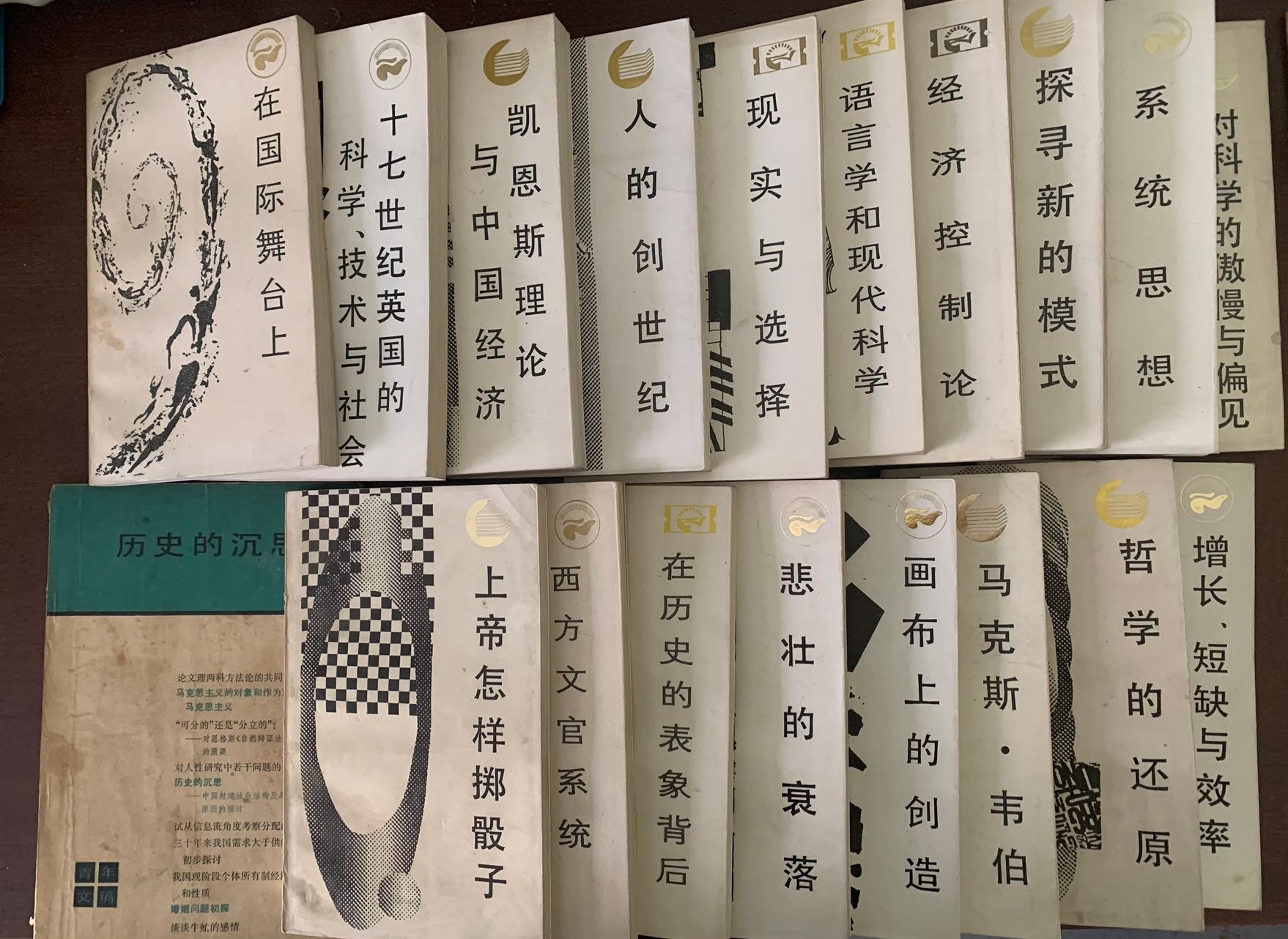
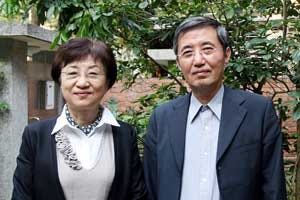
《走向未来》是一套小开本丛书,由金观涛、刘青峰等人主编,1984年起由四川人民出版社陆续推出。原计划出版100种,实际出版约74种后,就因1989年天安门事件的发生而被迫中止。丛书内容,横跨自然科学、社会科学、人文思想、经济学、现代化理论等领域,既有译介,也有原创。白色封面,装帧朴素,当时的人们习惯称之“小白书”。这称呼本身就带有时代记忆:它不是藏在书斋里的学术专著,也不是高高在上的官方读本,而是可以被大学生夹在腋下、放进书包、在宿舍和走廊里传阅讨论的一套书。
这套丛书的诞生,首先与八十年代四川出版界的特殊气质有关。当时正是改革开放初期,全国仍处在“文革”之后的思想饥馑之中,书店门口排长队买书并非奇观。四川一批有胆识的出版人不再满足于出版地方性、通俗性的读物,开始面向全国组稿,积极寻找能够回应时代焦虑的新选题。
这种出版胆识并非凭空出现。八十年代的四川,并不是一个普通的内陆省份。赵紫阳从1975年10月到1980年,在这里担任省委第一书记。他主政之下,四川开启了一系列农业与经济改革,民间流传着“要吃粮,找紫阳”的赞誉,四川成了中国农村改革的一个试验场。这对地方的社会气候也有影响——既然是试验,地方不再只是中央政策的被动执行者,也可能成为新路径的发生地。四川出版社敢于突破地域限制,挺进全国思想市场,也与这种地方气质相互呼应。
但如果仅视为一次成功的出版策划,则显然低估其历史意义。《走向未来》真正引发震动,是因为它击中了八十年代中国社会最深的精神缺口。
当时的中国,经历了长期封闭与政治运动,思想极为匮乏。而经由这套书,一代青年突然置身于一个陌生的世界面前:现代科学、市场经济、工业文明,还有信息社会、系统论、控制论、现代化理论,以及宗教改革、科学史、社会结构分析……这些词语像一扇扇猛然推开的窗户,让人们窥见此前被遮蔽的世界。
青年读者争相购买这些“小白书”,并非仅仅为了获取知识,而是为了寻找一种新的解释能力:如何理解中国的过去?如何理解中国改革开放的必要?如何理解西方世界?以及如何想象中国的未来?
第二次“开眼看世界”的时刻
废墟之后的知识饥渴,并非八十年代所独有。近代中国每一次大的精神转向,几乎都发生在旧的解释体系被现实撞碎之后。若把《走向未来》丛书放进更长的历史脉络中看,很容易让人想起鸦片战争之后一代士人的“开眼看世界”。那时候,林则徐(1785-1850)组织译介夷情,魏源(1794-1857)编成《海国图志》,徐继畬(1795-1873)写下《瀛寰志略》,他们所面对的也是一个突然断裂的世界:曾经自足的天下秩序,被远来的舰炮、贸易、条约和海洋国家体系撕开缺口。中国不得不承认,自己并不位于世界中心,外部世界并非想象中的蛮夷边缘。
晚清的“开眼”,首先来自震惊。《海国图志》的意义,不只是介绍外国情形,而是重绘了一张中国人的认知地图。八十年代的《走向未来》丛书,在精神结构上,也与此相通。当然,二者所面对的危机已经不同。晚清面对的是外部冲击。八十年代面对的,是在“文革”结束后,面对贫困、封闭、制度僵化和知识荒芜,人们重新意识到中国与世界的真实距离,以及中国自身结构中的沉疴。
二者之间隔着百余年的失败、试验、革命、战争与再封闭,但共同说明了一个事实:当旧秩序无法解释新现实时,知识总会最先成为突围的工具。书籍看似柔弱,却常常承担着打开时代天窗的任务。
作为1980年代的大学生,笔者至今还记得当时读到《走向未来》丛书的惊喜心情。这套丛书的第一本是李平晔所著的《人的发现:马丁·路德与宗教改革》,“人的发现”这个主题,让笔者印象极为深刻。当时对笔者影响最大的是关于“老三论”(指系统论、控制论、信息论)和“新三论”(指耗散结构论、协同论、突变论)的著作。书名到现在还记得,如《经济控制论》、《动态经济系统的调节与变化》、《系统思想》,以及《信息革命的技术源流》、《整体的哲学:组织的起源、生长和演化》、《上帝怎样掷骰子》等。本土学者的书里面,则有金观涛所著的《在历史的表象背后:对中国封建社会超稳定结构的探索》。
这些书当时给我们这样的青年学子带来极大的冲击力,以至于“耗散结构”、“超稳定结构”等这样的词汇,成了当时大学生们的口头禅。一方面,是出于年轻人的好奇,追逐来自西方的学术时尚,另一方面,则出于对辩证唯物主义、历史唯物主义这样的官方主流意识形态的逆反,以及对那些陈词滥调的厌倦。
笔者当时醉心的译著还有《增长的极限:罗马俱乐部关于人类困境的研究报告》;森岛通夫的《日本为什么成功:西方的技术和日本的民族精神》;以及马克斯·韦伯著的《新教伦理与资本主义精神》。本土学者的书中,则有朱光磊的《以权力制约权力:西方分权论和分权制评述》等。
特别关注这些著作,是因为它们都研究现代国家制度与国家能力问题;人的主体性问题,苏联、东欧等社会主义国家的改革与中国发展问题。这些都是当时的青年学子特别聚焦的议题。
说实话,那些书我们当时未必全能读懂,很大程度上也是懵懵懂懂。但关键不在于青年学子们是否掌握了这些理论,而在于大家获得了官方话语之外的一种新的话语,并由这些新的话语打开了一扇新的认知天窗。
启蒙的光照及其脆弱
如今,经常有人提到1989年天安门运动与这套书的关系,笔者认为,如果要联系起来,《走向未来》丛书不是这场运动的直接发动机,但这套丛书作为当时的文化热现象之一,是启蒙运动中青年自我教育的一个媒介,让一代青年学子获得了一种全新的认知方式,从政治口号转向对社会的结构分析,这极大地促进了他们的思考能力。
换句话说,一代青年学子不是通过这套丛书中的某一本或某几本完成理论觉醒,而是在连续阅读、互相讨论、校园传播,以及当时的改革语境中,逐渐学会了用结构、制度、系统、科学、现代化、主体性这些词重新认识中国与世界。
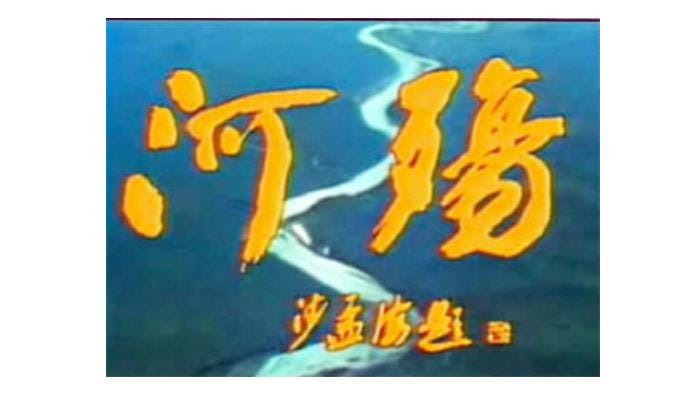
其中,历史反思与文化批判尤为关键。超稳定结构、儒家文化困境、近代科学的产生、宗教改革、新教伦理等著作,都强化了一个问题:为什么中国没有自然生成现代科学、现代制度与有现代“主体性”意识的个人?这条线与整个1980年代的“新启蒙”热潮,以及电视政论片《河殇》带来的社会反思都汇流在一起,形成了一代青年面向改革年代的问题意识。
系统论和控制论在当时之所以流行,是因为这些理论让人们看到,一个社会不是靠单一命令运行的机器,而是充满层级、回路、信息、误差和调节机制的复杂整体。对刚刚经历过高度动员和意志政治的中国青年而言,这种语言具有强烈的解放感。
尤其值得注意的是,八十年代青年知识分子对“科学”的理解,已经超出了普通科普。科学不再只是公式、仪器和实验室,而是一种理解社会的方式,一种反对任意性、拒绝神秘化,重视程序、反馈和证据的理性精神。
现代经济学的进入同样具有破冰意义。市场不再只是意识形态标签,也不再只是“资本主义”的代名词,而开始被理解为一种信息处理机制,一种资源配置方式,一种社会秩序。产权、激励、价格、看不见的手,这些概念在当时的传播中难免粗糙,却第一次使许多人意识到,经济生活并不是靠道德号召和行政命令就能有效运行的。
科学史与未来学,则为这一代人提供了另一种时间感。科学史让他们看到,现代文明并非从天而降,而是在历史中逐步形成的。未来学则让他们意识到,人类社会正面对工业化之后的新阶段,世界格局将重新书写。这种历史的纵深感和未来视野,使八十年代的中国青年,不再满足于现实缝隙中的小修小补,而开始把中国的改革放在一个文明转型的过程中思考。
也因此可以说,这些书的出现,以及人们对它们的追随,改变了一代人谈论中国问题的方式,也影响到了一代人精神结构上的整体更新。
但是,这套丛书潜藏的局限同样清晰可见:科学主义的色彩太浓,宏大理论的建构太多。对中国社会复杂性的理解则显得粗疏。
另外,它带来的启蒙光芒强烈而又脆弱——中共意识形态对出版的管控一直非常严厉。当时,在新旧交替的某种制度真空中,一些青年知识分子,凭借非正式的编委会、讲座、沙龙等渠道,打造出一个带有公共性质的网络,推动了《走向未来》丛书的出版,以及相关的影响力。但是,这种短暂的繁荣,缺乏现代法治与出版制度的实质支撑,主要依赖于地方政治的气候,特定官员的胆识以及短暂的政策宽容。风向一旦转舵,通向未来的窗户便可能被随时关上,看似热烈的公共讨论,随之瞬间窒息。
今天评价《走向未来》,既不能以后见之明去苛责当时的幼稚,也不必将其神化为一个完美的黄金时代的象征。那些“小白书”曾在青年手中传递,像一扇扇临时打开的窗,让封闭已久的房间忽然涌入了风和光。但打开窗户不等于房屋的重建,光亮也不等于制度的完成——启蒙之后,如果没有制度的更新与支撑,关于未来的想象,只能一次次被打开,又一次次被迫合上。
本期推荐档案:
【本文为中国民间档案馆首发,转载时请务必在正文之前注明“本文首发于中国民间档案馆”,并加上原文在中国民间档案馆网站或者中国民间档案馆Substack的链接。】
【作者观点不代表中国民间档案馆立场。】
“Towards the Future”: How the “Little White Books” Sparked China’s Intellectual Enlightenment of the 1980s
By Hai Xing
Editors’ Note:
Whether in the past or the future, generations of young lives have always yearned for new perspectives and new ideas. This was precisely the case in 1980s China. After experiencing a period of immense intellectual stagnation and scarcity, a generation of youth expanded their horizons and transformed the way they discussed China’s issues and viewed the world—all thanks to the “Towards the Future” book series. Today, as China’s political and intellectual landscape shows signs of closing off once again, the younger generation faces a similar sense of loss and pain. Looking back at this piece of history from the 1980s may offer us some inspiration for the present.
In 1980s China, the social atmosphere was transformed not only by rural reform, urban reform, and the opening of the country to the outside world, but also by a wave of radical new publications. Among these, the “Towards the Future” book series, published by Sichuan People’s Publishing House, was perhaps the most iconic. Rather than a mere collection of popular educational readings, it was a consequential intellectual project through which a new generation of young intellectuals sought to use modern knowledge to re-interpret China, reconnect with the world, and reshape the future.
How the “Little White Books” Became a Cultural Phenomenon
Edited by scholars like Jin Guantao and Liu Qingfeng, “Towards the Future” was a pocket-sized book series that Sichuan People’s Publishing House began rolling out in 1984. Although the original plan called for 100 titles, production was abruptly halted after roughly 74 volumes following the 1989 Tiananmen Square protests. The series spanned a vast range of subjects—including the natural sciences, social sciences, humanities, economics, and modernization theory—and featured both translated works and original texts.
With their plain layout and stark white covers, readers affectionately dubbed them the “Little White Books.” This nickname itself captures a collective generational memory: these were not obscure academic monographs hidden away in libraries, nor were they official texts that were out of touch with ordinary people. Instead, they were the kinds of books college students tucked under their arms, stuffed into backpacks, and avidly debated in dorm rooms and campus hallways.
The birth of the series was directly tied to the unique, bold spirit of the Sichuan publishing world during the 1980s. In the early days of reform and opening up, the entire nation was suffering from a profound intellectual famine in the wake of the Cultural Revolution. Then, long lines outside bookstores were a common sight. No longer content with producing purely local or populist literature, a group of ambitious Sichuan publishers began soliciting manuscripts from across the country, actively seeking out provocative new topics that could speak to the anxieties of the era.
This editorial audacity did not materialize out of thin air. In the 1980s, Sichuan was far from a sleepy inland province. Zhao Ziyang had served as the provincial First Party Secretary from October 1975 to 1980, and under his leadership, Sichuan pioneered a series of sweeping agricultural and economic reforms. This earned him the popular praise, “If you want food to eat, look for Ziyang,” turning Sichuan into a vital testing ground for China’s rural restructuring. This political environment fundamentally altered the local social climate; because the province was a laboratory for change, local institutions stopped acting as passive executors of Beijing’s dictates and began serving as crucibles for new ideas. The willingness of Sichuan’s publishers to break regional boundaries and enter the national marketplace of ideas perfectly mirrored this local ethos.
Yet, to view the series merely as a highly successful commercial publishing venture is to drastically underestimate its historical significance. “Towards the Future” created a genuine sensation because it struck at the heart of the spiritual void in 1980s Chinese society.
Having endured decades of isolation and relentless political campaigns, China found itself intellectually starved. Through these books, an entire generation of young people was suddenly introduced to an unfamiliar world: modern science, market economics, industrial civilization, the information society, systems theory, cybernetics, modernization theory, the Protestant Reformation, the history of science, and structural social analysis. These concepts, like windows thrown wide open, offered people a breathtaking glimpse into a world that had long been hidden from view.
Young readers did not scramble to buy these “Little White Books” simply to accumulate facts, but rather to find a new framework for understanding: How should they interpret China’s past? How could they justify the necessity of reform and opening up? How were they to perceive the West? And how, ultimately, should they envision China’s future?
A Second “Opening of the Eyes to the World”
This desperate hunger for knowledge was by no means unique to the 1980s. Almost every major intellectual turning point in modern Chinese history has occurred after an old explanatory framework was violently shattered by reality. When viewed in a broader historical context, the “Towards the Future” series immediately evokes the generation of late-Qing scholar-officials who first “opened their eyes to see the world” after the Opium Wars. In those days, Lin Zexu (1785–1850) organized the translation of intelligence on foreign powers, Wei Yuan (1794–1857) compiled the Illustrated Treatise on the Maritime Kingdoms, and Xu Jiyu (1795–1873) penned the Brief Survey of the Maritime Circuit. They, too, confronted a fractured reality: a centuries-old, self-contained world order had been abruptly shattered by Western gunboats, global trade, unequal treaties, and an international system of maritime empires. China was forced to confront the harsh reality that it was not the center of the universe, and that the outside world was not the peripheral wasteland of barbarians they had long imagined.
In the late Qing, this awakening was born out of raw shock. The significance of the Illustrated Treatise on the Maritime Kingdoms lay not just in its descriptions of foreign lands, but in the way it radically redrew the cognitive map of the Chinese elite. Spiritually and structurally, the “Towards the Future” series of the 1980s shared this exact same DNA, even if the specific crises they faced had evolved. While the late Qing reeled from an external shockwave, the 1980s generation was reacting to the internal aftermath of the Cultural Revolution. Faced with poverty, isolation, institutional sclerosis, and intellectual barrenness, people were forced to confront the staggering chasm that separated China from the modern world, as well as the deep-seated maladies embedded within China’s own systemic structure.
Though separated by more than a century of failures, experiments, revolutions, wars, and periods of renewed isolation, both eras proved a fundamental truth: when an old order can no longer explain a new reality, knowledge becomes the primary tool used to break through the impasse.
As a university student during the 1980s, I still vividly remember the sheer exhilaration of discovering the “Towards the Future” series. The very first volume was Li Pingye’s The Discovery of Man: Martin Luther and the Reformation, and its core theme—the liberation of human agency—left an indelible impression on me. The volumes that shaped my thinking most profoundly, however, were those introducing the “Old Three Theories” (systems theory, cybernetics, and information theory) and the “New Three Theories” (dissipative structures, synergetics, and catastrophe theory). I can still recall their titles today: Economic Cybernetics, Regulation and Change of Dynamic Economic Systems, System Thought, The Technological Origins and Streams of the Information Revolution, The Philosophy of the Whole: The Origin, Growth, and Evolution of Organizations, and How Does God Play Dice. Among the works by domestic scholars, the most influential was Jin Guantao’s Behind the Appearance of History: An Exploration of the Ultra-Stable Structure of Chinese Feudal Society.
These books hit young scholars like me with such force that terms like “dissipative structures” and “ultra-stable structures” instantly became ubiquitous campus slang. Part of this was driven by youthful curiosity and a desire to chase Western intellectual trends, but it was also a quiet rebellion against the stale platitudes of official mainstream ideologies like dialectical and historical materialism.
Among the translated works, I was particularly fascinated with The Limits to Growth: A Report for the Club of Rome’s Project on the Predicament of Mankind, Michio Morishima’s Why Has Japan “Succeeded”?: Western Technology and the Japanese Ethos, and Max Weber’s The Protestant Ethic and the Spirit of Capitalism. From our domestic scholars, I closely read works like Zhu Guanglei’s Restraining Power with Power: A Review of Western Separation of Powers Theory and the Separation of Powers System.
We gravitated toward these specific texts because they directly tackled the burning questions of modern state systems, institutional capacity, individual subjectivity, and the challenges of socialist reform in the USSR, Eastern Europe, and China. These were the exact issues that our generation was desperately trying to parse.
To be perfectly honest, we did not fully comprehend everything we read; in many ways, we were stumbling through these complex ideas in a daze. Yet, whether we fully mastered the underlying theory was beside the point. What mattered was that we were acquiring a new vocabulary outside the bounds of official state discourse, and through that vocabulary, we were opening a brand-new cognitive window.
The Light of Enlightenment and Its Fragility
Today, some people attempt to draw a line between this book series and the 1989 Tiananmen Square movement. In my view, while “Towards the Future” was not the direct engine of those protests, it served as a vital vehicle for youth self-education within the broader cultural craze of the enlightenment. It gave a generation of students a completely new framework for processing reality, shifting their focus away from hollow political slogans and toward the structural analysis of society, which immeasurably sharpened their critical thinking skills.
In other words, the student body did not experience an intellectual awakening because of any single volume in the collection. Rather, it was through a continuous process of reading, intense debate, campus-wide dissemination, and the broader atmosphere of national reform that they gradually learned to re-evaluate China and the world through the lenses of structure, institution, system, science, modernization, and subjectivity.
Within this framework, historical introspection and cultural critique became paramount. Works analyzing ultra-stable structures, the historical traps of Confucian culture, the birth of modern science, the Reformation, and the Protestant ethic all forced us to confront a single, haunting question: Why had China failed to naturally generate modern science, modern institutions, and individuals possessed of a modern sense of personal agency? This line of inquiry merged seamlessly with the “New Enlightenment” movement of the 1980s and the deep social reflection sparked by the television documentary River Elegy, ultimately crystallizing into the foundational intellectual worldview of a generation entering the era of reform.
Systems theory and cybernetics enjoyed immense popularity during this period because they allowed people to see that a society is not a simplistic machine driven by top-down commands, but a complex web of hierarchies, feedback loops, information flows, errors, and self-correcting mechanisms. For a Chinese youth culture that had just emerged from an era of hyper-mobilization and radical voluntarism, this systemic language offered an intoxicating sense of liberation.
It is particularly remarkable that the 1980s intellectual understanding of “science” transcended mere popular physics or chemistry. Science was no longer viewed simply as formulas, lab equipment, and test tubes; it was embraced as a method for understanding society—a rational ethos that rejected arbitrary authority, refused mystification, and prized procedure, feedback, and empirical evidence.
The introduction of modern economics was similarly groundbreaking. The market ceased to be viewed merely as an ideological label or a dirty shorthand for capitalism. Instead, it began to be understood scientifically: as an information-processing mechanism, a method of resource allocation, and a form of social order. Though the dissemination of concepts like property rights, incentives, pricing, and the invisible hand was undeniably unrefined at the time, it marked the first time many people realized that economic life could not be run effectively through moral exhortation and administrative fiat.
Concurrently, the history of science and futurology provided this generation with an entirely new perception of time. The history of science demonstrated that modern civilization did not materialize out of thin air, but was forged incrementally through historical processes. Futurology, meanwhile, made them realize that humanity was entering a post-industrial frontier where the global balance of power was being completely rewritten. This profound sense of historical depth and future perspective meant that young Chinese thinkers were no longer content with minor, superficial fixes to the status quo; they began to view China’s domestic reforms as an epic process of civilizational transformation.
Consequently, it is fair to say that the emergence of these books, and the fervor with which they were devoured, fundamentally altered how a generation discussed China’s problems and permanently reshaped their collective intellectual architecture.
Even so, the inherent flaws of the series remain glaringly obvious in retrospect: it was deeply colored by an over-reliance on scientism, overly preoccupied with building grand theories, and frequently superficial in its grasp of the immense complexities of Chinese society.
Furthermore, the light of enlightenment it cast was as fragile as it was bright, given that the Communist Party’s ideological stranglehold on the publishing industry remained brutally strict. During that brief transitional window—a sort of institutional vacuum between the old world and the new—a handful of young intellectuals managed to leverage informal editorial boards, lectures, and salons to construct a makeshift public network, which successfully drove the publication and influence of the series. Yet this fleeting intellectual renaissance lacked any real foundation in the rule of law or a free press. It depended almost entirely on the shifting winds of local politics, the courage of select officials, and a momentary policy of state tolerance. The moment the political wind changed direction, the window to the future was slammed shut, and what had seemed like a vibrant, roaring public discourse was suffocated in an instant.
In evaluating “Towards the Future” today, we should neither use the benefit of hindsight to mock its naivete, nor should we romanticize it as a flawless symbol of a golden age. Those “Little White Books” passed from hand to hand among the youth like a series of makeshift windows, suddenly flooding a long-sealed room with fresh air and light. Yet, opening a window is not the same as rebuilding the house, and a flash of illumination is not the same as establishing an enduring system. In the absence of institutional reform and systemic safeguards, the window to the future can only be pushed open for a moment, before being forced shut once again.
Recommended archives:
The “Towards the Future” Book Series (Sichuan People’s Publishing House)
[This article first appeared in China Unofficial Archives. When reposting, please ensure that the following is included at the beginning of the reposted text: “This article was first published by the China Unofficial Archives,” accompanied by a link to the original article on the China Unofficial Archives website or Substack.]
[The views expressed by the author of this article do not necessarily reflect the position of the China Unofficial Archives.]